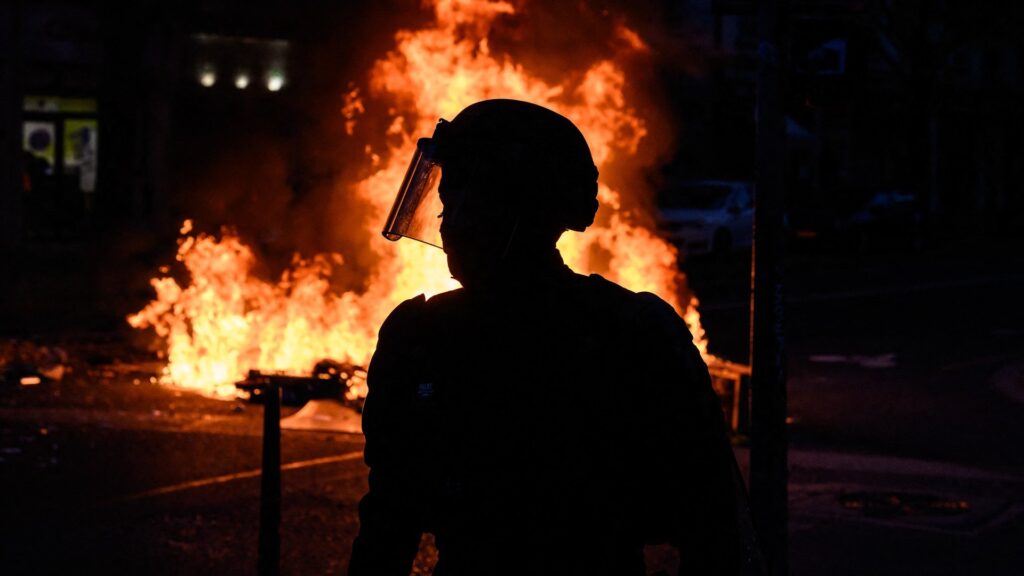
Tens of thousands of people across France and Germany have taken to the streets in a wave of protests driven by mounting concerns over rising living costs. This unprecedented wave of demonstrations has resulted in fierce confrontations with police forces in multiple cities, highlighting the growing public frustration with economic pressures.
The protests, which erupted simultaneously in several major urban centers, saw demonstrators rallying against inflation, increased energy prices, and general economic hardship. Participants from diverse backgrounds voiced their discontent over the government’s handling of economic policies and demanded immediate action to alleviate the financial burden on ordinary citizens.
In France, cities such as Paris, Marseille, and Lyon became focal points for the unrest. Protesters clashed with police, who used tear gas and water cannons in efforts to disperse crowds. Reports indicated that some protests escalated into violent skirmishes, resulting in injuries on both sides and multiple arrests.
Similarly, in Germany, notable demonstrations occurred in Berlin, Frankfurt, and Hamburg. Police in Germany also faced aggressive confrontations, deploying riot control measures where necessary to manage the large, often agitated, crowds. The scale of protests in Germany reflects a broader European concern about the impact of inflation and energy costs, which continue to strain household budgets.
Organizers of the protests have called on governments to implement comprehensive economic relief measures, focusing on subsidies for essential goods and services, wage increases, and stronger social safety nets. They emphasized that the current financial climate is pushing many families to the brink of poverty.
Government officials in both countries have acknowledged the challenges posed by rising living costs but have stressed the complexity of balancing economic support with fiscal responsibility. Nevertheless, these protests demonstrate the urgency felt by the populace and the demand for more effective policy responses.
Analysts suggest that the protests could gain momentum if economic conditions continue to deteriorate, signaling a potential for broader social unrest. The situation remains fluid, with authorities in both nations monitoring developments closely and preparing for further demonstrations.
The events in France and Germany echo similar movements across other European countries, where citizens are increasingly vocal about the need for government intervention to address economic hardships. These protests serve as a stark reminder of the social impact of inflation and the critical role of government policies in maintaining social stability.
As tensions persist, the coming weeks will likely be decisive in shaping the trajectory of public sentiment and government action in response to the rising cost of living in Europe.