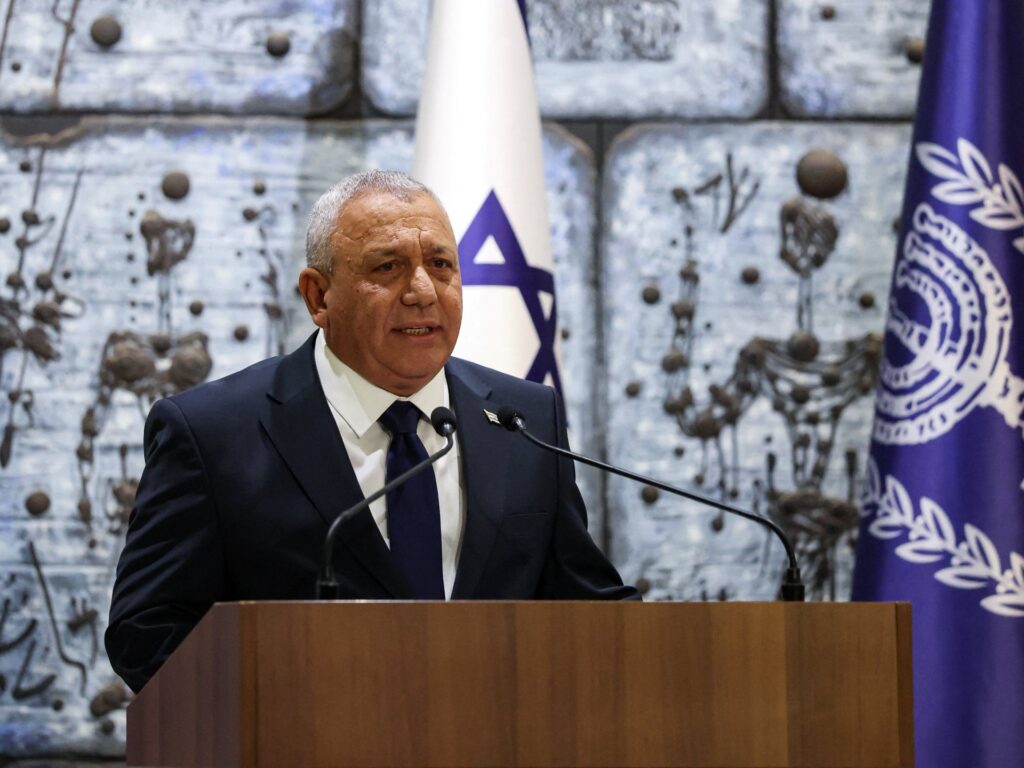
In a significant political statement, Benny Gantz, a prime ministerial hopeful, has condemned what he describes as Prime Minister Benjamin Netanyahu’s ‘racist’ campaign against Palestinian Israelis. Gantz accuses Netanyahu of attempting to marginalize and smear the Palestinian citizens of Israel, labeling these actions as ‘an anti-state act.’
The controversy revolves around the ongoing political discourse and campaigns that involve the portrayal of Palestinian Israelis. Gantz’s remarks highlight a growing concern over the treatment and rhetoric aimed at this community within the Israeli political landscape.
By calling the campaign against Palestinian Israelis racist, Gantz is bringing to light the polarization and ethnic tensions within Israel. His stance reflects a broader debate about the rights and representation of Palestinian citizens in a country where they constitute a significant minority.
Gantz’s criticism comes at a time when Israel’s political environment is highly charged, with elections and leadership struggles dominating headlines. His use of the term ‘anti-state act’ suggests that marginalizing any community threatens the unity and democratic fabric of the state.
This development is critical as it may influence the political dynamics and voter sentiments in upcoming elections. It also underscores the need for dialogue and policies that promote inclusion and equality rather than division.
Netanyahu, known for his tough stance on national security and his firm approach to Palestinian issues, has often faced criticism over his policies and statements perceived as exclusionary.
The debate over the status and treatment of Palestinian Israelis is not new, but Gantz’s public condemnation signals a potential shift or at least a significant challenge to the established narrative presented by Netanyahu’s camp.
Political analysts suggest that this conflict might deepen the divisions within Israeli society, which is already grappling with complex socio-political issues.
The call to end the smear campaign against Palestinian citizens is also a call for the recognition of their rights and a reconsideration of policies that may have marginalized them.
As the political campaigns intensify, the discourse around ethnicity, citizenship, and state identity in Israel will likely remain a central theme.
Observers await to see how Netanyahu responds to Gantz’s accusations and whether this confrontation will prompt a broader dialogue or escalate into further political strife.
This incident serves as a reminder of the delicate balance required in governance and the importance of fostering unity within a diverse society.
Ultimately, addressing these concerns transparently and respectfully is essential for the stability and democratic health of Israel, ensuring all citizens are treated with dignity and fairness regardless of their background.