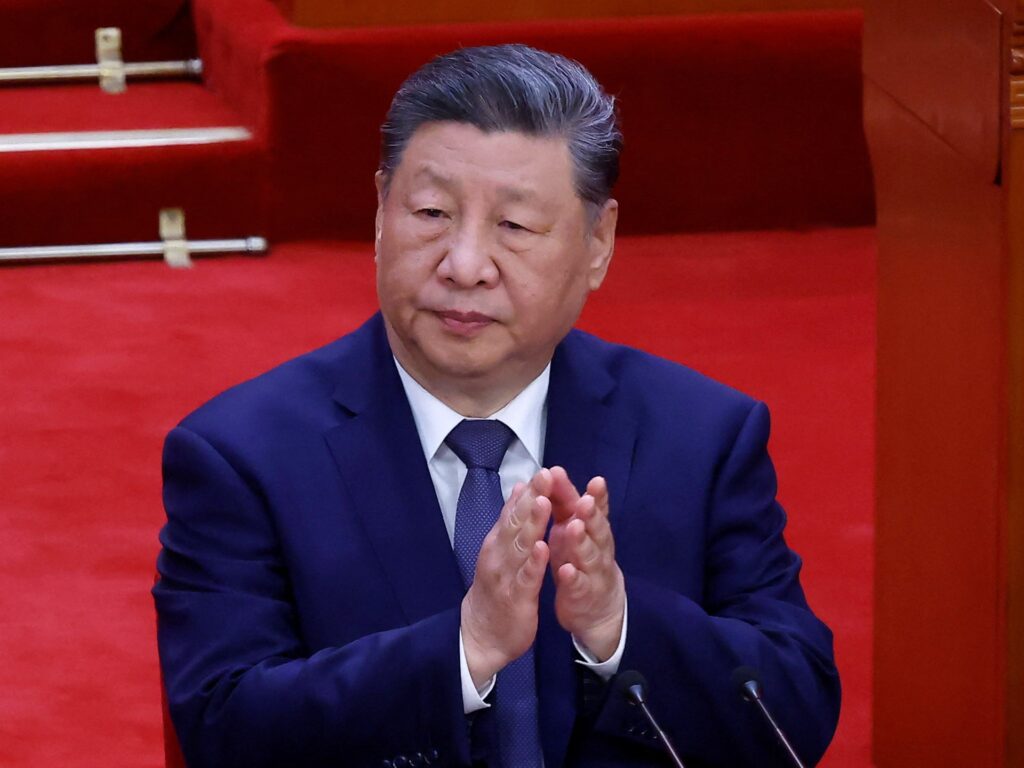
Chinese President Xi Jinping has emphatically declared that the ‘complete reunification’ of Taiwan with the mainland is an inevitable historical process that cannot be halted. Speaking amid heightened tensions across the Taiwan Strait, Xi underscored his government’s determination to bring Taiwan under its sovereignty, asserting that the tide of history is in favor of reunification.
This statement comes as Taiwan firmly rejects the ‘one country, two systems’ framework proposed by Beijing, which aims to offer Taiwan a degree of autonomy while acknowledging Chinese sovereignty. Taiwanese leaders have consistently opposed the framework, citing it as incompatible with the island’s democratic values and way of life.
Xi Jinping’s comments highlight the Chinese leadership’s unwavering stance on Taiwan, which Beijing views as a breakaway province that must ultimately be unified with the mainland. The remarks reflect continued efforts by China to assert its claims and influence over Taiwan amid increasing international attention and strategic competition.
The issue of Taiwan remains one of the most sensitive and complex in Chinese foreign policy, with significant geopolitical implications. Taiwan operates as a self-governing democracy with its own political system and military, yet China insists on its eventual reunification, by force if necessary.
International actors have often voiced concerns over escalating rhetoric and military activity near Taiwan. The prospect of reunification under ‘one country, two systems’ remains deeply controversial, with many in Taiwan fearing erosion of their freedoms and autonomy.
Xi’s statement signals that the Chinese government prioritizes this goal as part of its national rejuvenation strategy. The promise of ‘complete reunification’ is portrayed as a historic mission driven by the sentiment of national unity and territorial integrity.
Taiwan continues to maintain its stance of independence and democracy, bolstered by support from key global allies. It rejects Beijing’s overtures, emphasizing its right to self-determination and opposing any coercion.
As the rhetoric intensifies, experts warn of the risks associated with unresolved tensions. Analysts note that peaceful dialogue remains crucial to avoiding conflict. However, Xi Jinping’s firm declaration indicates China’s readiness to persist with its policy until reunification is achieved.
This latest development marks a continuation of longstanding disputes over Taiwan’s status, reflecting deeply rooted sentiments on both sides. Observers are watching closely for how the international community will respond and the potential impacts on regional stability.
In summary, Xi Jinping’s declaration about Taiwan’s ‘complete reunification’ underscores China’s strategic focus on the island despite explicit Taiwanese resistance to the ‘one country, two systems’ proposal. The situation remains a central, contentious issue in cross-strait relations and broader geopolitical affairs.