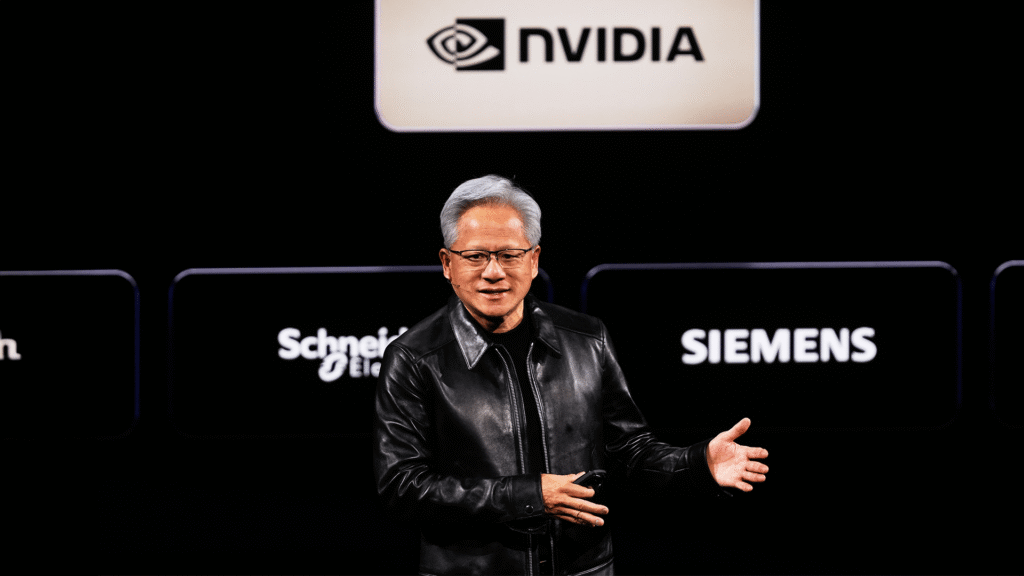
In a surprising development within the technology sector, Jensen Huang, the co-founder and CEO of Nvidia, has stepped down from his role. This unexpected resignation follows recent revelations about an alleged affair involving Huang, which have drawn significant media attention and raised concerns about the company’s future.
Jensen Huang co-founded Nvidia in 1993 and led the company to become a global powerhouse in graphics processing and AI technologies, playing a pivotal role in advancing computing capabilities worldwide. His departure marks a turning point for Nvidia, which has been at the forefront of innovations in gaming, data centers, and artificial intelligence.
The details of the affair were brought to light by investigative reports, stirring a strong reaction among stakeholders and prompting questions about corporate governance and leadership stability. Al Jazeera’s journalist Kristen Saloomey has examined the implications of this controversy and what lies ahead for Nvidia in light of Huang’s departure.
Saloomey points out that while personal scandals can impact public perception, the immediate concern for Nvidia is how the company will navigate leadership transition without disrupting its aggressive growth trajectory in several high-stakes markets.
The board of directors has been actively engaged in selecting a successor who can maintain Nvidia’s competitive edge. Industry analysts note that the new leader will need to manage not only ongoing product development but also investor confidence and strategic partnerships.
Beyond the leadership vacuum, the revelations have spurred discussions on corporate ethics, workplace culture, and the pressures faced by executives in high-profile technology firms. Nvidia’s corporate communications team has reiterated the company’s commitment to integrity and its intention to support a smooth handover process.
Investors have responded cautiously, with stock prices experiencing volatility as the market absorbs news of the resignation and the surrounding circumstances. However, many believe that Nvidia’s solid fundamentals and robust technology portfolio will help it weather this turbulent period.
Looking forward, Nvidia faces key challenges including sustaining innovation, expanding AI capabilities, and competing with rivals in semiconductor manufacturing and software solutions. The company’s ability to adapt and lead in these areas remains under scrutiny.
Furthermore, this episode has sparked broader reflections within the tech industry about transparency, executive accountability, and the impact of personal conduct on corporate reputation.
As the story continues to unfold, stakeholders including employees, customers, and partners are keenly watching for Nvidia’s next moves. The appointment of a new CEO will be a critical event, expected to be announced soon.
In summary, Jensen Huang’s resignation underscores the complex interplay between personal actions and professional responsibilities at the highest levels of corporate leadership. Nvidia stands at a crossroads, facing both challenges and opportunities as it transitions into a new chapter without its iconic founder at the helm.