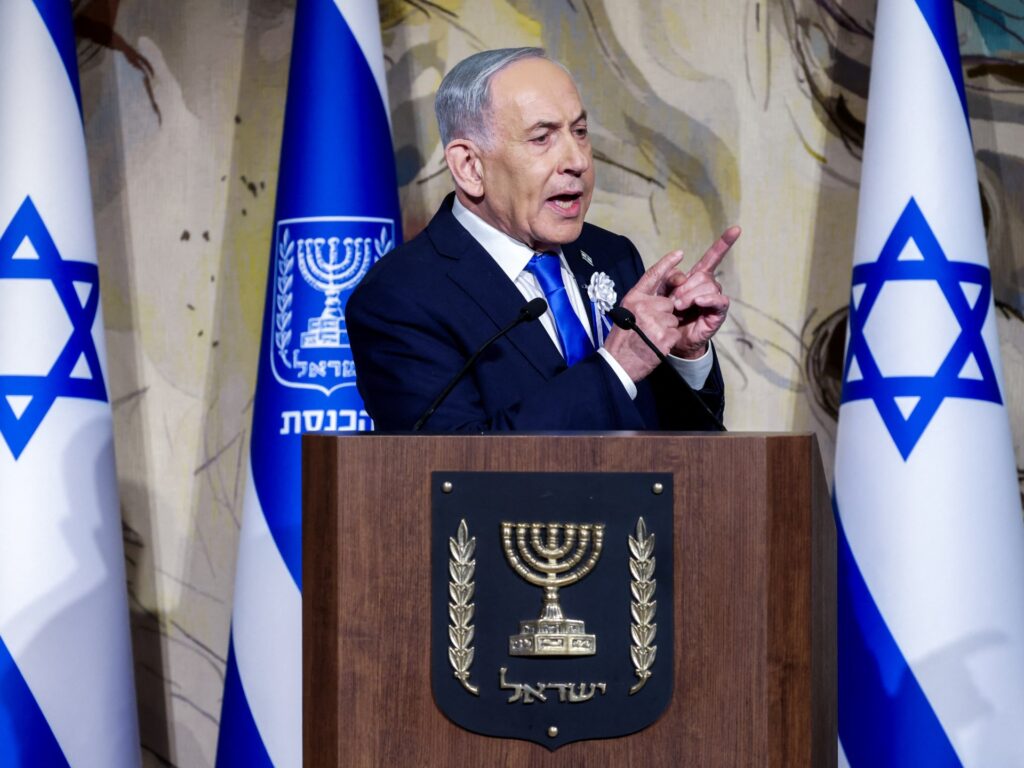
The recent tumultuous opening of the Israeli parliament has underscored a significant shift in the nation’s political landscape, largely attributed to the enduring legacy of Benjamin Netanyahu. Known for his polarizing style and fierce fight for political survival, Netanyahu’s influence extends far beyond his policies, deeply affecting the nature and tone of Israeli democracy.
Netanyahu’s leadership has been marked by a personalized brand of politics, where issues often become secondary to his political agenda and personal battles. His tenure has cultivated an environment where political discourse frequently descends into acrimony, with the parliament’s sessions sometimes resembling stages for personal conflicts rather than constructive debate.
This transformation is evident in the recent parliamentary opening, which quickly devolved into a scene filled with insults and public disagreements. Such events reflect growing divisions within Israeli society and its political class, brought to the forefront by a leader whose style prioritizes confrontation and survival over consensus-building.
Critics argue that Netanyahu’s approach has weakened institutional norms and democratic traditions, replacing them with a volatile and fragmented political culture. Supporters, however, view his tactics as necessary to navigate the complex and often hostile political environment of Israel.
The reverberations of this shift are significant. Israeli democracy is witnessing a move away from collective governance towards a system characterized by personality-driven leadership and zero-sum politics. This dynamic challenges the foundational principles of parliamentary democracy, including mutual respect and dialogue among elected representatives.
Moreover, the intense focus on Netanyahu as an individual has implications for policy-making and governance. Decisions increasingly hinge on political survival strategies rather than long-term national interests, complicating efforts to address critical issues such as security, economy, and social cohesion.
As Israel grapples with this new reality, the question arises: what will be the lasting impact of Netanyahu’s legacy on the country’s democratic institutions? The current political theater suggests a cautious outlook, with many fearing further polarization and institutional erosion.
In conclusion, Netanyahu’s fight for political survival has reshaped Israel’s democracy in profound ways. The parliament’s opening, marked by insults and acrimony, is symptomatic of a broader trend where personality politics overshadow traditional democratic processes. Navigating this complex environment will require a recommitment to democratic values and a move beyond personalism to restore a healthier political discourse in Israel.