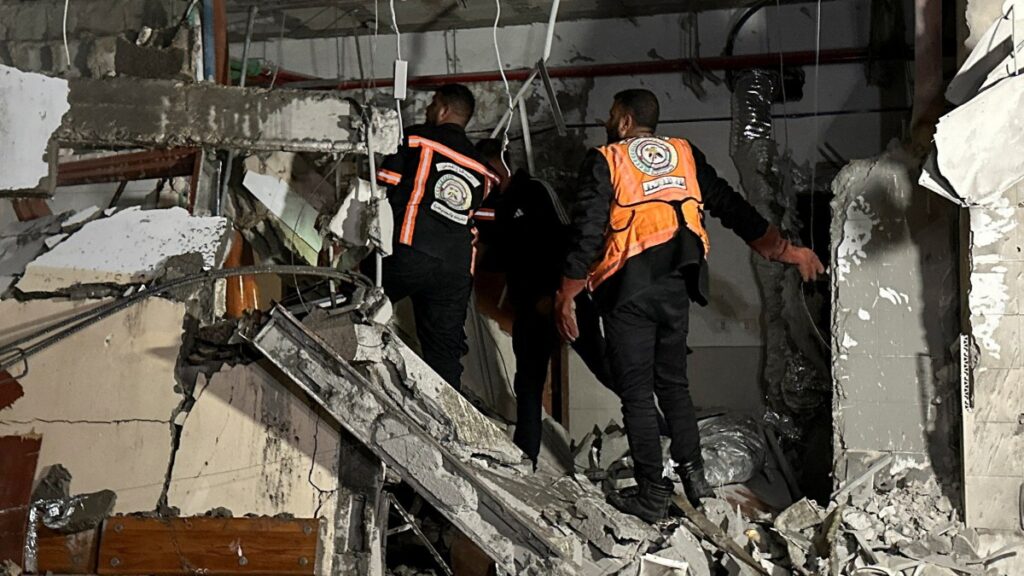
An Israeli air strike struck the Nasser Medical Complex in Khan Younis, Gaza, resulting in the deaths of six individuals. This attack is part of a broader escalation of violence in the region, where the ongoing conflict has been causing extensive harm to civilians and infrastructure.
The strike has raised serious humanitarian concerns, particularly as Gaza faces additional challenges from adverse weather conditions. The United Nations has urgently appealed for aid to assist the people of Gaza, especially in light of heavy rains that threaten to exacerbate the already dire humanitarian situation.
In total, the air strikes across Gaza have led to at least 13 fatalities, highlighting the escalating toll of the conflict on civilian lives. Medical facilities like the Nasser Medical Complex are critical for providing care to the injured and sick, and damage to such institutions severely hampers the ability to deliver essential medical services.
The UN’s call for urgent aid underscores the immediate need for humanitarian assistance to support people affected by both the conflict and the challenging weather. Heavy rains in Gaza are likely to complicate relief efforts, increase the risk of disease, and strain already limited resources.
Human rights groups and international observers have condemned attacks on medical facilities, emphasizing that hospitals must be protected under international law. The targeting of a hospital has drawn wide criticism and sparked calls for de-escalation to prevent further civilian casualties.
The situation remains volatile, with fears that increased violence could lead to further destruction and loss of life. Aid organizations continue to work under difficult conditions to provide emergency assistance, but the combination of conflict and weather poses a significant obstacle.
Efforts to negotiate ceasefires or humanitarian pauses have so far been challenged by ongoing hostilities, leaving civilians caught in the crossfire. The international community has been urged to prioritize the protection of civilians and ensure that aid reaches those in desperate need.
As the crisis worsens, the impact on Gaza’s population is profound, with families losing loved ones and facing a future marked by uncertainty and hardship. The destruction of healthcare infrastructure further limits access to treatment, complicating efforts to address injuries and illnesses.
The attack on the hospital is a stark reminder of the vulnerability of medical personnel and patients in conflict zones. Safeguarding humanitarian spaces remains a critical priority to uphold human dignity and reduce suffering during times of war.
In summary, the Israeli air strike on the Nasser Medical Complex, alongside other attacks in Gaza, has resulted in significant civilian casualties and has drawn urgent appeals from the UN for aid amidst worsening weather. The protection of medical facilities and civilians, alongside immediate humanitarian assistance, remains crucial as the conflict continues to unfold.