The Trump administration’s White House has publicly criticized the Democratic Party’s plans for congressional investigations, labeling them as an ‘abuse’ of power. This stark denunciation highlights the increasing friction between the executive branch under President Donald Trump and the Democratic-controlled congressional committees intent on probing various aspects of the administration’s actions.
Democratic lawmakers have been escalating their efforts to launch a series of investigations targeting the Trump administration, focusing on alleged misconduct and potential conflicts of interest that arose during and after the 2016 presidential campaign and throughout Trump’s tenure in office.
However, in an official letter released by the White House, the administration firmly decried these planned congressional probes, calling them unwarranted and politically motivated attempts to undermine the President’s agenda and legacy. The letter accused the Democrats of abusing their legislative authority by engaging in what it described as endless and partisan scrutiny.
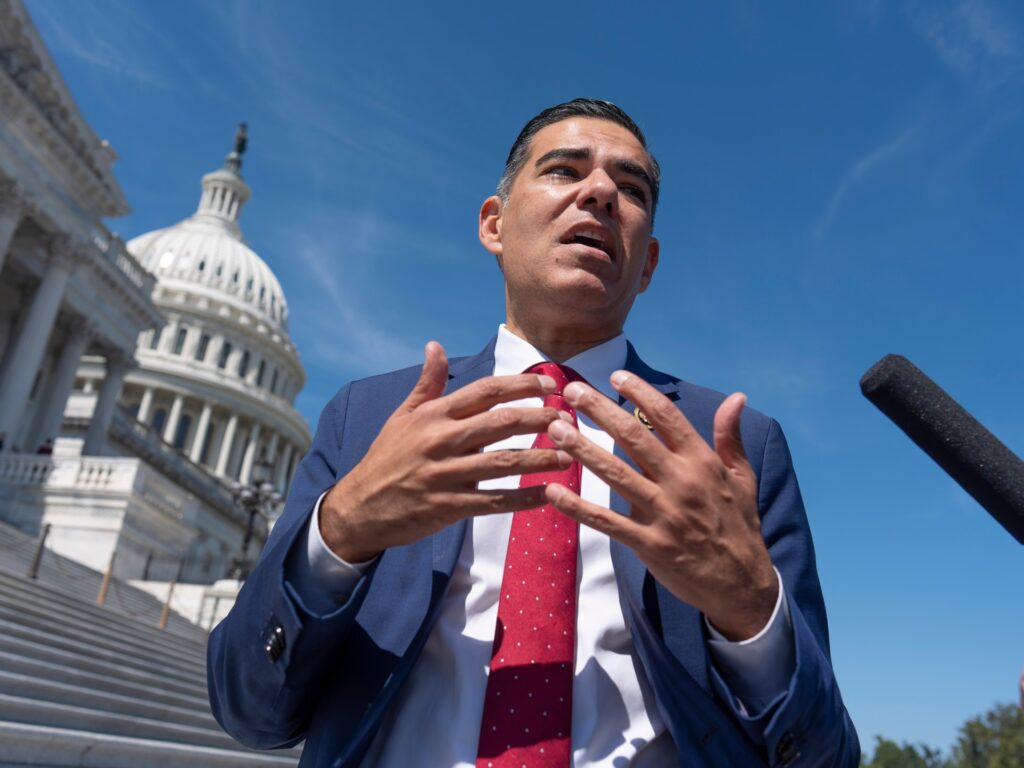
Among the prominent voices opposing this White House stance, Democratic Congressman Robert Garcia has strongly condemned the letter. Garcia characterized the administration’s response as an ‘unconstitutional attack’ on the legislative branch, asserting that congressional oversight is a fundamental and constitutionally mandated function of Congress designed to ensure checks and balances within the federal government.
Garcia emphasized that the investigations were not only legitimate but necessary to uphold transparency and accountability, especially given the numerous concerns raised about the Trump administration’s adherence to ethical standards. He argued that dismissing these probes as political abuse undermines the role of Congress and threatens the democratic process.
The tension between the executive branch and Congress is not new but has become particularly palpable during this period of heightened partisan conflict. Democrats, having regained control of the House of Representatives, have vowed to use their oversight powers aggressively to scrutinize the administration’s policies and conduct.
Meanwhile, the Trump White House continues to push back against these efforts, framing the investigations as harassment and distractions from governing priorities, suggesting that they stem from political vendettas rather than genuine oversight.
This ongoing dispute illustrates the challenges inherent in the U.S. political system’s system of checks and balances. On one side, Congress holds the mandate to oversee and investigate the executive branch; on the other, the President’s office seeks to protect its operations from what it views as excessive and partisan interference.
Political analysts note that this battle could have lasting implications for the balance of power between the branches and may shape how oversight and investigations are conducted in future administrations.
As this conflict continues to unfold, it remains to be seen whether any compromise or resolution can be reached that respects both Congress’s oversight responsibilities and the executive branch’s need to function without constant legislative obstruction.
In summary, the White House’s characterization of Democratic congressional probes as an ‘abuse’ has sparked a fierce debate about constitutional powers and political accountability. Democratic lawmakers like Robert Garcia defend these investigations as crucial to maintaining governmental integrity, while the Trump administration accuses its political opponents of exploiting oversight mechanisms to pursue partisan goals. The episode underscores the deep divisions that currently define the American political landscape.