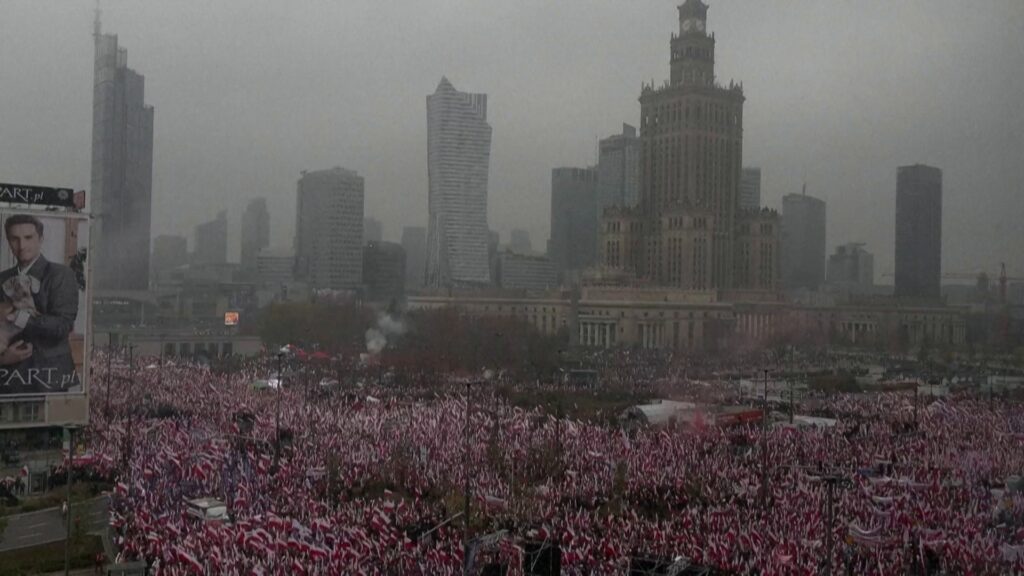
Thousands of people have taken to the streets of Warsaw to participate in the annual Independence Day march, a significant event in Poland that commemorates the country regaining its sovereignty. The march is a vibrant demonstration of national pride and patriotic spirit, reflecting the historical importance of November 11th when Poland first regained independence in 1918 after 123 years of partitions by Russia, Prussia, and Austria.
The event draws a diverse crowd from all over the country, including families, veterans, politicians, and various civic groups. Participants typically carry Polish flags, wear traditional attire or symbolic colors, and often sing patriotic songs as they march through the capital. It serves as both a festive celebration and a solemn remembrance of the struggles faced by the nation throughout its history.
The Independence Day march in Warsaw is one of the largest public gatherings in Poland and has grown in prominence over the years, becoming a key fixture on the national calendar. The march highlights the unity and resilience of the Polish people while also providing an opportunity to reflect on the values associated with freedom and independence.
Authorities usually coordinate closely with organizers to ensure the event proceeds peacefully and safely. Security measures are heightened to manage the large crowds and prevent any disruptions. Despite occasional controversies related to political messages or extremist elements in the crowd, for most attendees, the march is a deeply meaningful celebration of Poland’s identity and freedom.
In addition to the march, various official ceremonies and cultural events are held across the country on this day. Schools, government institutions, and cultural organizations host programs to educate citizens about Poland’s history and the significance of independence. The day is marked by speeches from government leaders, laying wreaths at national monuments, and public concerts that emphasize Polish heritage and pride.
The Independence Day march thus remains a powerful symbol of national unity and patriotism in Poland, connecting past and present generations in a shared commitment to preserving the country’s sovereignty and values.