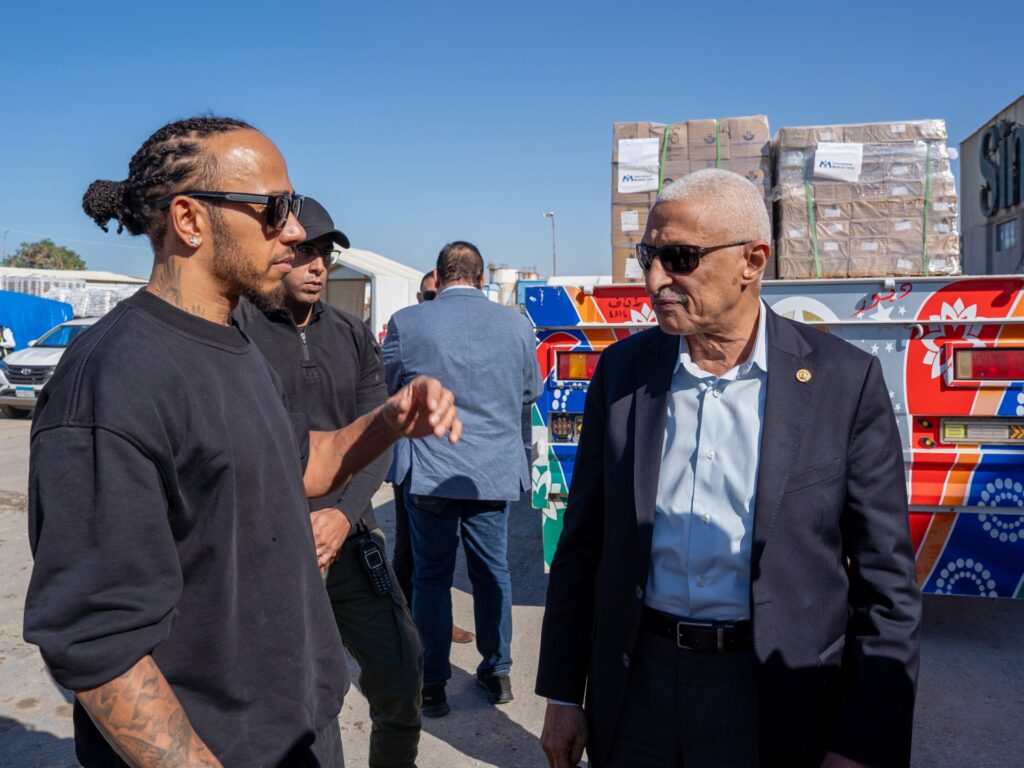
Formula 1 World Champion Lewis Hamilton has made a heartfelt plea for Israel to open the Rafah border crossing between Gaza and Egypt. During his visit to the Egypt-Gaza border, Hamilton witnessed first-hand the dire conditions faced by Palestinians in Gaza, exacerbated by recent heavy rains that have worsened the already critical humanitarian situation.
Hamilton’s visit comes as the humanitarian crisis in Gaza intensifies. The Rafah border, which serves as a vital gateway for Palestinians to exit Gaza and receive essential aid, has been largely closed or restricted, complicating efforts to deliver medical supplies, food, and other critical resources. The blockade and conflict-related restrictions have left Gaza’s population vulnerable to shortages of everything from clean water to basic healthcare.
During his visit, Hamilton highlighted the urgent need for international intervention and greater access to Gaza. He expressed deep concern about the damaging impact of the blockade and ongoing conflict on innocent civilians, many of whom are trapped amidst escalating violence and worsening living conditions.
The recent heavy rains have led to flooding in Gaza, damaging infrastructure, homes, and sanitation facilities. With electricity and water supplies already scarce, the flooding has made the situation almost unbearable for the residents. Hospitals are struggling to operate without reliable power, and clinics face an influx of patients injured by both the weather and continuing hostilities.
Hamilton’s call for Israel to open the Rafah border emphasizes the importance of humanitarian access to ensure that essential aid can reach those in need swiftly. He also called on global leaders and organizations to increase their support for relief efforts in Gaza, highlighting the responsibility of the international community to protect vulnerable populations.
As a prominent global figure, Hamilton’s advocacy brings attention to the plight of Palestinians in Gaza, a region often overlooked amidst geopolitical tensions. His visit underscores how influential voices in sports and entertainment can drive awareness and encourage action toward resolving humanitarian crises.
In addition to Hamilton’s advocacy, several international agencies have been pleading for uninterrupted access to Gaza, warning that delays and restrictions could lead to a catastrophic humanitarian disaster. The UN has reported escalating shortages of medical supplies, food, and clean water, urging all parties to prioritize civilian protection and facilitate aid delivery.
The Rafah border remains a critical transit point for many Palestinians seeking refuge or urgent medical care unavailable within Gaza. Its closure or limited operation exacerbates the hardships faced by Gazans, many of whom are displaced or have lost homes due to recent conflicts.
Hamilton’s visit and subsequent call to action reflect a growing movement of athletes, celebrities, and human rights advocates demanding peace, justice, and humanitarian relief in conflict zones around the world. By bringing his global platform to bear on this urgent issue, Hamilton hopes to inspire change and support for those caught in the crossfire.
The situation in Gaza remains fluid and fragile, with the international community closely monitoring developments. Humanitarian organizations continue to appeal for safer corridors and aid access. Meanwhile, Lewis Hamilton’s efforts help highlight the human face behind headlines, encouraging empathy and solidarity in difficult times.