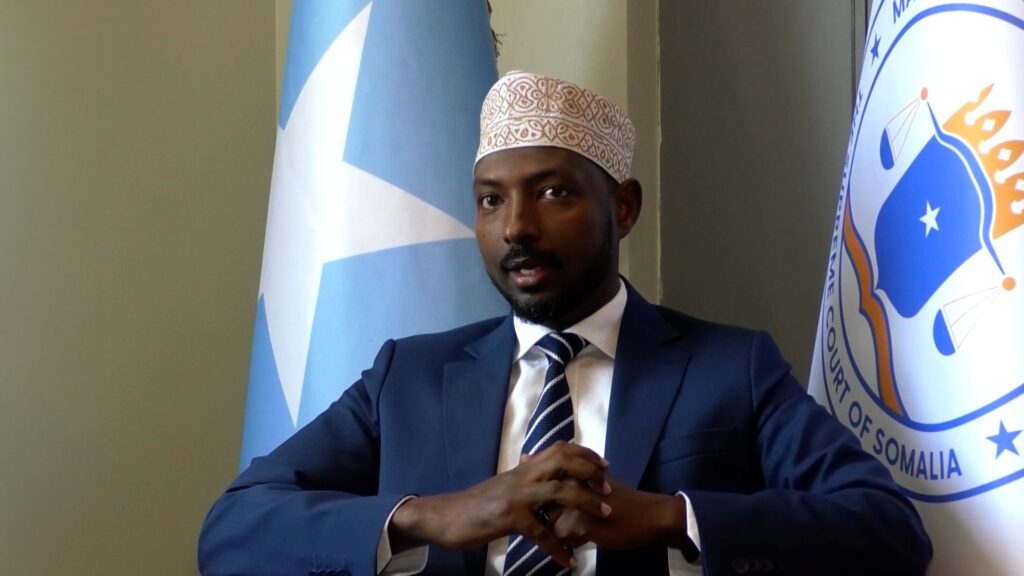
In a significant development in Somalia’s political and judicial landscape, Somalia’s former Chief Justice has reported that more than 300 security forces have militarily occupied the Supreme Court. This event raises serious concerns regarding the independence of the judiciary and the stability of the Somali legal system.
The former Chief Justice’s statement highlights the gravity of the situation, as the Supreme Court is the highest judicial authority in Somalia and is supposed to operate independently from any external pressures or military involvement. The occupation of the court premises by a large number of security personnel could be perceived as an attempt to intimidate the judiciary or influence its rulings.
This occupation has not only disrupted the day-to-day functioning of the court but also sparked widespread concerns among legal experts, human rights organizations, and political analysts about the erosion of judicial autonomy. The Supreme Court plays a critical role in upholding the rule of law, interpreting constitutional issues, and serving as a check on the powers of other branches of government.
The involvement of security forces in judicial matters signifies a blurring of the lines between military authority and civil judicial processes, potentially undermining democratic norms and the separation of powers enshrined in Somalia’s constitution.
Analysts speculate that this military presence might be linked to underlying political conflicts or power struggles within Somalia’s government or between different factions vying for control. The court may have been targeted due to pending rulings on contentious cases or electoral disputes that threaten certain political interests.
The Somali public and international community have expressed alarm over this development. The intervention by security forces could compromise ongoing legal proceedings, deter judges from making impartial decisions, and weaken public trust in the justice system.
Calls for an immediate withdrawal of security forces from the Supreme Court have been made by various local and international entities advocating for the restoration of judicial independence and respect for human rights.
This incident underscores the fragility of Somalia’s institutions amidst ongoing challenges such as political instability, security threats from militant groups, and efforts to establish stronger governance structures.
Restoring the Supreme Court’s autonomy is critical for Somalia’s progress toward rule of law and democratic consolidation. It requires urgent dialogue among political leaders, judicial authorities, security agencies, and civil society to resolve the crisis peacefully and uphold constitutional governance.
In conclusion, the reported militarization of Somalia’s Supreme Court by security forces, as highlighted by the former Chief Justice, represents a critical juncture for the country’s legal and political trajectory. Ensuring the independence of the judiciary is essential to protect democratic principles and promote peace and stability in Somalia.