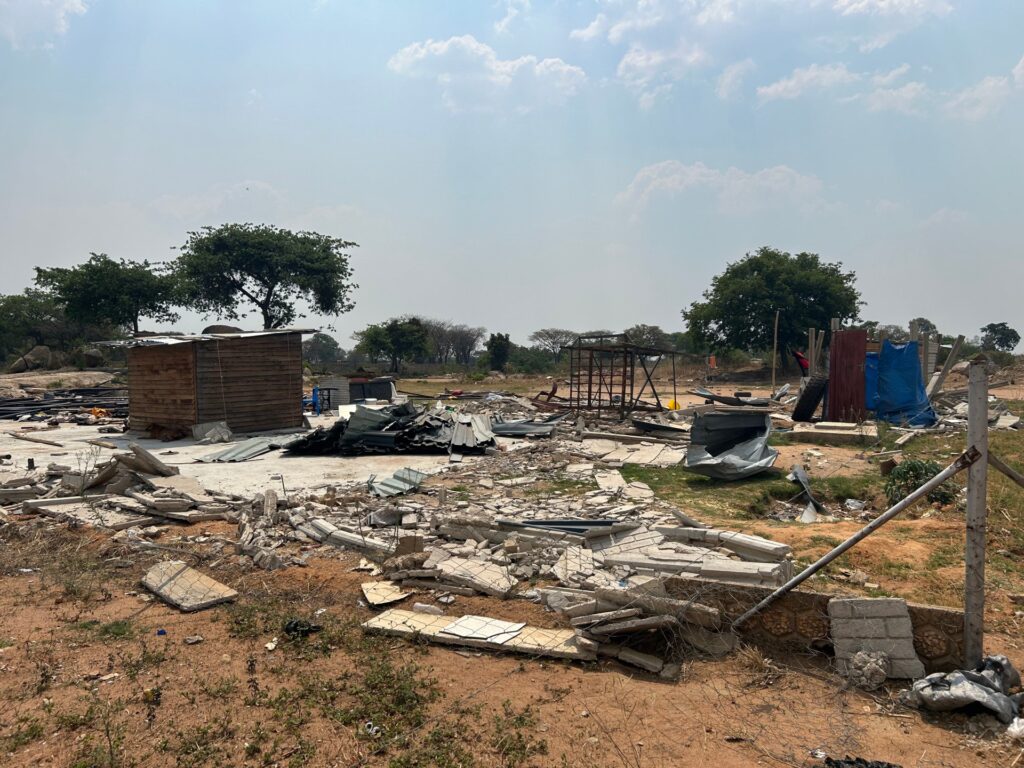
In Harare, a wave of demolitions has left numerous families homeless, sparking outrage and distress among residents who claim they legally purchased their land. These demolitions have destroyed homes where people have lived and built for years, resulting in a humanitarian crisis within the city.
Residents affected by the demolitions assert that they acquired their land through legitimate means, often providing documents and proof to support their claims. Despite this, local authorities have proceeded with the destruction of their property without adequate warning or compensation. The affected families are now struggling to find shelter, with many fearing they will be displaced indefinitely.
The demolitions appear to be part of a broader urban redevelopment or land reclamation initiative by municipal authorities. However, the lack of clear communication and failure to respect property rights has intensified tensions in the area. Human rights organizations and community leaders have condemned the demolitions, calling for urgent intervention to protect vulnerable residents.
Many residents recount how they spent years building their homes and establishing their lives in these neighborhoods, only to see everything demolished overnight. The emotional and economic toll has been devastating, as families lose not only their homes but also their personal belongings and sources of livelihood.
There is also growing concern about the transparency of the land allocation and acquisition process in Harare. Some experts suggest that corruption and mismanagement might be factors contributing to the wrongful demolitions. Calls for a thorough investigation into the matter have been made to ensure justice and restitution for the affected families.
In the wake of the demolitions, local NGOs and aid groups have mobilized to provide emergency assistance, including temporary shelter, food, and counseling services. However, these efforts are only a short-term relief measure.
The Harare city council has issued statements defending the demolitions, citing the need to enforce urban planning laws and remove illegal structures. They argue that the actions are necessary for the city’s development and to prevent uncontrolled urban sprawl.
Despite these claims, the affected families and advocates demand a review of the enforcement actions and plead for the implementation of fair processes that respect citizens’ legal rights. They emphasize the importance of dialogue and consultation in resolving land disputes to prevent further displacement.
As the situation unfolds, it remains critical for stakeholders, including government officials, community representatives, legal experts, and human rights organizations, to come together to find a sustainable solution. Ensuring that no family is left homeless and that property rights are protected will be essential to maintaining social stability in Harare.
The current crisis highlights deeper issues in land administration and urban governance, requiring comprehensive reforms. Without addressing these systemic problems, similar incidents may recur, compounding the challenges faced by urban residents in Zimbabwe’s capital.
In summary, the demolitions in Harare have left many families homeless after years of building on land they claim to have legally purchased. The crisis has exposed critical issues in land management, transparency, and human rights, calling for urgent action to protect affected residents and prevent future injustices.