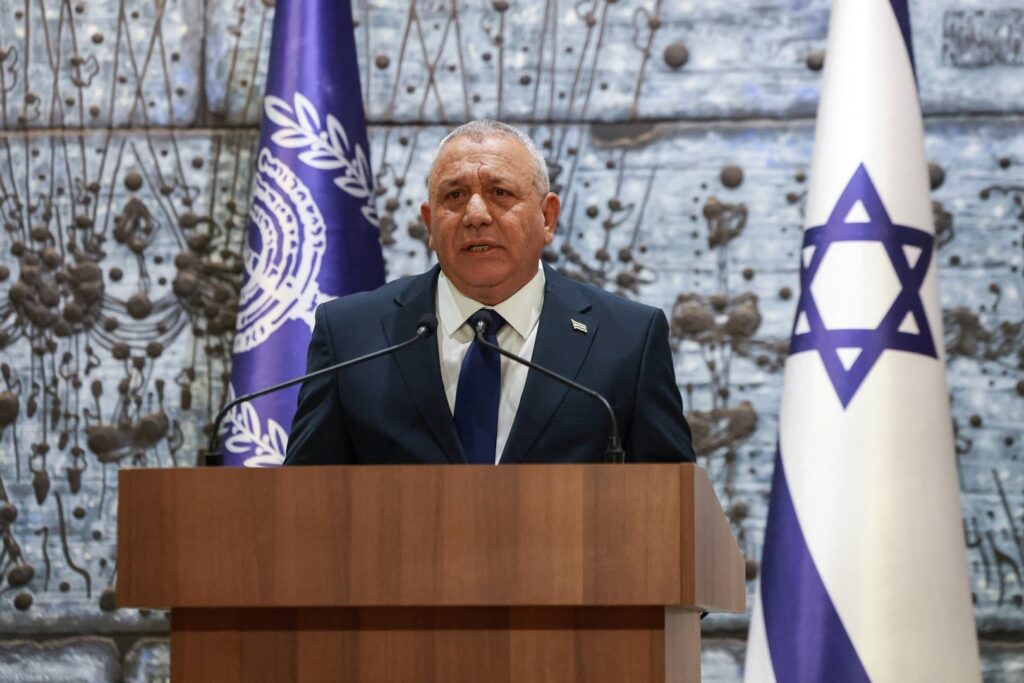
In a critical development in Israeli politics, opposition leader Gadi Eisenkot has been entrusted by President Isaac Herzog with the responsibility of forming a new government. This move comes at a turbulent time for the nation, underscored by Eisenkot’s stark warning about the deteriorating state of Israeli democracy. Eisenkot, a former Chief of Staff of the Israel Defense Forces, has expressed deep concern over political developments that he believes threaten the democratic fabric of the country.
During a recent statement, Eisenkot warned of a looming ‘point of no return,’ where the pillars supporting democracy could be irreversibly weakened. His cautionary remarks highlight the urgency and gravity of the current political climate in Israel, where contentious reforms and governance disputes have sparked widespread debate and unrest.
President Isaac Herzog’s decision to assign Eisenkot the task of government formation signals a strategic effort to stabilize the political landscape. Eisenkot, seen as a unifying figure with a strong military leadership background, faces the challenge of bridging divides within the Israeli parliament and securing a coalition that can govern effectively.
The call to form a new government follows a period marked by political instability and failed coalition talks among various factions. Israeli democracy, while robust, has recently been tested by intense partisan conflicts and legislative initiatives that some critics argue could undermine judicial independence and democratic checks and balances.
Eisenkot’s caution about reaching a ‘point of no return’ resonates with citizens and political analysts concerned about preserving democratic norms and the rule of law in Israel. His leadership during this critical period will be crucial in shaping the country’s future trajectory, potentially steering it away from divisive politics toward a more inclusive and stable governance model.
As Eisenkot begins consultations with different political parties, observers watch closely to see how he navigates the complex coalition-building process. Success in this endeavor is viewed as vital not only for Israel’s political stability but also for maintaining the democratic principles that underpin the nation’s identity.
The international community is also monitoring developments with interest, recognizing that the strength of Israeli democracy has regional and global implications. Eisenkot’s warnings and the current government formation efforts underscore a pivotal moment in Israel’s political history, where the choices made today will reverberate for years to come.
In summary, Gadi Eisenkot’s appointment by President Herzog to form the next Israeli government comes with a sobering message about the fragility of democracy. His leadership will be instrumental in either averting a democratic crisis or confronting the consequences of reaching an irreversible ‘point of no return.’ The unfolding political events in Israel demand careful attention as the country stands at a crossroads between preserving democratic values and navigating profound political challenges.