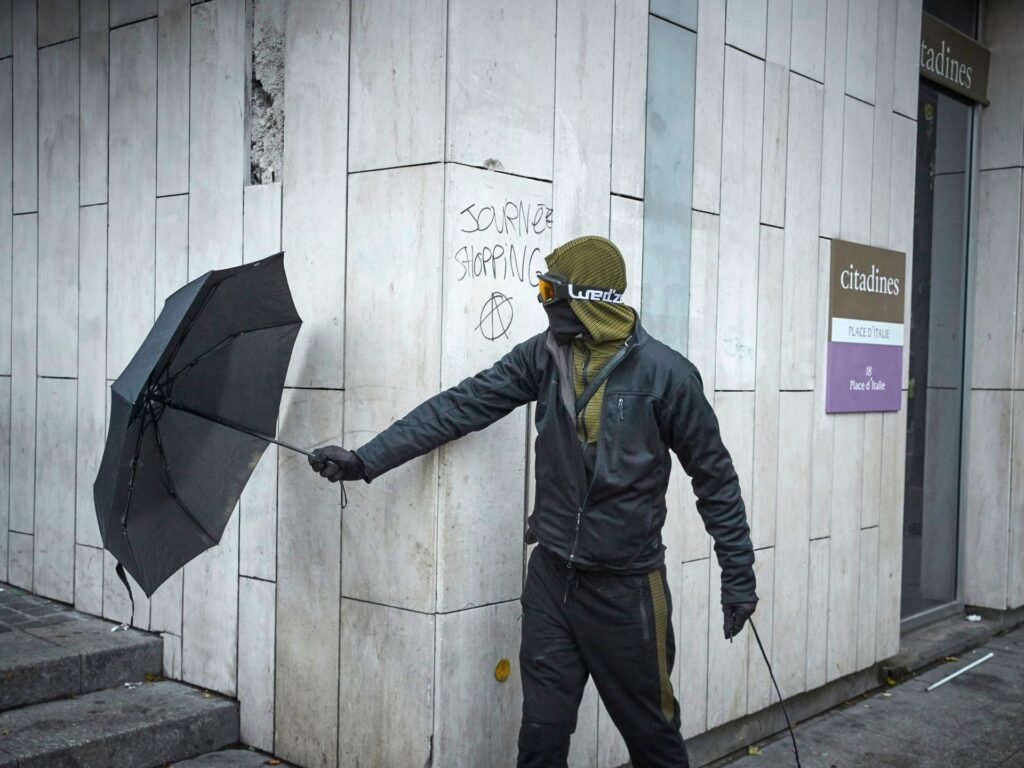
Across Europe, the sight of anarchistic activists clad head-to-toe in black, engaging in intense clashes with police, has become increasingly common. Known as the Black Bloc protesters, these groups are a distinctive presence at demonstrations from Paris to Tirana. Their hallmark attire includes black hoodies, masks, and helmets designed to conceal identity and unify the group visually.
The Black Bloc is not a single organization but rather a tactic adopted by various activists who share anarchist, anti-capitalist, and anti-authoritarian beliefs. This mode of protest emphasizes direct action, often involving property damage and violent confrontation with law enforcement. They reject traditional political channels, preferring to challenge state power and capitalist institutions head-on.
Originating in the 1980s, the Black Bloc tactic rose to prominence during protests against nuclear power and later became synonymous with anti-globalization movements in the late 1990s and early 2000s. Their confrontational approach is aimed at disrupting the status quo, illustrating their belief that systemic change requires radical means.
In countries like France, the Black Bloc has become ingrained in protest culture, frequently appearing at annual May Day demonstrations and during large-scale movements such as the Yellow Vests protests. Clashes often result in significant destruction and injuries, drawing a mix of condemnation and fear from authorities and the public.
In Eastern Europe, including Albania and surrounding regions, the Black Bloc tactic has less historical rooting but is gaining traction as political dissatisfaction grows. These activists target symbols of government authority and corporate power alike, signaling widespread unrest.
Critics argue that Black Bloc tactics overshadow peaceful protestors and undermine broader social movements by focusing on violent spectacle. However, supporters contend that such tactics draw necessary attention to injustices and demonstrate resistance against oppressive systems.
Law enforcement faces substantial challenges dealing with Black Bloc groups due to their anonymity and unpredictability. The unity in dress and movement allows individuals to blend in and evade identification, complicating police efforts to enforce order.
Social media has amplified the Black Bloc’s visibility, with footage of clashes rapidly spreading online, often glamorizing their defiance and skillful maneuvering. This digital exposure emboldens new activists while intensifying government repression.
Despite attempts by authorities to curb their influence through arrests and legislation, Black Bloc activists continue to appear at protests across Europe. Their presence highlights the persistent undercurrents of dissent within European societies and underscores the tensions surrounding freedom of expression, state power, and social justice.
Understanding the Black Bloc requires recognizing the diversity and complexity of its members, motivations, and goals. They embody a radical critique of contemporary political and economic systems, making them a controversial yet compelling force in European protest culture.