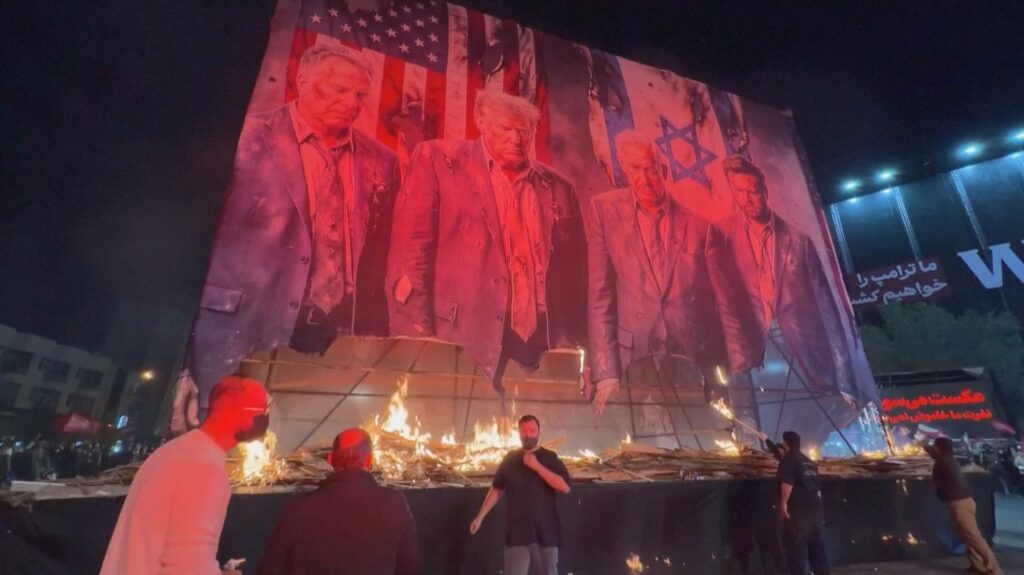
At a recent rally held in Tehran, a gigantic banner featuring images of US President Donald Trump, Ohio gubernatorial candidate J.D. Vance, and Israeli Prime Minister Benjamin Netanyahu was set ablaze by demonstrators. The act symbolized strong disapproval and anger towards the political figures, reflecting Iran’s tense diplomatic relations with both the United States and Israel. The rally highlighted ongoing grievances against US foreign policy and Israeli actions in the Middle East, serving as a platform for expressing dissent through dramatic public acts.
This event was widely covered by local and international media, capturing the moment as a significant expression of political protest in Iran. Organizers of the rally accused Trump, Vance, and Netanyahu of perpetuating hostility against Iranian sovereignty and regional stability. Participants chanted slogans condemning perceived aggression and interference.
Burning banners have been a traditional method of protests in the region, often used to send a clear message of resistance. This instance involving prominent political figures from the US and Israel intensified the symbolism, underscoring deep-rooted geopolitical tensions.
The burning took place amid ongoing international debates about US sanctions on Iran and concerns over Israel’s role in the Middle East conflicts. Both the United States and Israel regularly face criticism from Iranian officials and demonstrators. The inclusion of Vance, a US political candidate known for his conservative stance, marked an expansion of protest targets, linking domestic US politics with broader international disputes.
Reactions to the event varied globally, with some seeing it as a legitimate form of political expression and others as provocative and inflammatory. Analysts suggest that such demonstrations serve to rally domestic support and reinforce nationalistic sentiments in Iran. They also reflect the persistent volatility in US-Iran and Israel-Iran relations.
Overall, the burning of the giant banner at the Tehran rally is emblematic of the ongoing challenges and hostilities in Middle Eastern geopolitics, highlighting the deep divisions and strife that continue to shape the region’s political landscape.