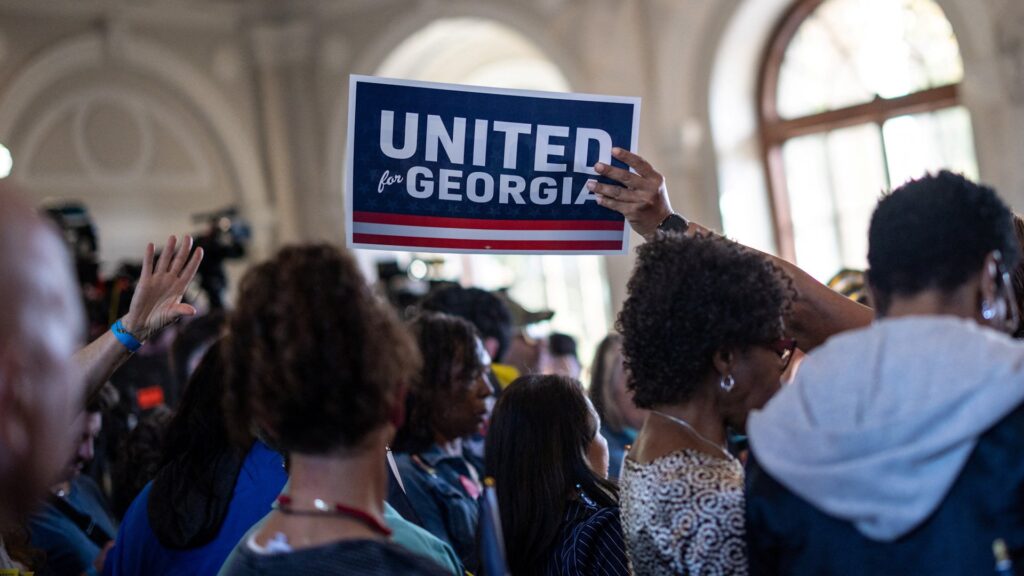
As the United States midterm elections approach, Georgia Senate candidates are making their final efforts to connect with voters and secure a win in this highly contested battleground state. The race has drawn significant national attention, highlighting the importance of Georgia in shaping the balance of power in the Senate.
Democratic incumbent Senator Jon Ossoff and his Republican challenger Mike Collins have intensified their campaigns, focusing on key issues that resonate with Georgia voters. Both candidates have crisscrossed the state, attending rallies, engaging in town halls, and utilizing media outreach to make their final pitches ahead of Election Day.
Senator Ossoff, representing the Democratic Party, has emphasized his legislative achievements, particularly in areas such as healthcare expansion, economic development, and voting rights protections. He has framed his campaign around continuing progress and protecting the Democratic gains made in the state since the 2020 elections, when Georgia played a pivotal role in shifting Senate control.
His opponent, Mike Collins, a Republican with a background in business and military service, has critiqued Ossoff’s tenure, focusing on issues like government spending, border security, and the social policies promoted by Democrats. Collins has sought to energize the conservative base, underscoring commitments to economic growth, law enforcement support, and conservative family values.
The stakes are high as control of the U.S. Senate could hinge on this race. Georgia’s diverse electorate and recent political shifts make it one of the most unpredictable and fiercely contested contests of the midterms. Voter turnout efforts from both parties have been intense, with significant mobilization in urban, suburban, and rural areas.
Political analysts argue that local issues such as inflation, job creation, education, and pandemic recovery efforts are pivotal in influencing voter decisions. Additionally, national topics like Supreme Court appointments, climate policy, and immigration continue to play critical roles in campaign narratives.
Community leaders and advocacy groups have also been active in getting out the vote, emphasizing the importance of participation in the democratic process. Early voting numbers suggest a high level of engagement from Georgians, indicative of the race’s competitiveness.
As Election Day nears, both Ossoff and Collins are appealing to undecided voters, seeking to secure every possible vote. Their final speeches and advertisements are aimed at highlighting contrasts in vision and policy for Georgia’s future.
The outcome of the Georgia Senate race will not only determine the state’s political direction but will also have significant implications for the national legislative agenda. With control of the Senate possibly shifting depending on this race, the eyes of the nation remain fixed on Georgia as voters prepare to cast their ballots.