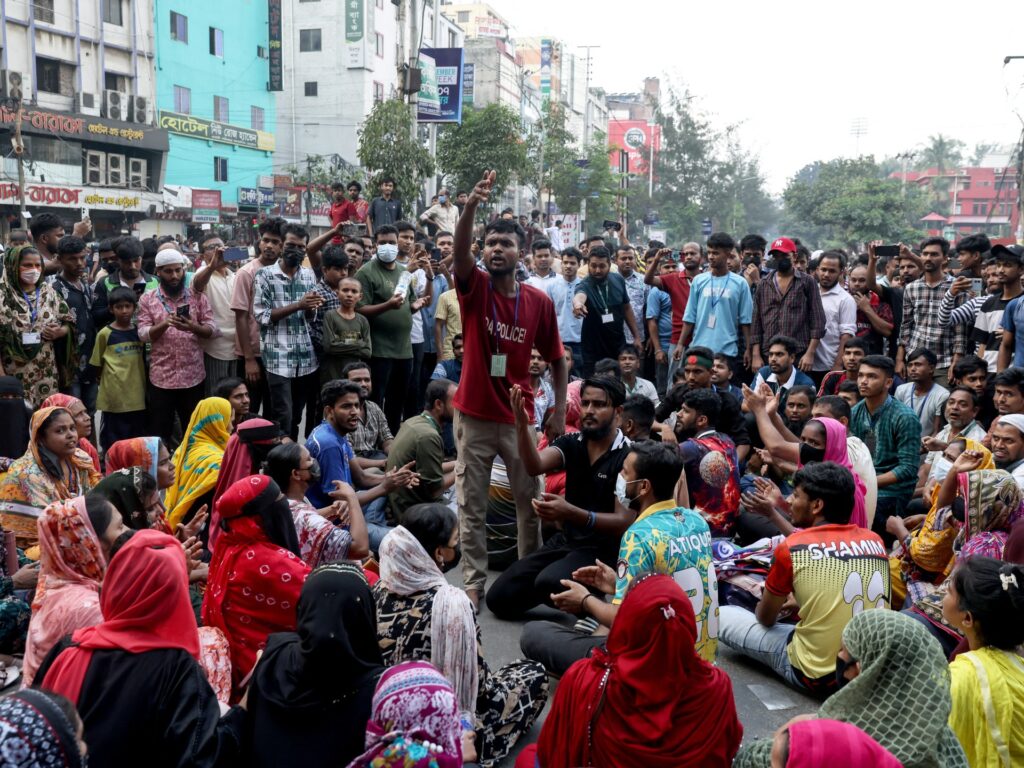
Workers in Bangladesh’s vital garment sector have been staging protests for the third consecutive day, causing significant disruptions across multiple factories. As the country’s largest export industry, the garment sector employs millions and plays a crucial role in the economy. The ongoing demonstrations stem from workers’ demands for a minimum wage increase in response to the soaring inflation and rising living costs faced by laborers.
The protests have led to operational halts, affecting production schedules and creating concerns about supply chain delays globally. Amid rising inflation, many workers claim their current wages are insufficient to cover basic necessities like food, housing, and healthcare. Labor unions organizing these protests emphasize that the garment workers, despite being the backbone of Bangladesh’s export economy, have not seen real wage growth for years.
Factory owners and business groups have expressed apprehension regarding the feasibility of significant wage hikes, citing tight profit margins and competitive pressures from international buyers. However, workers argue that without fair compensation, their livelihoods are under threat, which could ultimately impact the sustainability of the garment industry.
The government has been called upon to mediate between labor representatives and factory owners to find a negotiated solution. Officials acknowledge the importance of balancing economic stability with workers’ welfare to maintain Bangladesh’s position as a leading garment exporter.
Protests have occurred in major garment production hubs such as Dhaka and Chattogram, where thousands of workers gathered demanding immediate action on wage reforms. The disruptions have also raised questions about worker safety and the potential for escalation if their concerns remain unaddressed.
International garment brands sourcing from Bangladesh are closely monitoring the situation, given the potential impact on production timelines and reputational risks associated with labor disputes. Some brands have urged factories to engage constructively with workers and ensure peaceful resolutions.
Economic experts warn that prolonged unrest in the garment sector could have far-reaching consequences for Bangladesh’s export revenues, which constitute a significant portion of the national economy. They advocate for a balanced approach that includes wage adjustments linked to inflation, improved working conditions, and social protections for workers.
This current wave of protests underscores broader social challenges faced by developing countries reliant on low-cost manufacturing. The garment workers’ demand for fair wages amid inflation highlights the tensions between economic development, labor rights, and global market competition.
In summary, Bangladesh’s garment industry is at a critical juncture, with worker protests highlighting urgent demands for increased wages and better income security. The outcome of negotiations and responses by factory owners and the government will be pivotal in shaping the future of this key economic sector and the welfare of millions of workers dependent on it.