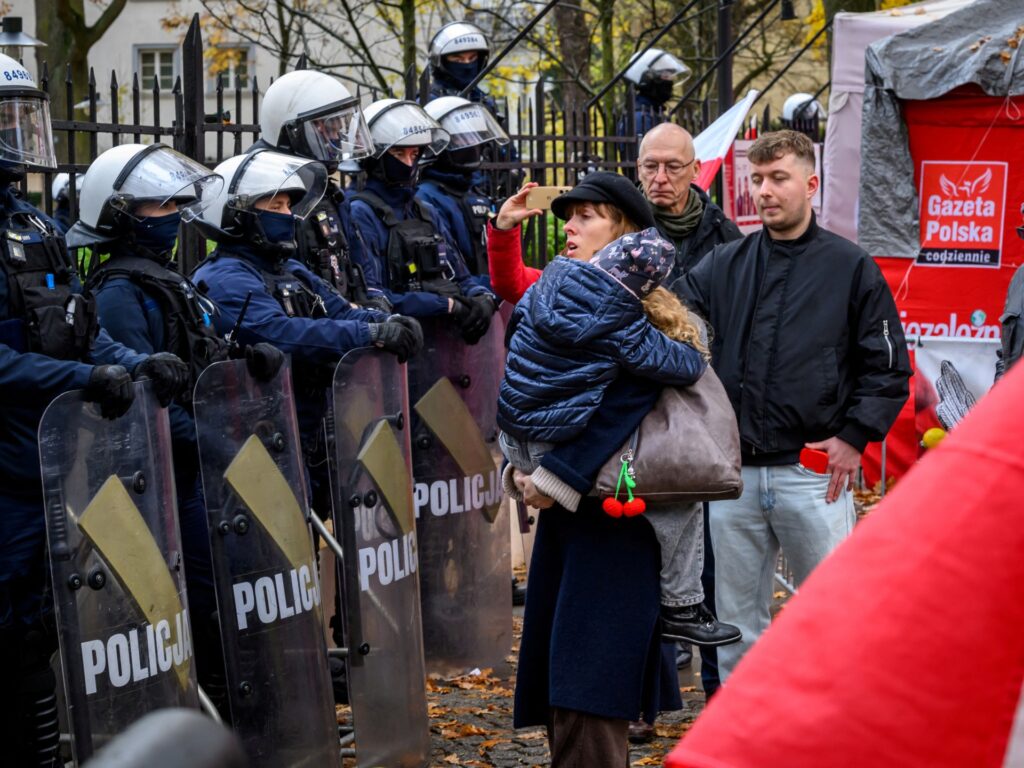
Recent widespread protests outside Poland’s Constitutional Court have brought international attention to a deepening judicial crisis in the country. At the heart of the turmoil is a fundamental conflict over the independence of the judiciary, a cornerstone of democratic governance.
Poland’s centrist government asserts it is taking necessary steps to restore judicial independence after what it describes as years of far-right political interference. According to government officials, previous administrations undermined the courts’ impartiality through appointments and policy directives that aligned the judiciary closely with far-right political agendas.
The controversy began when the government initiated reforms aimed at rebuilding the Constitutional Court’s autonomy. These reforms include revising the appointment processes of judges, adjusting court procedures, and enhancing transparency measures. Proponents argue these changes will prevent political overreach and ensure that the judicial branch operates free from undue influence.
However, critics contend that the government’s efforts mask attempts to consolidate power and weaken judicial checks on executive authority. Opposition parties and legal experts warn that some reforms could allow political figures to exert more control over court decisions, eroding the separation of powers integral to democracy.
The protests across Poland symbolize a nation divided, with citizens demanding clarity on the true intentions behind the reforms. The demonstrators emphasize that judicial independence is not merely an abstract principle but a vital protector of human rights, rule of law, and democratic safeguards.
International observers have voiced concern over the rapid developments in Poland’s judiciary. The European Union, in particular, has highlighted potential breaches of EU values regarding judicial independence and is monitoring the situation closely to ensure compliance.
Meanwhile, Polish courts face operational challenges amid the unrest, with judges expressing uncertainty about their roles and the court’s future direction. Legal practitioners stress the importance of maintaining an impartial judiciary for social stability and economic confidence.
The government maintains that dialogue and cooperation with all stakeholders are ongoing and that reforms will ultimately enhance the judiciary’s credibility and effectiveness. Still, the polarized climate indicates that reaching consensus may prove difficult in the near term.
Historical context adds depth to the crisis, as Poland’s post-communist transition included efforts to establish strong democratic institutions. The present dispute reflects clashing visions for the country’s political future and tests the resilience of its democratic framework.
In summary, the protests outside Poland’s Constitutional Court illuminate a significant constitutional crisis involving judicial independence, political influence, and democratic principles. The outcome will likely shape Poland’s governance and its standing within the European and global community for years to come.