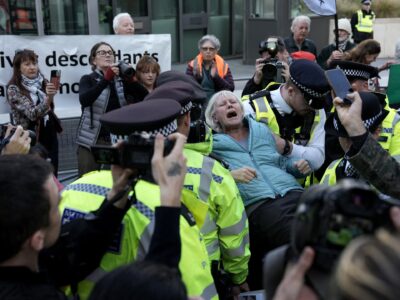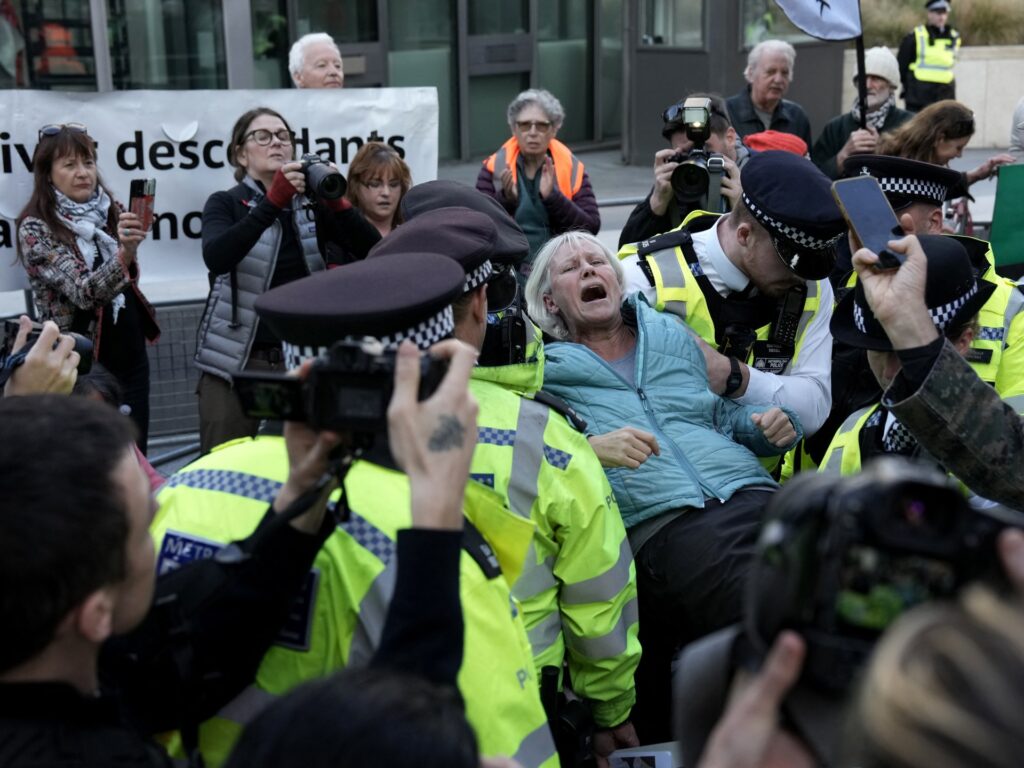
In the days leading up to a significant UK Supreme Court appeal challenging the ban on Palestine Action, hundreds of protesters took to the streets in London and Edinburgh to voice their opposition. The protests, marked by their size and intensity, resulted in the arrest of 139 individuals in London alone as police sought to manage the demonstrations.
Palestine Action, an activist group focused on actions against companies involved in the Israeli-Palestinian conflict, was recently proscribed, leading to heightened tensions and public outcry among its supporters. This ban has sparked a vigorous debate about the balance between national security and the right to protest.
The demonstrations in both cities reflected the growing unrest and dissatisfaction among those who view the ban as a suppression of political expression and activism. Protesters gathered to demand the reversal of the proscription and to raise awareness about their cause.
London police were prepared for the protests but faced challenges due to the number of participants and the passion driving the crowds. The arrests were made on various charges, including public order offenses, as the police aimed to maintain peace and prevent any escalation into violence.
In Edinburgh, the turnout was significant though smaller compared to London. Demonstrators in the Scottish capital echoed similar sentiments, emphasizing the importance of activism and the right to dissent within a democratic society.
The timing of the protests, just days before the Supreme Court is set to hear an appeal against the group’s proscription, adds a critical dimension to the debate. The court’s decision will have far-reaching implications for how the UK government handles political organizations and activist groups deemed controversial or threatening.
Supporters of Palestine Action argue that the group’s activities are a form of legitimate protest against occupation and injustice, and that the ban is an overreach that stifles free speech. Critics, however, claim that the group’s methods cross legal boundaries and that the proscription was necessary to prevent unlawful activities.
The police response to the protests has also been scrutinized, with some human rights advocates calling for careful review of the arrests and crowd control tactics used. The balance between enforcing the law and respecting civil liberties continues to be a delicate issue in the unfolding situation.
As the Supreme Court prepares to make its ruling, attention remains focused on the broader questions surrounding activism, security, and the rights of citizens to engage in political movements. The outcome of this legal battle is poised to set a precedent for future cases involving protest groups in the UK.
The events highlight the complexities and challenges faced by authorities in maintaining public order while safeguarding democratic freedoms. The coming days will be crucial in determining the legal and social landscape relating to activism and dissent in the country.