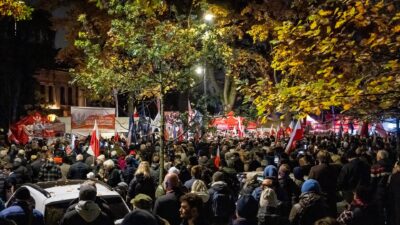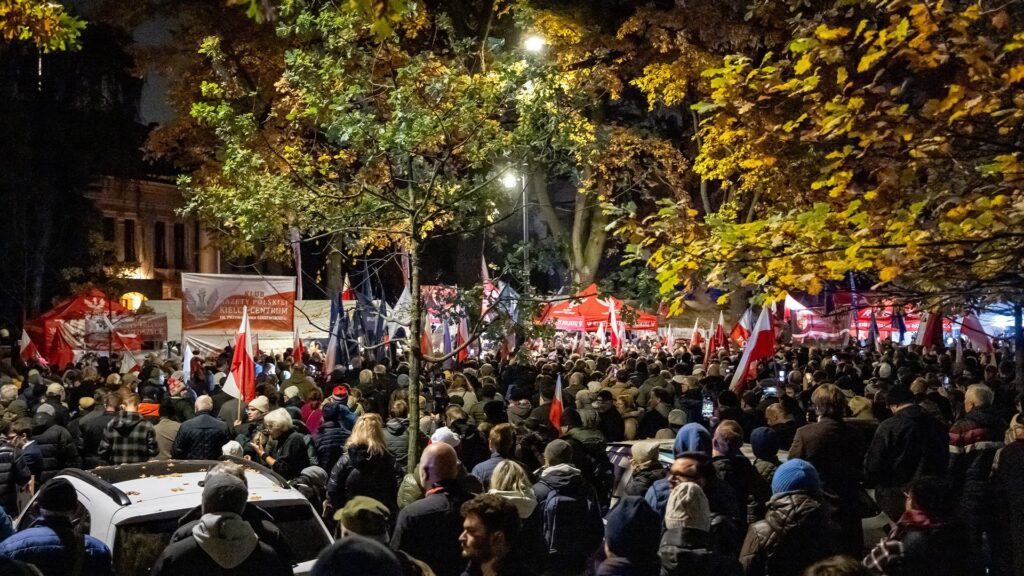
In an unprecedented move, Poland’s president abruptly cut short his trip to Senegal to join protests unfolding in the country. The protests are in response to a mounting constitutional crisis centered around Poland’s top court, a development that has captivated national and international attention alike.
The constitutional crisis emerged when controversial rulings by Poland’s Constitutional Tribunal sparked a fierce debate over the balance of power between the judiciary and other branches of government. Critics argue that these rulings undermine judicial independence and threaten democratic checks and balances, while supporters claim they are necessary for reform.
The president’s decision to physically join the protestors marks a significant escalation in the conflict, signaling his solidarity with the demonstrators who are facing off with law enforcement officials. Police presence at the protests has been heavy, and confrontations have ensued as authorities attempt to disperse crowds demanding judicial reforms and greater protection of constitutional principles.
Observers note that the president’s presence may serve both as a morale boost for protestors and a clear message to political opponents about his stance on the crisis. The protests have brought together a diverse coalition of citizens, including legal professionals, civil rights activists, and ordinary Poles concerned about the future of their constitution.
This crisis follows months of escalating tensions between the government and the judiciary, with recent court decisions perceived by many as politically motivated. The constitutional tribunal’s rulings have questioned key aspects of Polish law and governance, causing upheaval across political and civil society spheres.
Internationally, the crisis has raised alarms about the state of democracy in Poland. European institutions and human rights organizations have called on all parties to seek dialogue and respect the rule of law. The unrest also underscores broader challenges faced by Central and Eastern European countries grappling with governance reforms and democratic backsliding.
The president’s protest participation is a dramatic development that underscores the urgency of the crisis. It highlights the deeply polarized environment in Poland, where judicial reforms have become a flashpoint for wider debates on democracy, sovereignty, and the rule of law.
As the situation remains fluid, political leaders and civil society are watching closely to see if dialogue can replace confrontation and if a resolution can be found that upholds constitutional integrity while addressing the concerns of various factions.
In summary, Poland’s president joining the protests amid the constitutional crisis at the top court is a significant and symbolic act reflecting the gravity of the political and judicial turmoil currently gripping the nation. The coming days will likely be critical in determining the path forward for Poland’s democracy and legal system.