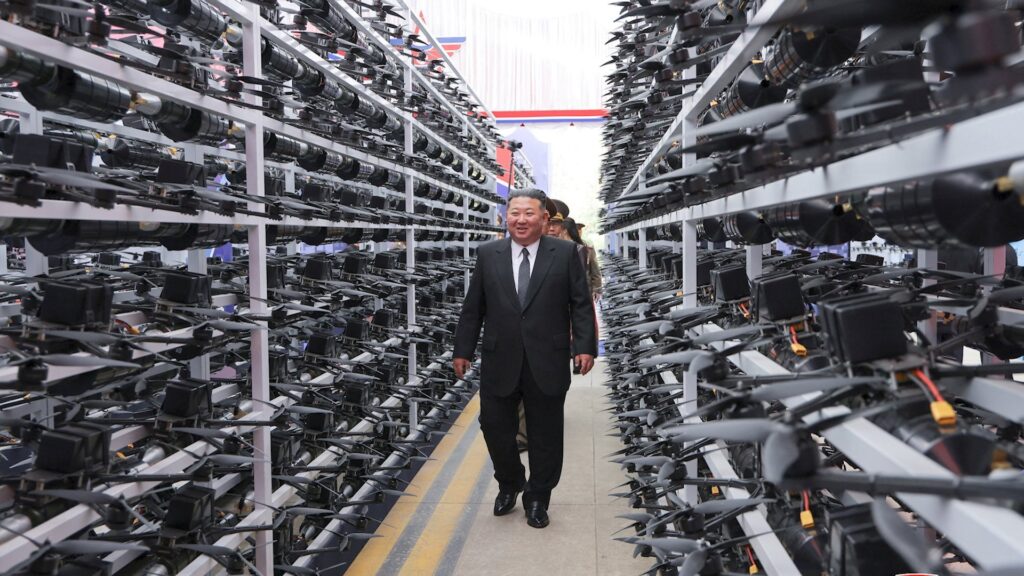
In a recent directive signaling a significant strategic focus, North Korean leader Kim Jong Un has called for the country to achieve “absolute superiority” in drone technology. This call comes amid growing global attention to unmanned aerial vehicles (UAVs) as critical assets in modern warfare and surveillance.
Kim Jong Un’s emphatic demand highlights North Korea’s intent to intensify development and deployment of drones as part of its broader military modernization efforts. The leader’s focus on drones underscores their strategic value in intelligence gathering, reconnaissance, and potential offensive operations.
The directive was issued during a high-level military meeting where Kim emphasized the necessity for groundbreaking advancements in drone capabilities. He urged scientists, engineers, and military officials to innovate and expand North Korea’s technological edge in UAV design, endurance, stealth, and payload capacity.
North Korea has previously demonstrated its interest in drone technology, reportedly developing various models for tactical and reconnaissance purposes. However, Kim’s call for “absolute superiority” suggests a push for more sophisticated, possibly autonomous, drone fleets that could challenge regional adversaries and bolster North Korea’s deterrence posture.
Experts believe that achieving such technological superiority would require significant investments in research and development, potentially leveraging advances in artificial intelligence, communications, and materials science. The goal would be to produce drones capable of executing complex missions with precision and reliability, providing North Korea with a strategic advantage.
The move also serves as a message to the international community about Pyongyang’s commitment to advancing its military technology despite international sanctions and diplomatic pressures. Enhanced drone capabilities could alter the security dynamics in Northeast Asia, complicating the defense strategies of neighboring countries and their allies.
Analysts view Kim’s directive as part of a broader trend where major military powers are prioritizing UAVs for their versatility and effectiveness in modern conflicts. Drone technology offers a cost-effective means to conduct surveillance, strike targets, and support ground forces while minimizing risks to personnel.
North Korea’s pursuit of advanced drone technology may also have implications for export and proliferation risks, as the regime has previously been reported to sell military technology to other nations and non-state actors.
In conclusion, Kim Jong Un’s call for “absolute superiority” in drone technology marks a pivotal moment in North Korea’s military strategy. It signals a renewed emphasis on technological innovation aimed at achieving asymmetric advantages and sustaining the country’s military deterrence amid a complex and evolving geopolitical landscape.