Colombia is at a critical junction as President Alfonso de la Espriella’s administration moves to slash funding for the country’s transitional justice court, a vital institution dedicated to addressing war crimes and human rights violations stemming from decades of conflict. The court, which plays a central role in Colombia’s efforts toward reconciliation, is now under threat due to budget cuts amidst broader fiscal tightening.
The Special Jurisdiction for Peace (JEP), established as part of the 2016 peace agreement with the FARC guerrillas, has been instrumental in uncovering truth, prosecuting perpetrators, and providing a platform for victims to seek justice. However, President de la Espriella’s recent proposal to reduce the court’s budget by an estimated 30% has sparked widespread concern among human rights advocates and victims alike.
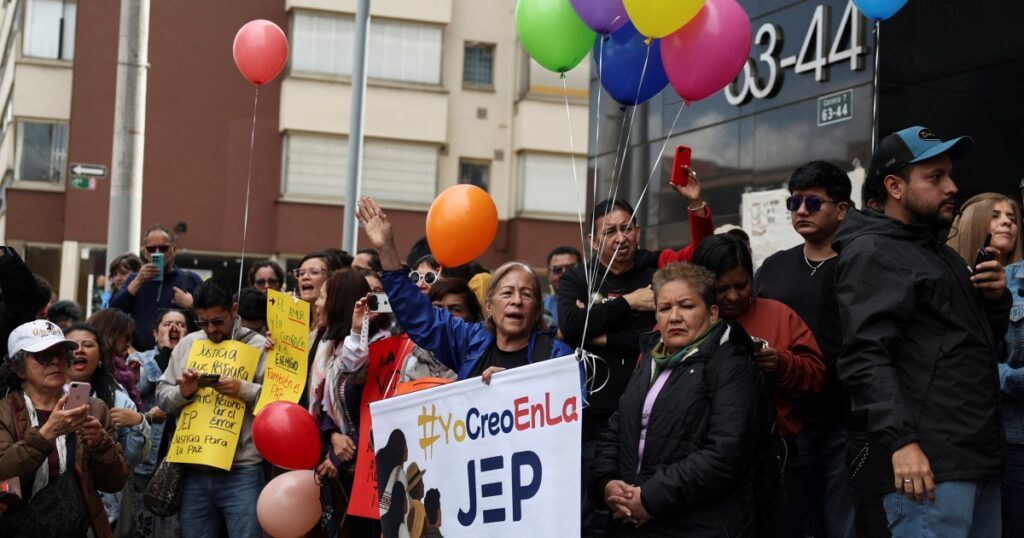
Victims of war crimes fear that diminished resources could undermine investigations, delay proceedings, and ultimately deny justice to those who have suffered immeasurably. For many Colombians, the court symbolizes hope and a break from a painful past marked by violence, displacement, and impunity.
Critics argue that cutting funds at this juncture betrays Colombia’s commitment to international human rights norms and threatens to stall the fragile peace process. The move could also signal a shift in political priorities away from accountability and toward forgetting the atrocities endured by thousands.
The transitional justice court operates not only as a judicial entity but also as a reconciliatory mechanism, offering restorative justice to communities affected by the internal armed conflict. Reductions in funding may impact the court’s ability to protect witnesses, carry out field work, and maintain its outreach programs – all crucial for its effectiveness.
President de la Espriella’s administration justifies the cuts by citing economic constraints and the need to reallocate resources amid competing national demands. Nonetheless, opponents emphasize that investing in justice mechanisms is fundamental for sustainable peace and cannot be sacrificed for short-term fiscal gains.
International organizations and the United Nations have also expressed apprehension about the budget proposals, urging the Colombian government to uphold its obligations to ensure justice and reparations for conflict victims.
Colombia’s national congress is soon expected to debate the funding proposal, providing a platform for various stakeholders to engage in discussions on the future of transitional justice in the country.
Legal experts warn that any reduction in the court’s operational capacity could compromise ongoing cases related to serious human rights abuses, thus undermining the credibility of Colombia’s justice system on the global stage.
Communities affected by the conflict remain vigilant, with representatives voicing their alarm and calling for sustained international support to preserve the gains made in truth and reconciliation efforts.
The controversy highlights the delicate balance between economic austerity measures and commitments to human rights accountability in post-conflict recovery scenarios.
Should the budget cuts proceed, the long-term ramifications could include increased impunity, diminished victim participation, and a setback in the nation’s journey toward healing and justice.
As Colombia grapples with this challenge, global observers stress the importance of reaffirming the dedication to transitional justice frameworks, which are essential to peacebuilding and securing human rights for future generations.