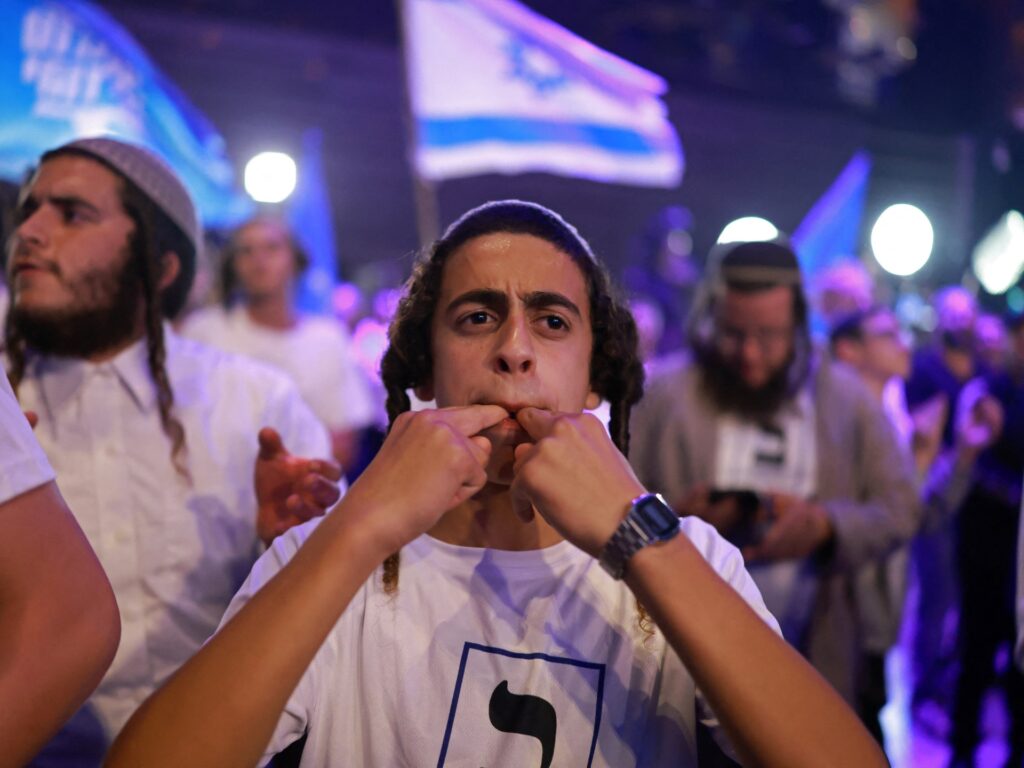
Israel stands at a political crossroads as its recent election results leave the nation grappling with an uncertain future. Both major political blocs have fallen short of securing a clear majority, igniting a tense debate about the path forward. The election campaign was marked by two dominant themes: the demand for political change and the persistent undercurrent of anti-Palestinian sentiment.
The incumbent right-wing government and the opposition left-wing alliance each failed to achieve the 61-seat threshold required in the 120-seat Knesset. This impasse has propelled Israeli parties into a complex political calculation, where the usual alliances and enmities are being reconsidered. At the heart of the dilemma lies a significant taboo: the prospect of forming a coalition with Arab parties, which historically have been kept at arm’s length from government due to ideological and security concerns.
For decades, the Israeli political landscape was starkly divided, with Jewish parties predominantly ruling while Arab parties remained marginalized. This election has brought to the fore the potential power that Arab parties wield in tipping the balance of power. Their inclusion in coalition talks, however, challenges deep-seated prejudices and fears among many Jewish Israelis, who worry about security and the country’s Jewish identity.
Political leaders are now confronted with a stark choice. They can attempt to break the longstanding taboo and extend a hand to Arab political factions, thereby fostering inclusion and a more representative government. Alternatively, they may call for another round of elections, hoping that a clearer mandate can be established to avoid the complications of a coalition government involving Arab parties.
The potential inclusion of Arab parties in government has elicited mixed reactions across Israeli society. On one hand, it promises a breakthrough in the nation’s democratic fabric by potentially addressing Arab citizens’ concerns and improving their political representation. On the other hand, it stokes fears among right-wing factions and nationalist groups who view such alliances as a threat to Israel’s security and Jewish majority.
This election also underscores a broader tension within Israeli society — the struggle between advancing change and maintaining entrenched anti-Palestinian sentiments. The ongoing Israeli-Palestinian conflict, territorial disputes, and cultural divisions heavily influence political alignments and voter behavior. These factors contribute to the polarized and fragmented nature of Israeli politics, complicating efforts to form stable governments.
International observers are closely monitoring the developments in Israel, aware that the outcome will have significant implications not only for domestic policy but also for regional stability. The potential for renewed elections has raised concerns about political fatigue among Israeli voters and the possibility of worsening divisions.
As parties deliberate their next move, the Israeli electorate remains anxious. The decision to either break with past taboos by incorporating Arab allies or to risk further election campaigns encapsulates the broader struggles facing Israeli society: the desire for meaningful change counterbalanced by the persistent weight of historical grievances and security concerns.
In sum, Israel’s election has brought to light the profound challenges within its democracy. The choices made in the coming weeks will shape not only the composition of the government but also the future trajectory of Israeli society and its approach to coexistence with its Arab citizens and neighbors.