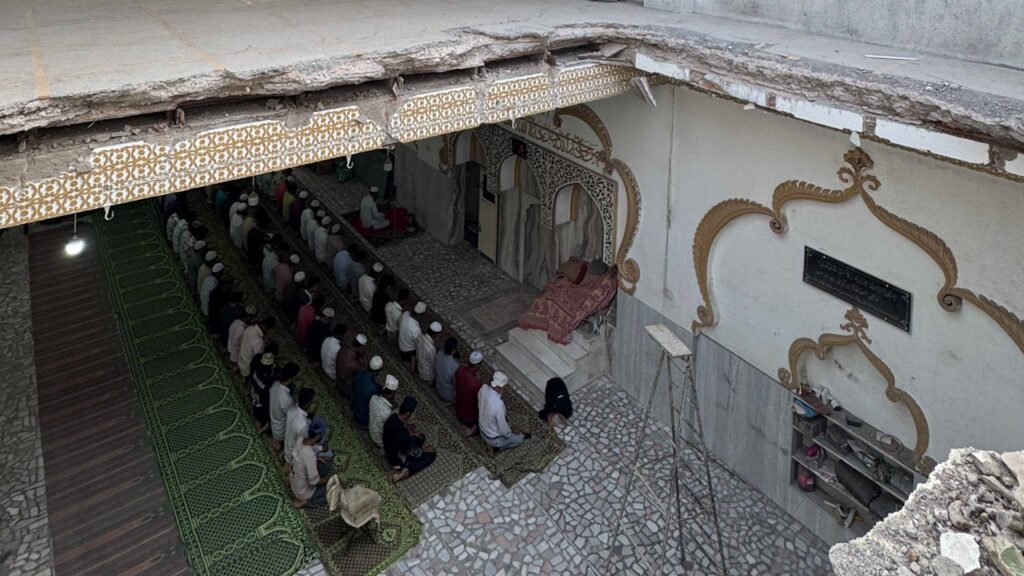
The historic Shahi Mosque in Ujjain, India, which stands as a testament to over 600 years of cultural heritage, recently faced a grave threat during a road-widening project meant to accommodate a large Hindu pilgrimage. The mosque’s minaret collapsed amidst demolition efforts, sparking widespread concern and debate about the preservation of India’s rich architectural past.
Located in the heart of Ujjain, a city revered for its religious significance and ancient monuments, the Shahi Mosque has been an integral part of the local community for centuries. This mosque not only serves as a place of worship but also acts as a symbol of India’s diverse history and architectural beauty.
The recent demolition work was initiated by local authorities to facilitate the expansion of a road heavily used by pilgrims visiting Hindu temples. However, this decision met with resistance from heritage conservationists and members of the Muslim community, who feared that the historic structure might be irreparably damaged.
Tragically, during the demolition, the mosque’s minaret—a tall, slender tower often used to call the faithful to prayer—collapsed. This event was met with shock and anger among residents and historians, who condemned the lack of adequate protective measures for such a prized monument.
The incident has raised several critical issues about urban development and heritage conservation in India. While infrastructure improvements are essential, these must be balanced with the preservation of historical sites that contribute to the nation’s cultural mosaic.
Experts emphasize the importance of thorough assessments before undertaking projects near heritage structures. They advocate for alternative routes or construction methods that minimize the impact on such sites.
Local community leaders have called for urgent action to stabilize and restore the Shahi Mosque. They stress that protecting monuments like these plays a vital role in fostering communal harmony and respecting India’s pluralistic society.
Government officials have promised an inquiry into the collapse and assured steps will be taken to safeguard remaining parts of the mosque. However, activists remain vigilant, urging for stringent policies to prevent similar incidents in the future.
The Shahi Mosque’s plight has drawn attention from national and international heritage organizations, highlighting the broader challenges faced in preserving South Asia’s architectural legacy amidst rapid urbanization.
This incident serves as a poignant reminder of the need for a measured approach to development that honors and protects the historical narratives embodied in India’s ancient structures.
As India continues to grow and modernize, the story of the Shahi Mosque in Ujjain underscores the delicate balance needed between progress and preservation—a balance that will define the nation’s cultural landscape for generations to come.