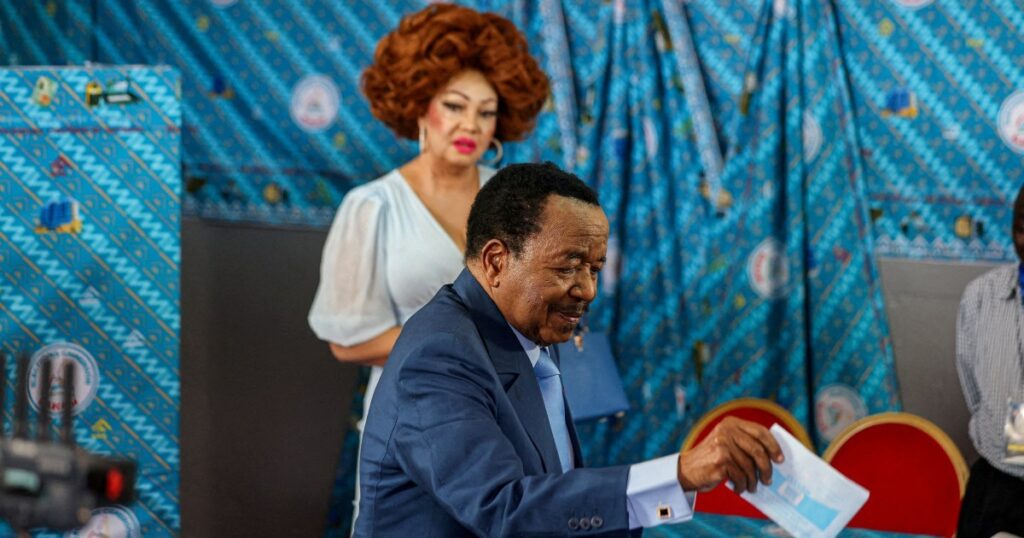
President Paul Biya’s return to Cameroon has reignited widespread speculation and debate about the future of his presidency and the succession of power in the country. Having ruled Cameroon since 1982, Biya is one of Africa’s longest-serving leaders, and his continued leadership raises many questions about the political direction of the nation.
As Biya resumes his duties, Cameroonians are closely watching the appointments he will make, particularly concerning the position of vice president. The role of vice president is critical as it often signals the potential successor to the presidency, especially in a political climate where succession planning has been a subject of much discourse.
The question on many minds is whether Biya, now in his late 80s, can effectively continue to govern a country facing complex challenges such as political unrest, economic pressures, and social divisions. His longevity in power has come with both praise for political stability and criticism for perceived authoritarian tendencies and delayed political reforms.
Observers speculate that the vice presidential appointment could mark a strategic move to stabilize the ruling party and reassure both domestic and international stakeholders about a smooth transition of power. However, the Cameroonian constitution does not explicitly define the process or powers of a vice president, leaving room for political maneuvering.
Political analysts suggest that Biya might choose a loyalist or a member of his inner circle, someone who can maintain the status quo and protect the interests of the current administration. Alternatively, the appointment could be an opportunity to introduce a new generation of leadership that might appeal to younger voters and reformist factions within the country.
The emergence of a vice president would also have implications for Cameroon’s domestic politics, potentially impacting the balance of power among various political factions and ethnic groups. The appointment could either mitigate or exacerbate existing tensions, depending on how inclusive and strategic the choice is.
Public sentiment towards Biya’s continued rule is mixed, with some Cameroonians expressing support for his experience and others calling for political renewal and greater democratic reforms. The question of succession looms large, as the country prepares for future elections and the eventual transition of leadership.
In conclusion, President Paul Biya’s return to power places him at a critical juncture, where decisions about vice presidential appointments and succession planning will significantly influence Cameroon’s political landscape. Whether he can still effectively rule remains a matter of public debate, hinging on his ability to address the country’s challenges and navigate the complex dynamics of leadership succession.