Skip to content
November 12, 2026
  • Facebook
  • Twitter
  • Instagram
  • Youtube
  • tiktok
MILLENNIUM NEWS 24/7

MILLENNIUM NEWS 24/7

Bridging The Community’s World Wide

  • Home
  • IP TV LIVE
  • U.S.News
  • LOCAL ELECTION
  • State News
    • Alabama
    • Alaska
    • Arizona
    • Arkansas
    • California
    • Colorado
    • Connecticut
    • Delaware
    • Florida
    • Georgia
    • Hawaii
    • Idaho
    • Illinois
    • Indiana
    • Iowa
    • Kansas
    • Kentucky
    • Louisiana
    • Maryland
    • Massachusetts
    • Michigan
    • Maine
    • Minnesota
    • Mississippi
    • Missouri
    • Montana
    • Nebraska
    • Nevada
    • New Hampshire
    • New Jersey
    • New Mexico
    • New York
    • North Carolina
    • North Dakota
    • Oregon
    • Pennsylvania
    • Rhode Island
    • South Carolina
    • South Dakota
    • Tennessee
    • Texas
    • Virginia
    • Washington
    • West Virginia
    • U.S. Virgin Islands
  • Politics
  • World News
  • Sports
  • Entertainment
  • Weather
  • Business
  • Health News
  • Urban Cultural Programs
  • ADVERTISEMENT
  • About Us
  • Contact us
Live TV

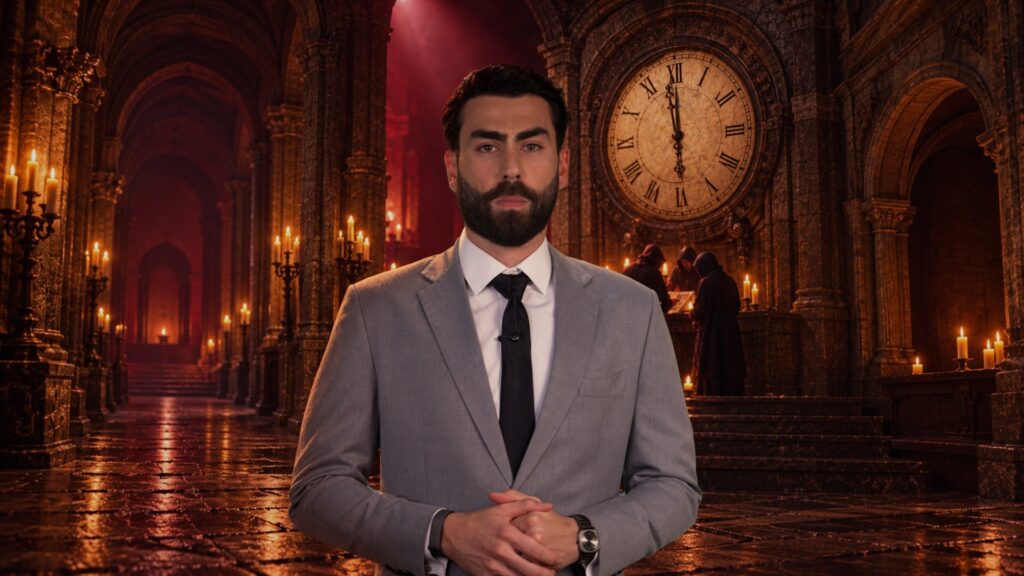
The Evolution of Timekeeping: The Secret History of Leap Seconds

For over half a century, an elite group of timekeepers has been subtly adjusting the world’s clocks by adding extra seconds, ensuring our timekeeping remains synchronised with the Earth’s rotation. This seemingly small adjustment, known as the “leap second,” has played an essential yet little-known role in maintaining accurate global time.

Time as we know it is measured by atomic clocks, which count the oscillations of atoms with extraordinary precision. However, the Earth’s rotation, which traditionally determined the length of a day, is irregular and gradually slowing over time. Because of this, atomic time and solar time slowly drift apart.

To reconcile this difference, leap seconds are occasionally added to Coordinated Universal Time (UTC). These extra seconds help keep our clocks aligned with the Earth’s actual rotation, ensuring that noon on our clocks closely matches the position of the sun in the sky.

The practice began in 1972, following extensive discussions by international bodies such as the International Telecommunication Union and the International Earth Rotation and Reference Systems Service (IERS). These organizations closely monitor the Earth’s rotation and announce when a leap second needs to be added, usually at the end of June or December.

Each leap second insertion is a carefully orchestrated operation affecting telecommunications, navigation systems, financial markets, and even software systems worldwide. The implications are significant because many devices and systems depend on precise timing for their operations.

Despite its importance, the leap second remains a controversial concept. Some scientists argue that the insertion of leap seconds creates challenges for modern digital systems and propose redefining timekeeping standards to eliminate the leap second entirely. Computers and networks occasionally struggle to adapt to the sudden 61-second minute, causing glitches or system crashes.

In response to these difficulties, proposals have surfaced to abolish leap seconds and allow atomic time and Earth’s rotation to diverge slowly. This change would simplify timekeeping but sacrifice the perfect alignment of our clocks with the solar day.

Timekeepers and scientists continue to debate the best path forward. As technology advances and our reliance on precise timekeeping grows, finding a balance between astronomical accuracy and operational stability remains a central challenge.

The quiet work of adding leap seconds has thus shaped the very fabric of timekeeping for more than fifty years. This invisible adjustment preserves the intricate relationship between human measurement and the natural world, ensuring that time remains not just a number on a clock but a reflection of our planet’s pace.

In a world where every millisecond counts, understanding the history and significance of leap seconds helps us appreciate the complexity behind the seemingly simple ticking of a clock. Whether the leap second will continue or become a relic of the past remains to be seen, but its impact on time, technology, and society is undeniable.


About Author

admin

See author's posts

Post navigation

Previous Israeli Attacks Result in Four Deaths as Gaza Faces Escalating Humanitarian Crisis
Next How the Turkiye-Libya Deal is Reshaping the Mediterranean

Related Stories

Iran War Live: Trump Announces Gulf Allies’ Request to Pause Iran Strikes

Iran War Live: Trump Announces Gulf Allies’ Request to Pause Iran Strikes

Yemen’s Houthis Renew Strikes on Saudi Arabia Amid UNSC Sanctions Extension

Yemen’s Houthis Renew Strikes on Saudi Arabia Amid UNSC Sanctions Extension

Iran War Live: Saudi-Led Coalition and China Respond as Houthis Claim Attacks on Aramco Facilities

Iran War Live: Saudi-Led Coalition and China Respond as Houthis Claim Attacks on Aramco Facilities

Entertainment

Golden Statue of Trump Mocking Vietnam Draft Deferment Installed by Anonymous Art Collective 1

Golden Statue of Trump Mocking Vietnam Draft Deferment Installed by Anonymous Art Collective

Remembering Shujaat Ali: The Esteemed Al Jazeera Cartoonist 2

Remembering Shujaat Ali: The Esteemed Al Jazeera Cartoonist

UK Children’s Author David Walliams Accused of Grooming Minors 3

UK Children’s Author David Walliams Accused of Grooming Minors

Meta’s AI Age-Check Goes Global: Can it Protect Teens? 4

Meta’s AI Age-Check Goes Global: Can it Protect Teens?

Russell Brand Sentenced to 10.5 Years for Sexual Assault 5

Russell Brand Sentenced to 10.5 Years for Sexual Assault

Al Jazeera.net Co-founder and Pioneer Cartoonist Shujaat Ali Passes Away at 54 6

Al Jazeera.net Co-founder and Pioneer Cartoonist Shujaat Ali Passes Away at 54

Meta Introduces Automated Age Verification for Teens Worldwide 7

Meta Introduces Automated Age Verification for Teens Worldwide

Top News

Iran War Live: Trump Announces Gulf Allies’ Request to Pause Iran Strikes

Iran War Live: Trump Announces Gulf Allies’ Request to Pause Iran Strikes

Yemen’s Houthis Renew Strikes on Saudi Arabia Amid UNSC Sanctions Extension

Yemen’s Houthis Renew Strikes on Saudi Arabia Amid UNSC Sanctions Extension

Iran War Live: Saudi-Led Coalition and China Respond as Houthis Claim Attacks on Aramco Facilities

Iran War Live: Saudi-Led Coalition and China Respond as Houthis Claim Attacks on Aramco Facilities

Russian Court Sentences Rights Lawyer to 12 Years on Treason Charges

Russian Court Sentences Rights Lawyer to 12 Years on Treason Charges

  • Home
  • About Us
  • Facebook
  • Twitter
  • Instagram
  • Youtube
  • tiktok
Editor: Nur M Tofader, Office: 250 Park Avenue, 7th Floor, New York, NY 10177 & Tell: 718 893 0002 (Office), 7188441300, +1212 401 6266, e-mail: Info@millenniuamtv24.com, e-mail: Info@millenniuamnews24.com, Copyright © Millennium News 24/7 | DarkNews by AF themes.