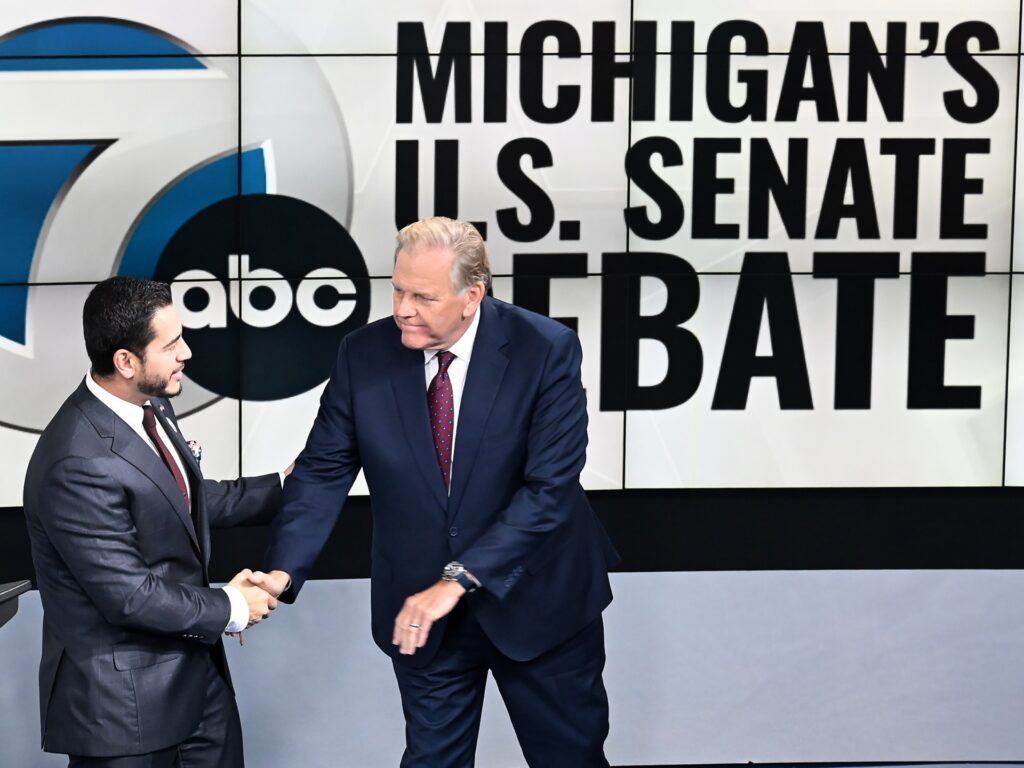
The recent Michigan Senate debate brought to light critical issues as candidates Dr. Abdul El-Sayed and John M. Rogers clashed over key topics shaping the state’s future. The debate, marked by spirited exchanges and policy disagreements, offered voters a clear view of the contrasting perspectives held by the two contenders.
One of the central themes was healthcare. Dr. El-Sayed emphasized expanding access to affordable healthcare, advocating for policies that would widen coverage and improve public health outcomes. Rogers, alternatively, focused on economic implications, endorsing a more market-oriented approach while emphasizing fiscal responsibility.
Immigration also took center stage in the discussion, highlighting Michigan’s role as a diverse and growing state. Both El-Sayed and Rogers acknowledged the importance of immigrant communities but differed on policy approaches. El-Sayed supported pathways to citizenship and stronger protections for immigrant workers, whereas Rogers stressed the enforcement of existing immigration laws and prioritizing border security.
The debate also included a reflection on recent local and national developments. While this exchange focused on Michigan, it resonated with broader political dynamics observable across the United States.
Simultaneously, the Kansas Senate race featured intense discussions around foreign policy, particularly concerning Ukraine. Candidates there debated the U.S. role in international conflicts, showcasing how foreign affairs remain an influential factor even in state-level elections.
Overall, the Michigan Senate debate highlighted the stark contrasts between progressive and conservative approaches within the state. It served as an important platform for candidates to present their visions and address voter concerns, from healthcare and immigration to the broader implications of national political trends.
As the election approaches, the insights gleaned from these debates will likely influence voter decisions, underscoring the significance of informed engagement in the democratic process.