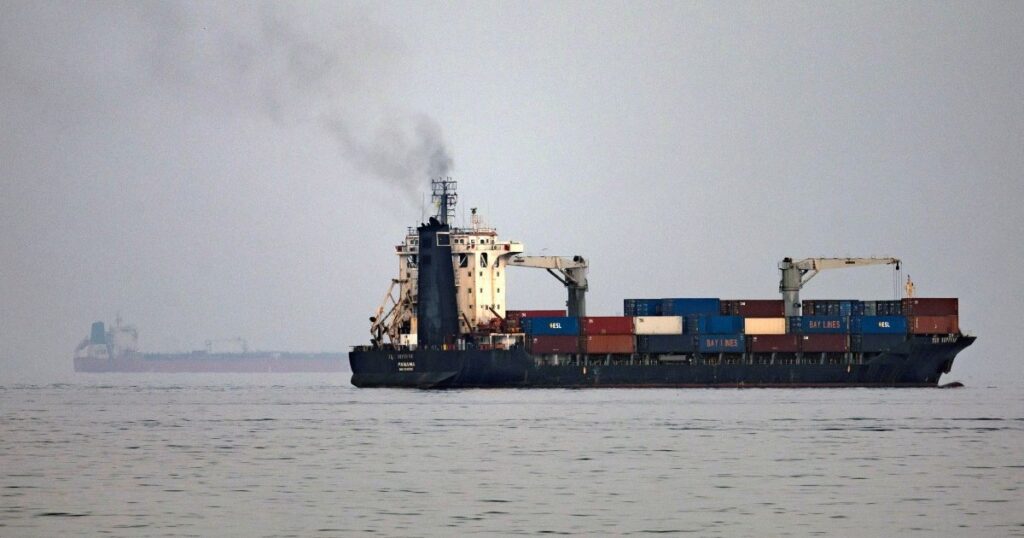
In a significant escalation of regional tensions, recent attacks have been reported targeting ships off the coasts of the United Arab Emirates and Yemen. Fires were reported on three tankers, raising concerns over maritime security in one of the world’s most critical shipping lanes.
These incidents have occurred against the backdrop of ongoing conflicts and political unrest in the Middle East. The attacks on the vessels have raised alarms about the safety of commercial shipping routes that are vital for global energy supplies.
In parallel developments near Riyadh, Saudi Arabia, authorities have successfully downed several drones. The interception of these unmanned aerial vehicles highlights the persistent threat of drone warfare in the region, as tensions between neighboring countries remain high.
Additionally, violence has erupted within the occupied West Bank, where masked settlers have attacked European politicians visiting the area. These incidents underscore the volatile situation on the ground and the challenges faced by international diplomats and peace efforts.
The attack on tankers off the UAE and Yemen’s coasts not only threatens the security of maritime trade but also risks exacerbating military confrontations in a region already fraught with conflict. Experts warn that further disruptions could have wide-reaching consequences for global energy markets and international relations.
The downing of drones near Riyadh reflects the technological dimensions of modern conflict, where unmanned systems are increasingly used for reconnaissance, attacks, and provocations. Saudi Arabia’s defensive measures demonstrate the ongoing contest for airspace control in the region.
Meanwhile, the aggression by masked settlers against European politicians in the West Bank adds a disturbing layer of complexity to the Israeli-Palestinian conflict. Such attacks threaten diplomatic efforts aimed at fostering dialogue and peace in one of the world’s most prolonged and contentious conflicts.
These interconnected events highlight the fragile security environment in the Middle East, where local conflicts and geopolitical rivalries intersect. International stakeholders have expressed concern and called for restraint and dialogue to prevent further escalation.
As military and political tensions rise, the risk of broader conflict looms large. The international community faces the challenge of balancing diplomatic engagement with decisive actions to protect civilians and maintain stability in the region.
In summary, the recent attacks on ships off the UAE and Yemen, the downing of drones near Riyadh, and the violence in the West Bank represent a critical juncture in Middle Eastern affairs. These developments serve as a reminder of the need for persistent and coordinated efforts to address the complex and overlapping crises that plague the region.