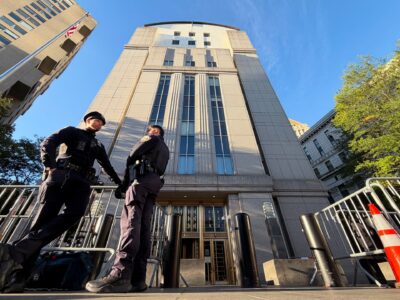
Venezuela’s President Nicolás Maduro has formally pleaded not guilty in a New York City court to new charges accusing him of conspiring to commit torture. This development marks a significant escalation as the U.S. government has taken the rare step of charging a reigning foreign leader.
The charges were presented alongside those against Maduro’s wife, Cilia Flores, who also appeared in court. Both denied the accusations, which allege a conspiracy to use serious and inhumane methods against political opponents and critics.
The allegations stem from the U.S. Department of Justice’s investigation into Maduro’s regime, which they accuse of engaging in systematic human rights abuses against its own people. The indictment details claims that Maduro and his inner circle orchestrated acts of torture aimed at intimidating and silencing opposition figures. This includes physical abuse and other forms of psychological torture.
Maduro’s court appearance in New York is rare; foreign heads of state are typically shielded by diplomatic immunity. The filing of these charges represents a bold move by the United States in its ongoing political and legal conflict with the Venezuelan leadership, which has been accused of corruption, election fraud, and suppressing dissent.
Political analysts suggest this could complicate any potential negotiations between Venezuela and the United States, especially efforts to address Venezuela’s deepening political and economic crisis. Maduro’s government has longtime been accused of widespread violations, including the imprisonment and torture of political prisoners.
This case could set a precedent in international law by holding a sitting head of state accountable in a U.S. court for alleged human rights abuses committed abroad. However, extraditing Maduro to the United States is considered highly unlikely at this stage, as Venezuela does not maintain an extradition treaty with the U.S. and Maduro remains in power.
International human rights organizations have welcomed the indictments, viewing them as a crucial step toward justice for victims of repression in Venezuela. Meanwhile, Maduro and his supporters have dismissed the charges as politically motivated attempts by the U.S. to interfere in Venezuela’s sovereignty.
The U.S. government continues to apply pressure through sanctions and legal actions to isolate Maduro’s administration and promote democratic reforms. The charges deepen the legal entanglements for Maduro and his closest allies, marking a notable chapter in the complex geopolitical struggle surrounding Venezuela.
As the case advances, it highlights questions about the reach of U.S. law enforcement and the pursuit of accountability for human rights abuses beyond national borders. The international community will be watching closely to see how this unprecedented move unfolds and impacts the future of Venezuela.