Jean-Luc Melenchon, a prominent left-wing presidential candidate in France, has added significant momentum to ongoing school protests by publicly endorsing the movement. The demonstrations, which have seen a surge in participation across the country, focus primarily on education reforms perceived as detrimental to the interests of students and educators.
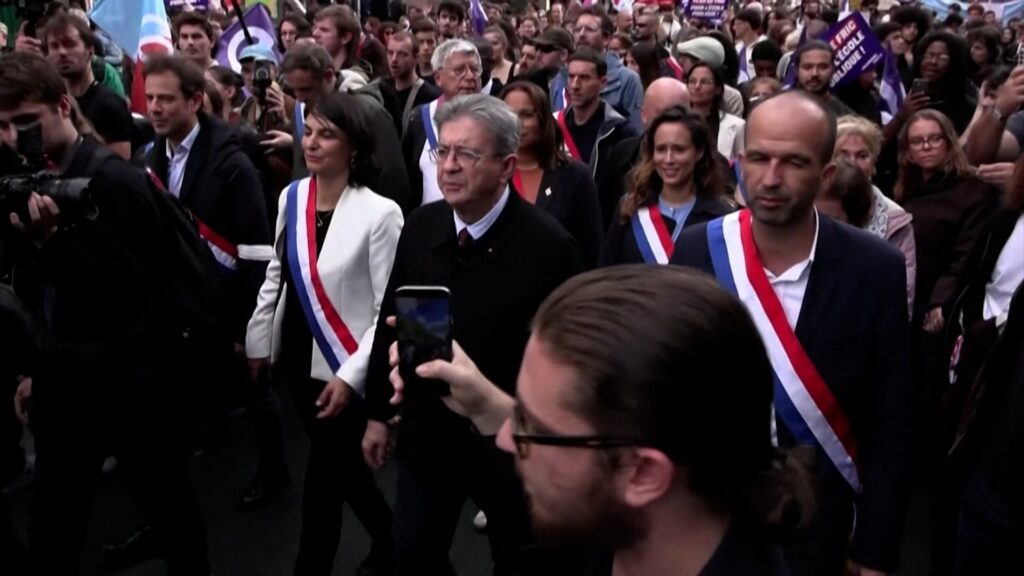
Melenchon’s involvement marks an important moment in the campaign, as he not only supports the protests but also physically joined the march, signaling deep solidarity with the students and teachers. His presence underlines the political importance of the education sector in France and highlights the tension surrounding government policies in this area.
The educational protests began as a response to proposed changes aimed at restructuring school curriculums and funding allocations. Protesters argue that these reforms could lead to increased inequality and reduced access to quality education, particularly impacting disadvantaged communities. The movement has grown to include not only students but also teachers, parents, and various labor unions.
Melenchon, known for his vocal critique of austerity measures and championing of social rights, has framed his support as part of a broader struggle against what he describes as neoliberal policies that undermine public services. He emphasized the critical role of education in shaping France’s future and warned against reforms that prioritize budget cuts over educational quality.
His alignment with the protests has energized supporters who see education as a key issue in the upcoming presidential elections. Political analysts note that Melenchon’s participation could influence public opinion, drawing more attention to the concerns raised by the protesters and putting pressure on the current government.
The protest march saw thousands of participants across several major cities, with Melenchon’s involvement drawing significant media coverage. Demonstrators carried banners calling for investment in schools, better pay for educators, and the withdrawal of unpopular reform plans.
Critics of the protests argue that the government’s reforms are necessary for modernization and efficiency. However, the scale of the demonstrations and Melenchon’s backing suggest a growing resistance that could complicate the government’s plans.
As the presidential race heats up, education policy remains a hot-button issue with potential to shape voter preferences. Melenchon’s active support for the school protests illustrates the intersection of grassroots activism and electoral politics, underscoring the importance of education as a cornerstone of social and political debate in France.
Observers will be watching closely to see how the movement evolves and whether it will impact legislative decisions or campaign platforms in the coming months. Melenchon’s endorsement is expected to keep the spotlight on education and may inspire other candidates to take clearer stances on this critical issue.