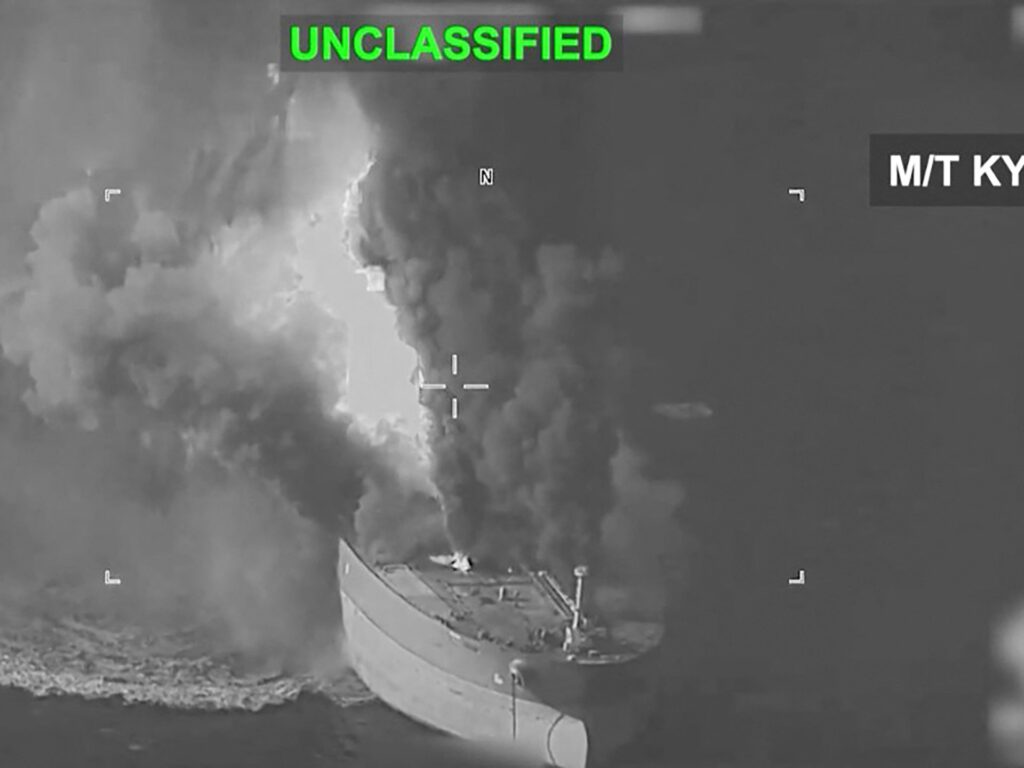
In a recent tense incident in the Gulf of Oman, US forces took decisive action to disable a commercial cargo ship that was attempting to breach the Iran blockade. According to CENTCOM, a US military jet struck the stern of the vessel without causing harm to the crew on board. This move highlights the ongoing enforcement of maritime security and the strict measures being taken to uphold international regulations in the region.
The Gulf of Oman has long been a hotspot for geopolitical tensions, especially related to Iran’s strategic maritime activities and the enforcement of blockades aimed at controlling shipping in this crucial waterway. The attempted breach by the cargo ship was seen as a direct challenge to these efforts.
CENTCOM’s statement indicated that while the ship was intentionally disabled to thwart its attempt to run the blockade, the operation was conducted with a focus on minimizing risk to human life. No casualties or injuries were reported among the crew of the commercial vessel.
This incident underscores the complexities involved in maintaining security in international waters, where commercial interests, national security, and international law often intersect. The US military’s role in patrolling these waters is part of broader efforts to deter illicit activities and to prevent escalation of conflicts in the region.
Maritime experts note that such interdictions are not uncommon in areas with heightened security warnings. However, the use of military force to disable a commercial ship is a significant step that demonstrates the seriousness with which rules of engagement and maritime law are being enforced.
Iran’s stance on the blockade and related maritime restrictions remains a key element driving tensions in the Gulf of Oman. The country’s strategic position along one of the world’s busiest shipping lanes makes these waters particularly sensitive from a geopolitical perspective.
International reactions to the US action have varied, with some nations supporting the enforcement of blockades as a necessary measure to uphold security, while others express concern over the escalation and potential impacts on innocent commercial shipping.
The incident also raises questions about the legal frameworks governing such actions and the protocols for engagement when commercial vessels do not comply with maritime regulations. Experts suggest this could prompt further international dialogue about safe navigation and the rights of vessels in contested waters.
Overall, the disabling of the cargo ship by US forces in the Gulf of Oman marks a significant moment in the ongoing enforcement of maritime security measures against perceived threats or violations. It also serves as a reminder of the fragile balance between maintaining freedom of navigation and ensuring regional security in one of the world’s most strategically important maritime corridors.