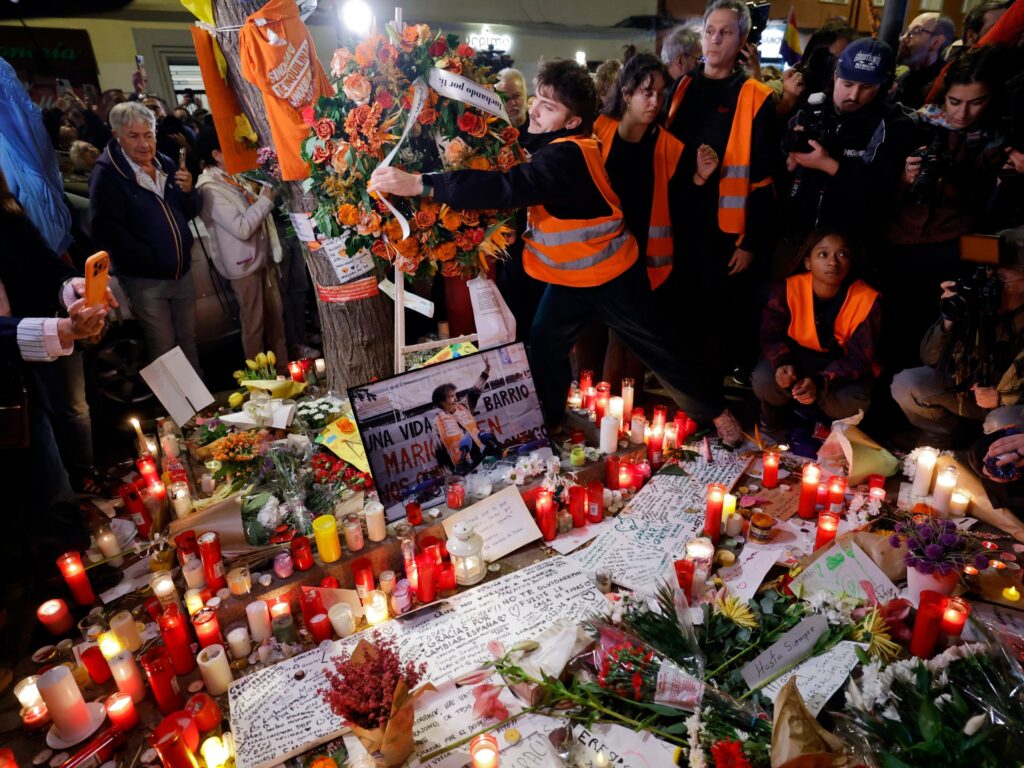
The death of Maricarmen Abascal, an 87-year-old woman widely regarded as a symbol of protest and resilience in Spain, has ignited widespread demonstrations and a contentious debate in the Spanish parliament. Known for her decades of activism and role as a figurehead in numerous social movements, Maricarmen’s passing has prompted thousands of Spaniards to take to the streets to honor her legacy.
Over recent days, cities across Spain have seen massive rallies and marches, with participants carrying banners and chanting slogans celebrating Maricarmen’s unwavering commitment to justice and human rights. Her life story, marked by persistent efforts to advocate for social change, has resonated deeply with younger and older generations alike. Protesters have emphasized that Maricarmen’s struggle is far from over, underscoring ongoing issues such as inequality, the rights of the elderly, and democratic freedoms.
The Spanish parliament has also become a stage for intense discussions following tributes paid to Maricarmen. Several lawmakers praised her courage and contributions to Spanish society, highlighting her as a symbol of resistance against oppression. However, these tributes also sparked debate, as some political factions questioned the appropriateness of politicizing her death. Critics argued that certain parties are attempting to use her legacy to further their political agendas, which has fueled divisions within the legislative chamber.
Supporters of Maricarmen have called for a unified recognition of her impact, transcending party lines. They argue that her dedication to justice and activism epitomizes core democratic values that should be celebrated by all sectors of society. Additionally, community leaders have urged for policy reforms to address the social issues Maricarmen fought against, pointing to her death as a call to action rather than a moment for division.
The outpouring of emotion and public engagement highlights the profound influence Maricarmen Abascal had on Spain’s social fabric. From grassroots activism to national discourse, her legacy continues to inspire political participation and a collective demand for equity. Numerous cultural events, commemorations, and educational initiatives are planned in the coming weeks to extend her memory and encourage civic involvement.
In summary, Maricarmen Abascal’s death has become a pivotal moment in Spain, not only honoring a revered protest symbol but also sparking essential conversations about activism, political appropriation, and the nation’s commitment to social justice. The ongoing protests and parliamentary debates reflect the enduring complexities of her impact and the high stakes involved in preserving the values she championed through her remarkable life.