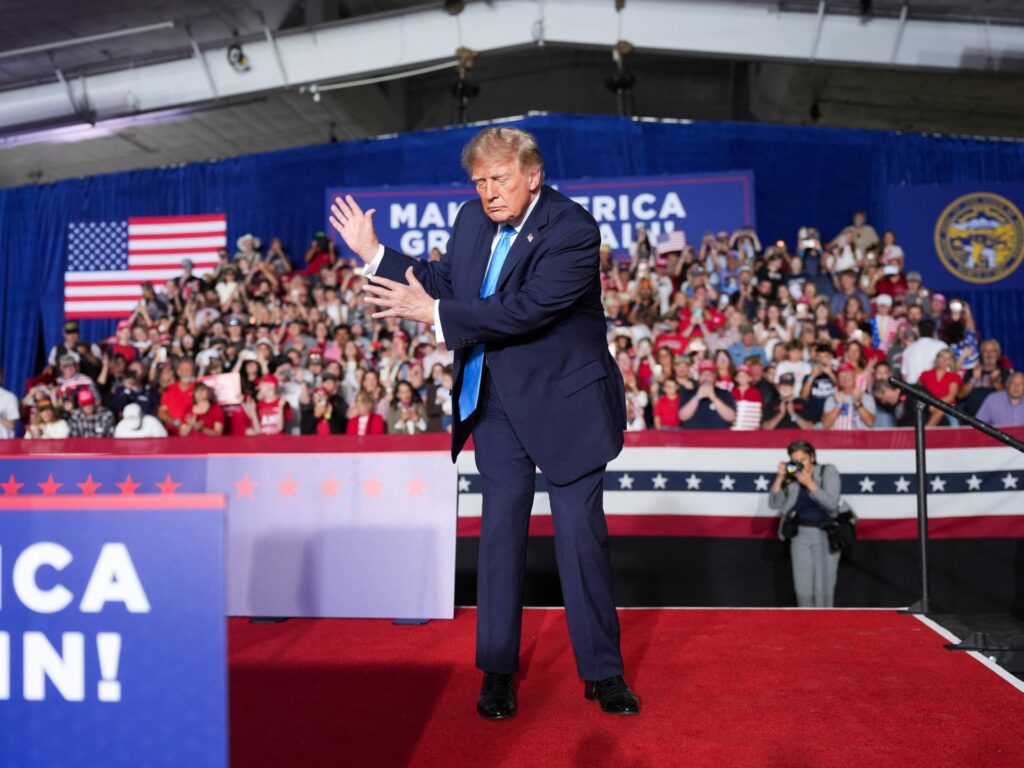
In a recent and contentious statement, former President Donald Trump claimed that Iran has the potential to ‘take’ major U.S. cities such as San Diego and Los Angeles. This assertion has sparked significant outrage across the political spectrum, drawing sharp criticism from both Democratic and Republican leaders.
Trump’s comments were made during a public address where he emphasized national security concerns and warned of Iran’s growing regional influence and military capabilities. He suggested that the U.S. must be vigilant and proactive in responding to what he characterized as an escalating threat from Iran.
The reaction to Trump’s statement was swift and widespread. Prominent Democrats condemned the remarks as alarmist and fear-mongering, arguing that such rhetoric unnecessarily heightens tensions and undermines diplomatic efforts. They cautioned against inflammatory language that could escalate conflict or provoke adversarial actions.
Republican leaders also distanced themselves from Trump’s remarks. Some criticized the former president for making statements that could be misinterpreted or incite public panic, while others called for measured and fact-based discourse on national security.
The White House, under the current administration, formally disputed the interpretation of Trump’s comments. Officials clarified that the administration sees no immediate threat to California cities and emphasized a continued commitment to diplomacy and de-escalation strategies with Iran.
This incident highlights the deep partisan divides over foreign policy and national security issues in the United States. It also underscores the challenges in communicating risks and threats without causing public alarm or political discord.
Experts on international relations note that while Iran’s military capabilities have advanced, the likelihood of such direct military actions against mainland U.S. cities remains low. Nonetheless, vigilance and strategic preparedness remain crucial components of U.S. defense policy.
The controversy surrounding Trump’s remarks adds to the ongoing discourse about America’s approach to Iran, including sanctions, diplomatic negotiations, and military deterrence. It raises questions about the balance between alerting the public to potential threats and avoiding rhetoric that could inflame geopolitical tensions.
As the debate continues, officials and commentators emphasize the importance of clear, responsible communication regarding national security to maintain public confidence and ensure effective policy responses.
In summary, Trump’s remarks about Iran potentially ‘taking’ U.S. cities have ignited a rare moment of bipartisan criticism, with calls for a more measured and careful approach to discussing international threats. The episode reflects broader challenges in U.S. political discourse as the nation navigates complex global security issues.