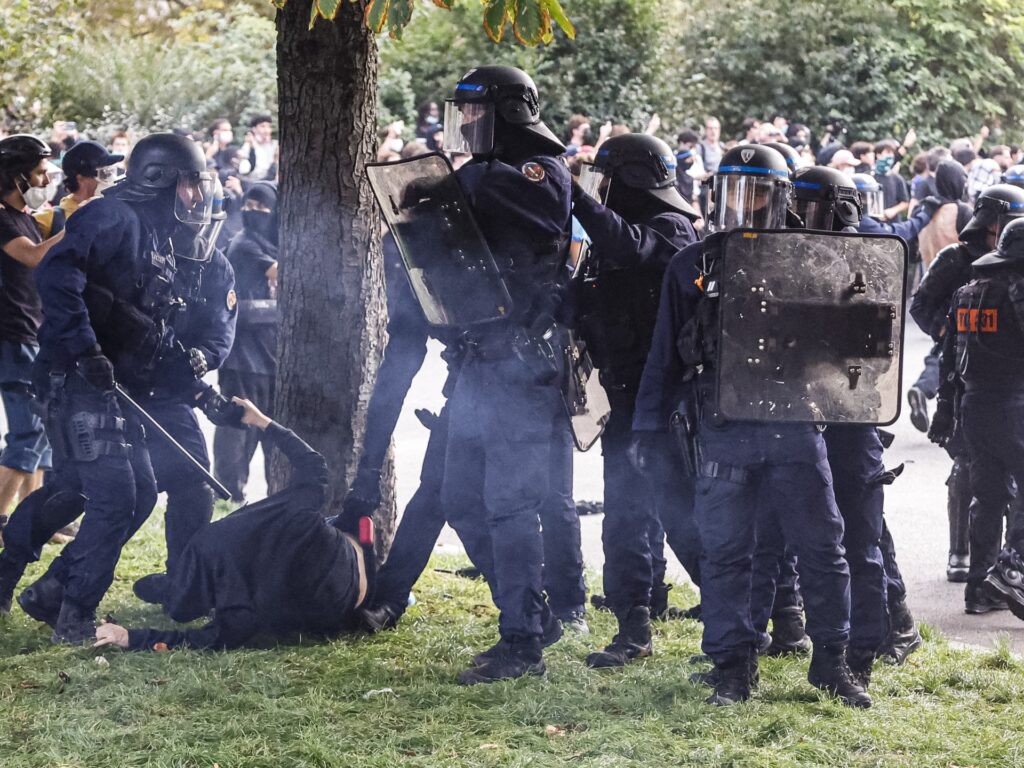
The French government has announced a halt to the use of stun grenades by police during student protests following recent demonstrations across the country. The decision comes amid escalating tensions as thousands of students took to the streets demanding increased funding for education.
Student protests have been gaining momentum in France, triggered by concerns over insufficient financial support for educational institutions and resources. Large-scale rallies have highlighted widespread discontent with current education policies, with students calling for meaningful reforms and investments to improve their learning environments.
In response to the growing protests, authorities initially deployed stun grenades as a means to control crowds and disperse demonstrations. However, the use of such measures drew criticism from human rights activists and opposition groups, who argued that the police tactics were excessive and posed risks to protesters’ safety.
Prime Minister Sebastien Lecornu is expected to make a public address to address the situation. Sources indicate that the prime minister will outline the government’s stance on the protests, reinforce commitments to education funding, and elaborate on new measures aimed at de-escalating tensions.
The announcement to suspend stun grenade use signals a shift in the government’s approach to managing civil unrest. It underscores an effort to balance maintaining public order with respecting the rights of demonstrators.
Education advocates have welcomed the decision as a step toward more constructive dialogue between students and the authorities. Nonetheless, many continue to urge the government to take swift and substantial action to meet the funding demands and improve education outcomes.
The protests reflect broader concerns in French society about the future of education and the need to invest in the next generation. As the government prepares to reveal its plans, all eyes remain on Lecornu’s address for indications of whether the student unrest will lead to significant policy changes.
This development occurs within a wider context of social activism in France, where citizens increasingly mobilize to influence public policy. The government’s response in the coming days may set the tone for how such movements are managed in the future.
Overall, the suspension of stun grenades at student protests marks a critical juncture in the ongoing dialogue between France’s youth and its political leadership, highlighting the complex dynamics at play when balancing security measures with the right to protest.