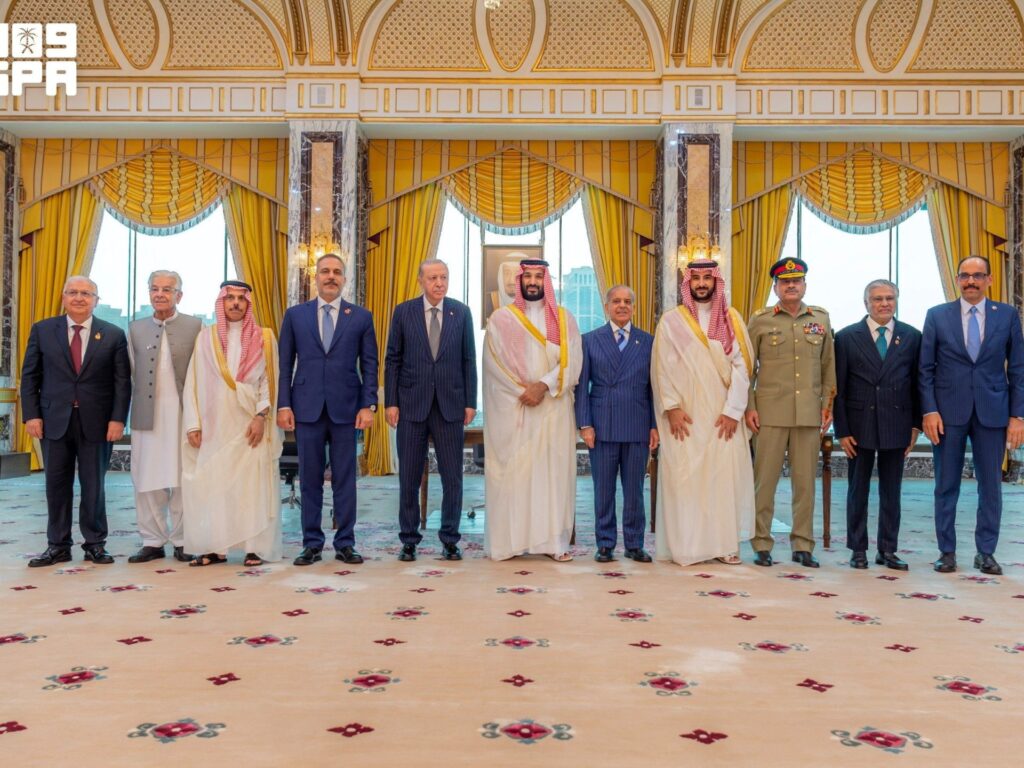
The strategic landscape of the Middle East and South Asia is witnessing a complex interplay of power dynamics, particularly involving Pakistan, Turkiye, and Saudi Arabia in their deterrent posture against the Houthis in Yemen. This development is crucial not only to regional security but also to the broader geopolitical balance involving defense and offensive strategies.
Pakistan, traditionally maintaining a stance of non-involvement, has articulated its role as defensive in the context of the Yemen conflict. Islamabad emphasizes that its actions are primarily aimed at safeguarding its national interests and ensuring regional stability without engaging directly in Yemen’s armed confrontations. This defensive posture underscores Pakistan’s careful diplomacy and its intent to avoid exacerbating regional tensions while still positioning itself as a key player.
Contrastingly, Saudi Arabia’s approach is decidedly offensive. Riyadh has been actively engaged in military operations against Houthi forces, aiming to curb their advances and influence within Yemen. This offensive stance highlights Saudi Arabia’s determination to restore its strategic interests and counter what it perceives as threats emanating from the Houthis, who are believed to be supported by rival regional powers.
Turkiye’s role is emerging as a significant factor in this equation. Ankara seeks to assert its influence and support allies within the region, positioning itself as a mediator and a deterrent force against Houthi expansion. Turkiye’s involvement reflects its broader geopolitical ambitions and its desire to maintain a balance of power that favors its strategic interests.
The cooperation or coordinated deterrence among Pakistan, Turkiye, and Saudi Arabia against the Houthis could signal a new phase of regional alignment. Such alignment may contribute to containment of the Houthi militias and stabilization of Yemen, which has suffered years of devastating conflict.
However, Riyadh’s offensive posture also poses a test of endurance, contemplating how long Saudi Arabia can sustain military operations without drawing Pakistan deeper into the fray or destabilizing regional relations further. The offensive has potential implications for all parties involved, necessitating careful navigation of diplomatic and military strategies.
The regional dynamics involving these countries against the Houthi insurgency encapsulate broader themes of defense, deterrence, and the quest for a secure strategic environment. The evolving situation demands attention to the balance of power, alliance formation, and the consequences of prolonged conflict in Yemen.
In summary, Pakistan’s defensive stance, Turkiye’s assertive diplomacy, and Saudi Arabia’s offensive actions against the Houthis together shape a complex geopolitical tableau. The outcomes of these interactions will decisively influence the future of regional stability and the geopolitical contours of the Middle East and South Asia.