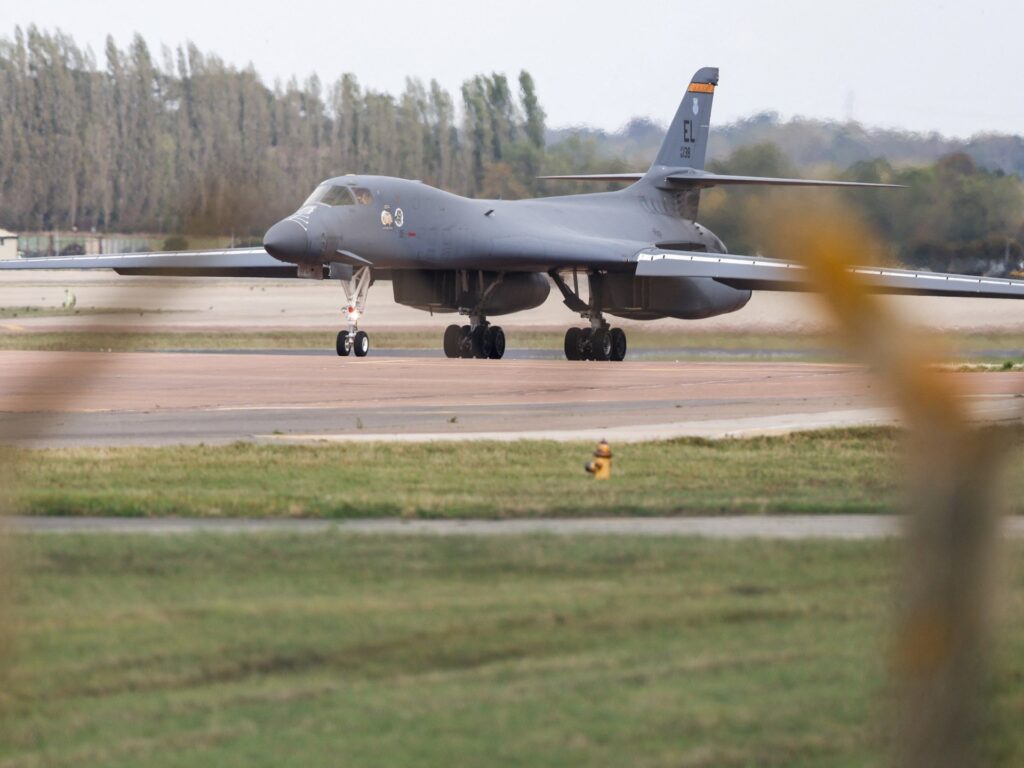
The recent withdrawal of US B-1 bombers from RAF Fairford in the United Kingdom, prompted by heightened tensions with Iran, highlights the strategic flexibility and global reach of America’s bomber fleet. RAF Fairford has long been a pivotal base for the US Air Force’s bomber operations in Europe, particularly for the B-1 Lancer, a supersonic heavy bomber designed for long-range missions.
With the B-1s pulled from RAF Fairford, it’s important to understand the alternative locations from which these formidable aircraft can operate worldwide.
1. **Ellsworth Air Force Base, South Dakota, USA**: Ellsworth AFB remains a primary home base for B-1 bombers. This base is strategically positioned in the interior of the United States, providing a secure location from which bombers can be deployed globally.
2. **Dyess Air Force Base, Texas, USA**: Another key US base for B-1 bombers, Dyess AFB supports rapid deployment and training missions. Its southern location allows for flexible access to routes across the Atlantic and Pacific Oceans.
3. **Andersen Air Force Base, Guam**: Situated in the western Pacific Ocean, Andersen AFB is a vital forward operating location for US strategic bombers, including the B-1, enabling rapid response to the Indo-Pacific region.
4. **Al Udeid Air Base, Qatar**: This airbase is a critical hub for US operations in the Middle East, providing a launch point for bomber missions related to regional security concerns, including those involving Iran.
5. **RAF Lakenheath, UK**: While primarily hosting fighter aircraft, RAF Lakenheath supports strategic bomber operations on occasion and provides another European location for launching missions.
6. **Joint Base Pearl Harbor-Hickam, Hawaii, USA**: This base supports bomber operations across the Pacific and affords strategic reach toward Asia.
The repositioning of the B-1 bombers from RAF Fairford underscores the US military’s capability to adapt quickly to geopolitical challenges by leveraging a network of global bases. This network ensures that the US maintains its strategic bomber presence and can project power rapidly in response to emerging threats, including those stemming from the volatile situation in Iran.
Overall, the US bomber fleet’s global basing architecture demonstrates a blend of home-based strength and forward deployment flexibility, ensuring that US strategic interests and commitments to allies are upheld regardless of shifting geopolitical landscapes.