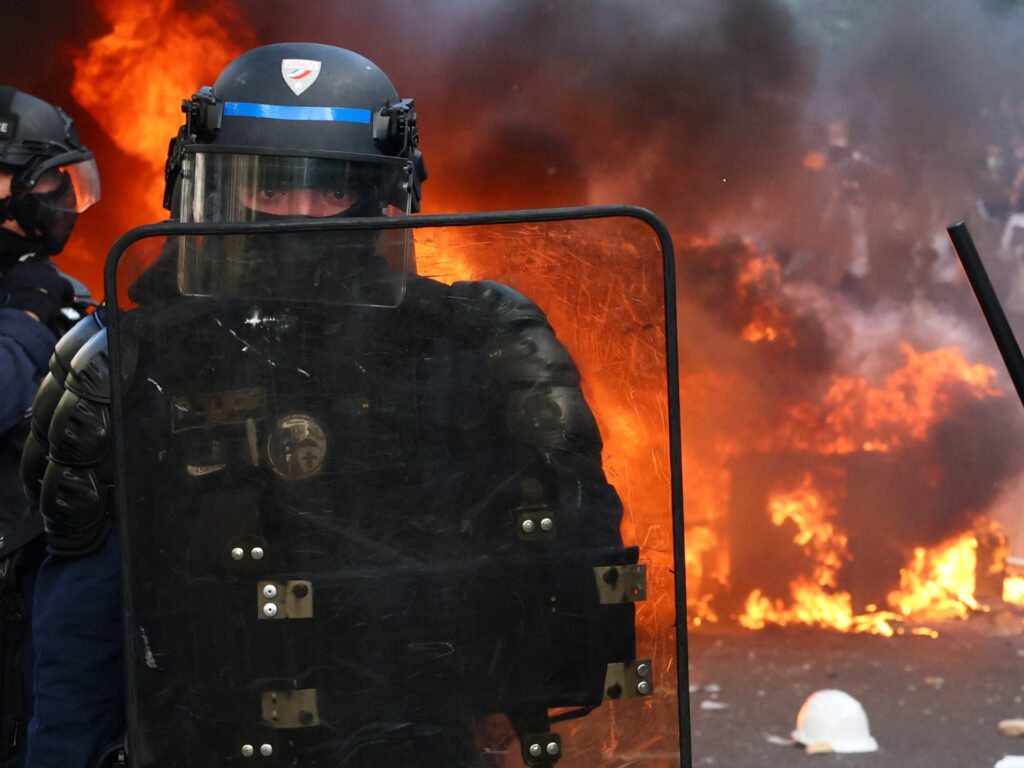
France is currently witnessing significant unrest as protests have escalated, leading to the suspension of high school classes across the country. The government, grappling with mounting violence, has taken this unusual step in an attempt to contain the situation and protect students from the chaos spilling into educational institutions.
The turmoil has been marked by frequent and sometimes fierce clashes between demonstrators and law enforcement. Protesters have taken to the streets in large numbers, citing various grievances, which has prompted a robust police response. These confrontations have resulted in damage to public property and numerous injuries, raising alarm throughout the nation.
French Prime Minister has issued a stern warning, emphasizing that “there is no room for tolerance for violence.” He underscored the importance of upholding law and order and called on all citizens to unite during this challenging period. His remarks highlight the government’s firm stance against any unlawful behavior and its commitment to restoring peace.
The suspension of classes reflects the government’s proactive strategy to minimize risks to young people, who could otherwise be caught in the crossfire of protests and police operations. School authorities across France have been instructed to halt lessons temporarily while the situation remains volatile.
This disorder represents a significant test for France’s social cohesion. The Prime Minister urged the citizens to “stand together,” appealing for solidarity and calm amidst the tense climate. The call is aimed at bridging divides and fostering dialogue to address the underlying issues driving the protests.
Authorities are working tirelessly to de-escalate tensions, with increased police presence and strategic measures being implemented in key areas affected by unrest. Efforts to engage community leaders and protest representatives have also been initiated in hopes of finding peaceful resolutions.
The protests highlight deeper social and political challenges facing France, including economic concerns, public policy dissatisfaction, and broader questions about governance and rights. As France navigates this turbulent moment, the balance between maintaining security and respecting citizens’ rights remains delicate.
International observers are closely monitoring the situation, recognizing the importance of stability in a country that plays a critical role in European and global affairs. The outcome of these events will likely have lasting implications on France’s domestic policies and its approach to civil unrest.
In summary, the suspension of high school classes marks a significant escalation in France’s response to widespread protests. With clashes ongoing and a government committed to ending violence, the nation stands at a crossroads, striving to find a path toward peace and unity amid growing challenges.