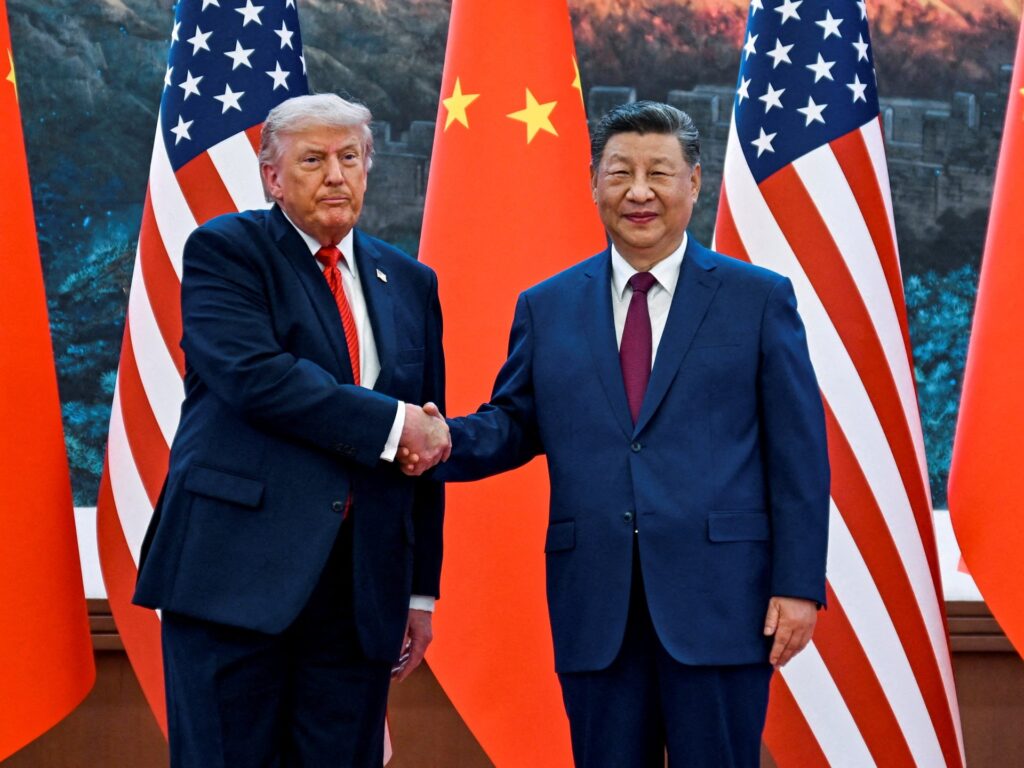
The highly anticipated summit between U.S. President Donald Trump and Chinese President Xi Jinping marks Xi’s first visit to the White House in more than a decade. The meeting comes at a critical juncture as both nations confront several ongoing disputes, including trade imbalances, advancements and concerns over artificial intelligence (AI), geopolitical tensions in Taiwan, and the escalating crisis surrounding the war in Iran.
Trade remains at the forefront of the bilateral agenda. Both leaders are expected to engage in detailed negotiations aimed at addressing tariffs, market access, intellectual property protections, and balancing the trade deficit that has long been a point of contention. This summit could serve as an opportunity to ease tensions and lay the groundwork for more cooperative economic engagement.
Artificial intelligence and technological rivalry also constitute a significant area of discussion. With both nations investing heavily in AI development, issues such as technology transfer, cybersecurity risks, and ethical use of AI are central concerns. The summit provides a platform for dialogue about potential collaboration, regulation frameworks, and setting red lines to prevent conflict in emerging tech domains.
Geopolitical tensions regarding Taiwan continue to pose a delicate challenge. The U.S. maintains a policy of strategic ambiguity while reiterating support for Taiwan’s democratic governance. Xi Jinping is expected to reaffirm China’s stance on Taiwan as an integral part of its territory, with both sides navigating these sensitive political waters amidst rising military activity near the island.
Additionally, the conflict in Iran and its repercussions on global stability are high on the agenda. The U.S. and China, despite differing approaches and alliances, share interests in mitigating violence and avoiding further escalation. The summit could lead to discussions on coordinated diplomatic efforts, sanctions, and the role of global powers in facilitating peace in the region.
This summit marks a pivotal moment in U.S.-China relations amidst a complex international landscape shaped by economic rivalries, technological competition, and strategic power plays. Observers are closely monitoring the outcomes to gauge the future trajectory of cooperation and conflict between the world’s two largest economies.