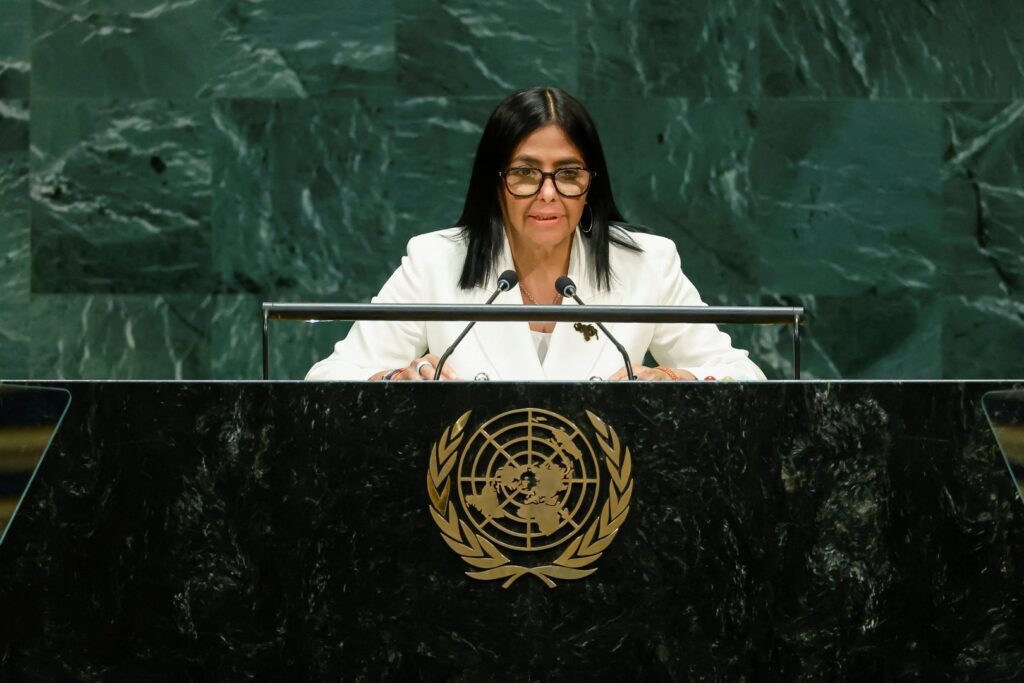
In a significant address at the United Nations General Assembly (UNGA), Venezuela’s Interim President Delcy Rodriguez outlined her vision for the nation’s future, emphasizing a commitment to democratic elections and a departure from the past’s extremism. Rodriguez’s speech marked a pivotal moment for Venezuela amid ongoing political and economic challenges, signaling a potential shift in the country’s approach to governance and international relations.
Rodriguez began her speech by acknowledging the difficulties Venezuela has faced, including political unrest, economic hardship, and international isolation. She expressed the urgent need for unity and dialogue within the country to overcome these obstacles and restore stability.
A central theme of her address was the promise to hold elections as a legitimate means of political expression and governance. Rodriguez underscored that abandoning ‘extremism’—which she identified as a root cause of Venezuela’s past conflicts—would pave the way for more inclusive and transparent processes. This pledge included commitments to ensure fair and free elections that could restore trust both domestically and internationally.
The Interim President also appealed to the international community for support, stressing the importance of cooperation and mutual respect in addressing Venezuela’s challenges. She suggested that external interference had previously exacerbated the situation, and now was the time for constructive engagement.
Rodriguez’s speech highlighted the government’s intention to pursue reforms aimed at improving the country’s economic conditions. She briefly touched on plans to stabilize the currency, attract investment, and create jobs, recognizing that economic recovery was integral to political progress.
Human rights and social welfare were also addressed, with Rodriguez emphasizing the government’s responsibility to protect vulnerable populations and ensure access to essential services. She promised to work towards reconciling divisions among Venezuelans and fostering a culture of peace.
Responding to concerns voiced by various nations at the UNGA, Rodriguez reiterated Venezuela’s sovereignty and the importance of non-interference, while showing a willingness to engage in dialogue with opposition groups and international partners.
Observers noted that this speech might signal a strategic recalibration by the Venezuelan leadership amidst increasing internal and external pressures. The call for elections and moderation could be seen as an effort to legitimize the government’s standing and open pathways for reconciliation.
In summary, Delcy Rodriguez’s UNGA speech laid out a vision of hope and renewal for Venezuela, focusing on democracy, economic reform, and international cooperation. Whether these pledges will translate into tangible changes remains to be seen, but the message was clear: Venezuela seeks a new path forward, leaving behind the extremism that marred its past.