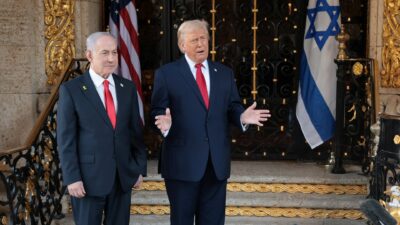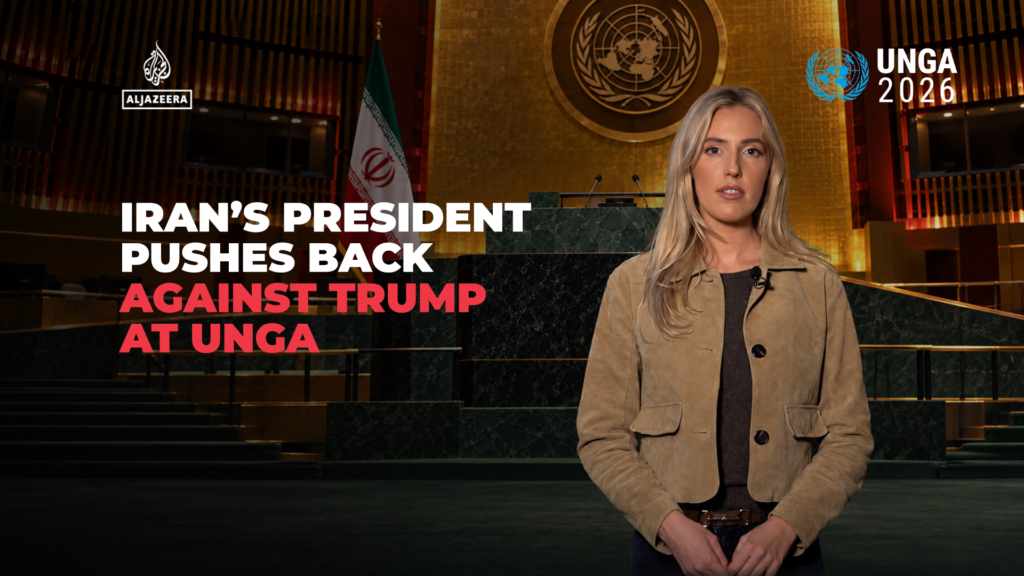
At the recent United Nations General Assembly, Iran’s President took a stark approach in his speech, presenting evidence that he claims shows US military strikes targeted civilians. This move came in the wake of highly charged rhetoric from US President Donald Trump, who had previously threatened to ‘annihilate’ Iran.
During his address, the Iranian President presented what he described as “receipts” or proof intended to demonstrate the direct impact of US military actions on innocent Iranian civilians. This accusatory stance underscores the heightened tensions between the two nations, which have been escalating amidst a complex backdrop of geopolitical conflicts, economic sanctions, and military confrontations.
The President’s speech was marked by a call for international scrutiny and accountability regarding the US’s military interventions in the Middle East. He urged the global community to consider the human cost of these actions and questioned the legitimacy of continued military pressure by the United States on Iran and the region.
This confrontation at the UNGA reflects the broader conflict that has been unfolding for years, with both countries engaged in a strident war of words and proxy battles. Iran’s presentation of evidence seeks to shift the narrative and highlight its position as a victim of external aggression rather than the aggressor.
Observers note that the Iranian President’s address was a strategic effort to rally international support and sympathy ahead of potential future confrontations. It also served as a direct challenge to the United States’ justification for its military presence and actions in the Middle East.
The tensions have been further inflamed by President Trump’s aggressive posture, including his explicit threat to “annihilate” Iran, which ratcheted up fears of an escalation into full-scale conflict. This rhetoric drew widespread condemnation and heightened calls for diplomacy and restraint from other global leaders.
The situation remains fragile, with both nations entrenched in positions that leave little room for compromise. The UNGA speech is seen as a critical moment in the ongoing diplomatic struggle, emphasizing the urgent need for dialogue and peaceful resolution to avoid further destabilization of the region.
In summary, the Iranian President’s UN General Assembly address was a poignant moment that illustrated the deep divisions between Iran and the United States. By bringing so-called evidence of US strikes on civilians, Iran aimed to mobilize international opinion and counteract the narrative of American dominance in the geopolitical landscape.
As tensions simmer, the world watches closely, hoping for a path toward de-escalation, stability, and peace in one of the most volatile regions on earth.