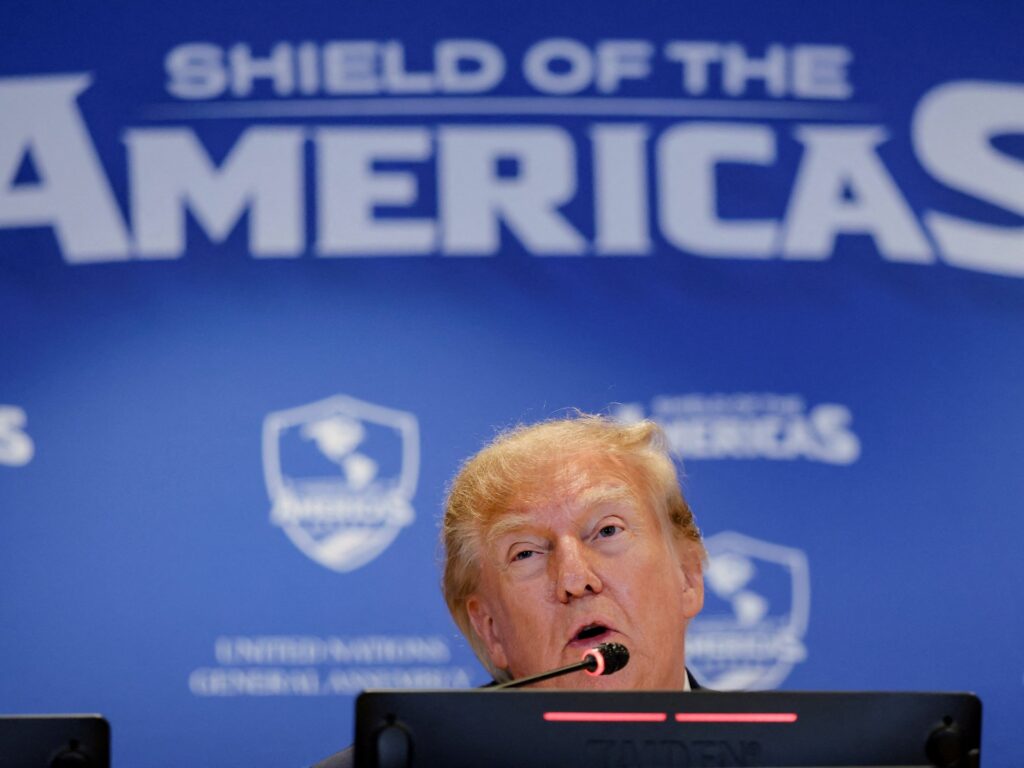
In a decisive move aimed at combating the growing influence of drug cartels, former President Donald Trump has rallied the Shield of the Americas coalition, a US-led alliance, to intensify efforts against organized crime groups in the region. This coalition, which comprises various countries from the Americas, has increasingly become a pivotal force in the fight against drug trafficking and cartel activities.
Trump’s recent calls for stronger action have galvanized the coalition to back sanctions against major drug cartels, signaling a more aggressive stance against these criminal organizations. The initiative underscores a coordinated regional response to drug-related violence, trafficking, and corruption that affects not only the member countries but also has far-reaching impacts worldwide.
The Shield of the Americas coalition, originally established to promote security and cooperation in the Western Hemisphere, has now prioritized dismantling drug cartels as a top agenda. Trump’s advocacy for amplified sanctions means targeting the financial networks and operations that sustain these groups, aiming to cut off their resources and operational capabilities.
This move has received widespread attention from political leaders, law enforcement agencies, and international organizations. Many view it as a necessary escalation in the ongoing war against narcotics, which has devastated communities and destabilized governments across Latin America.
Supporters of the coalition argue that multilateral pressure is essential for achieving lasting results. By combining intelligence, enforcing stricter border controls, and implementing targeted sanctions, they expect a significant decrease in cartel activities.
Critics, however, caution about the potential for increased violence or unintended consequences, emphasizing the need for comprehensive strategies that include economic development and community support.
Nonetheless, the coalition’s unified front, underpinned by Trump’s rallying call, signifies a renewed commitment to curbing drug trafficking. Sanctions are expected to target not only the cartels themselves but also their international financiers and facilitators, aiming to disrupt the global narcotics supply chain.
This enhanced collaboration between countries highlights the complexity of combating drug trafficking, which requires synchronized policies and enforcement actions. The Shield of the Americas coalition is set to increase joint operations, share intelligence more effectively, and coordinate sanctions to maximize pressure on trafficking networks.
Moreover, Trump’s involvement has brought renewed political momentum to the cause, encouraging additional countries to join the fight and support stronger enforcement measures.
The coalition’s strategy involves a multi-pronged approach: intensifying legal actions, deploying advanced technology for monitoring and interception, and fostering community resilience to reduce the allure of cartel influence.
As the coalition moves forward, the international community watches keenly, hopeful that this united front can make significant inroads in dismantling the drug cartels that have long undermined regional stability and security.
The coming months will be critical as sanctions take effect and enforcement measures ramp up. Success could pave the way for broader international cooperation in addressing global narcotics challenges, setting a precedent for future anti-crime initiatives.
In summary, Trump’s efforts have reinvigorated the Shield of the Americas coalition, bringing a sharpened focus and renewed resolve to counter drug cartels through coordinated sanctions and collaborative regional efforts. This unified stance represents a significant step forward in the ongoing battle against organized crime and drug trafficking in the Americas.