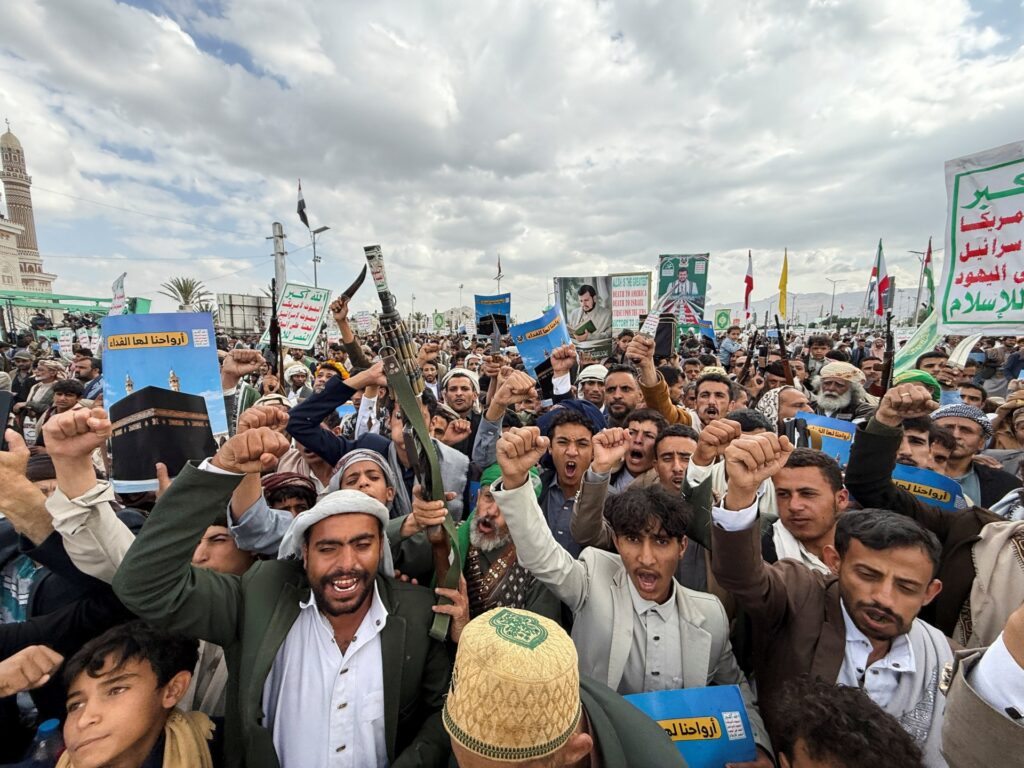
The group of seven (G7) foreign ministers has issued a strong call for the Houthi rebel group in Yemen to immediately cease its attacks on Saudi Arabia. These demands come amid escalating tensions and ongoing conflict in the region.
The ministers emphasized the urgent need to end the attacks, particularly those targeting maritime shipping routes, which are vital for global trade and regional stability. The targeted strikes on Saudi Arabia’s critical infrastructure have heightened concerns over the security of navigation in the Red Sea and the Bab al-Mandeb strait, key corridors for international maritime traffic.
In a joint statement, the G7 foreign ministers condemned the attacks and highlighted the destabilizing impact they have on both Yemen and the broader Middle East. They urged the Houthis to stop their campaign of violence and called for a peaceful resolution to the conflict.
Moreover, the ministers placed significant responsibility on Iran, urging it to cease its supply of arms and military support to the Houthi group. Iran’s involvement has been cited as a critical factor in perpetuating the conflict and undermining efforts at peace.
The G7’s position reflects a broader international consensus seeking to end hostilities in Yemen, where years of war have caused a profound humanitarian crisis. The ministers highlighted the importance of resuming inclusive peace talks that involve all Yemeni factions and international stakeholders to find a lasting diplomatic solution.
The escalation of attacks by the Houthis on Saudi Arabia has drawn widespread condemnation. Saudi Arabia has responded with defensive measures and military actions aimed at protecting its sovereignty and the security of maritime routes.
The maritime threats have disrupted commercial shipping, endangered civilian vessels, and increased insurance costs, impacting global supply chains. The G7 ministers warned that continued aggression not only affects regional peace but also global economic stability.
Calls from the G7 underline the need for restraint and dialogue rather than conflict. They stressed the humanitarian side of the crisis, urging all parties to prioritize civilian safety and facilitate humanitarian aid access in Yemen.
The international community remains watchful as diplomatic efforts continue to prevent further deterioration in the conflict. With Iran’s involvement under scrutiny, the G7 hopes that global pressure will encourage de-escalation and support for negotiated peace.
In summary, the G7 foreign ministers’ demand to halt Houthi attacks on Saudi Arabia symbolizes a significant step towards addressing the Yemeni war’s complex regional dynamics. It highlights maritime security, Iran’s role, and the urgent necessity for a peaceful resolution to one of the world’s most protracted conflicts.