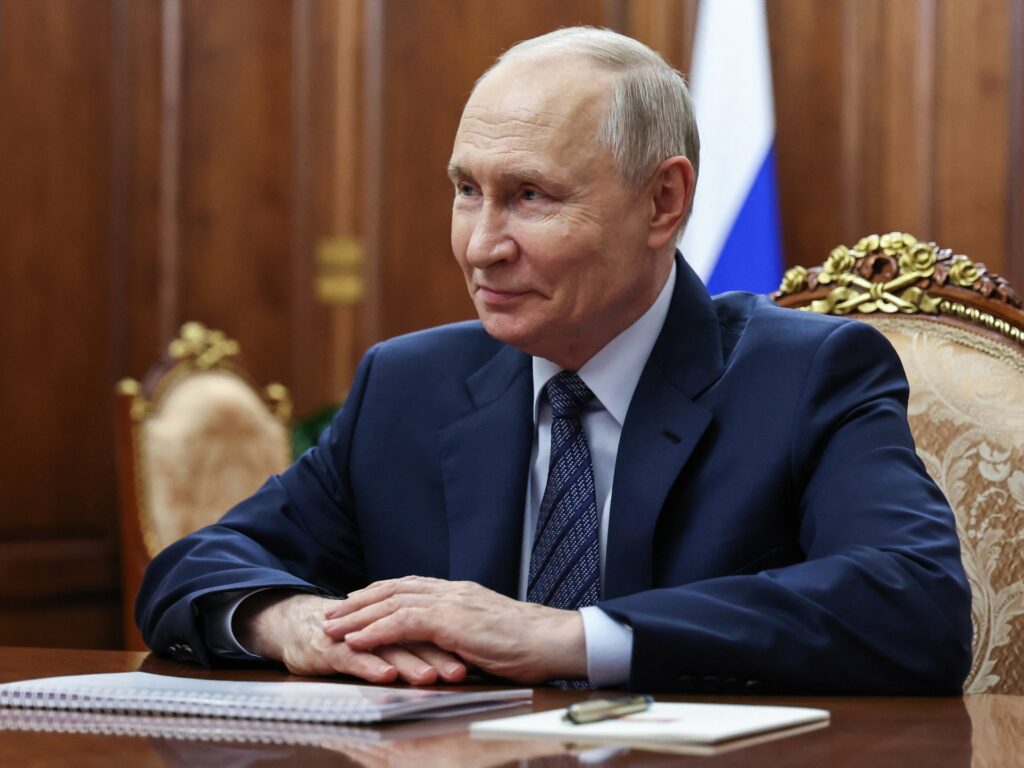
In a significant development in Russian politics, the United Russia party, led by President Vladimir Putin, has won a commanding supermajority in the recent parliamentary elections. This victory comes at a critical time as the ongoing conflict with Ukraine increasingly strains public opinion within Russia.
The election results have consolidated Putin’s hold on legislative power, providing his administration with a robust mandate to advance its policy agenda with little resistance. Analysts view this enhanced parliamentary dominance as a strategic advantage for Putin amid the growing challenges posed by both domestic and international pressures.
Despite mounting dissatisfaction among segments of the population over the protracted war in Ukraine, the United Russia party’s electoral success signals continued support from a significant portion of the electorate. The supermajority enables the government to pass laws and reforms without the need for compromise with opposition parties, potentially reinforcing Putin’s authority in shaping Russia’s political and economic future.
Observers note that the election outcomes reflect a complex political landscape. On one hand, they underscore the effectiveness of the United Russia party’s political machinery and its ability to mobilize voters. On the other hand, the results also highlight the limited influence of opposition groups, who have struggled to gain meaningful traction in recent years.
International reactions to the election have been mixed. Some governments express concern over the consolidation of power and the implications for democratic processes within Russia. Others focus on the broader geopolitical ramifications, especially in relation to the conflict in Ukraine and Russia’s international standing.
The war in Ukraine, which began several months ago, has led to significant geopolitical tensions and economic sanctions against Russia from Western countries. Despite these pressures, Putin’s party has managed to sustain political dominance at home. This suggests that the government remains confident in its domestic support base, even as the consequences of the conflict become more pronounced.
Russian citizens face a complex reality as they navigate the economic challenges posed by sanctions and the societal impact of the war. The supermajority held by United Russia may lead to increased government efforts to control internal dissent and maintain political stability during uncertain times.
The election results will likely shape the trajectory of Russian policy for years to come, reinforcing Putin’s vision for the country’s future. With a strengthened parliamentary position, the administration is poised to continue its approach toward governance, national security, and foreign affairs with renewed vigor.
In summary, the United Russia party’s supermajority victory solidifies President Putin’s political dominance and provides a clear signal of continuity in Russian governance amid escalating conflicts and growing international scrutiny. The impact of this development will unfold as the country navigates the evolving dynamics of both domestic challenges and global relations.