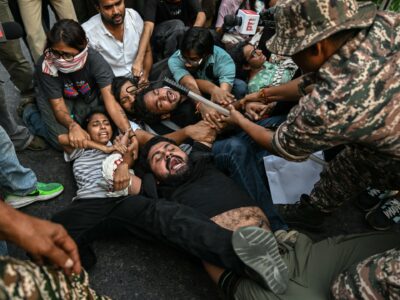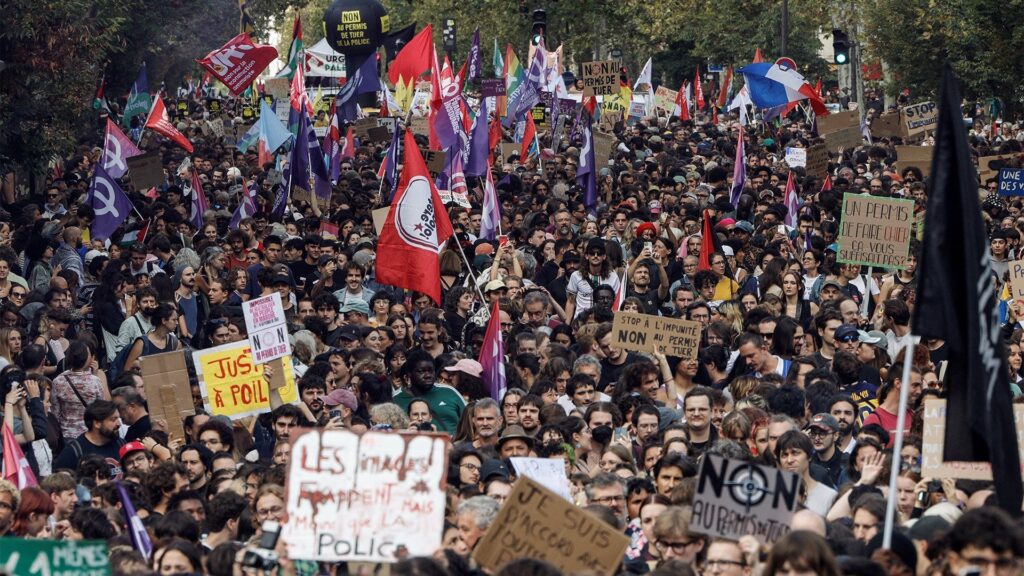
Thousands of protesters across France have taken to the streets in a powerful display of dissent against a newly proposed law that critics argue could grant police officers an unchecked “licence to kill.” The bill, which aims to regulate police use-of-force protocols, has ignited widespread fear and anger among citizens who believe it could exacerbate existing issues of police violence rather than curb them.
The demonstrations, held in major cities including Paris, Lyon, and Marseille, gathered a diverse crowd of activists, human rights advocates, unions, and everyday citizens united by their concern over potential abuses of power. Protest signs and chants echoed the striking message that the legislation threatens civil liberties and endangers vulnerable populations.
Supporters of the bill argue that it is necessary to clarify and codify guidelines for police conduct during confrontations, intending to provide officers with clearer rules of engagement and legal protections. They contend that these measures will enhance the safety and authority of law enforcement personnel, enabling them to perform their duties more effectively in challenging situations.
However, opponents counter that the law is dangerously vague and disproportionately favors law enforcement, potentially allowing excessive and lethal force without adequate oversight or accountability. They highlight instances of recent police brutality that have stirred public outrage, emphasizing that institutional reforms are needed to protect citizens’ rights, not dilute them.
The controversy taps into larger national debates about policing methods, systemic racism, and the role of law enforcement in French society. Amid growing scrutiny of police actions during protests and everyday policing, this bill exacerbates tensions between authorities and communities calling for justice and transparency.
Human rights organizations have joined the protests, issuing statements that denounce the legislation as a regression in civil rights protection. They urge lawmakers to reconsider and engage in meaningful dialogue with the public to address concerns constructively.
In response, government officials have emphasized their commitment to balancing effective policing with respect for human rights, asserting that the bill includes safeguards against misuse. Yet, many citizens remain unconvinced, demanding more comprehensive reforms and independent oversight mechanisms.
The ongoing public outcry underscores the challenges faced by France in navigating the complex dynamics of security, liberty, and equality. As protests continue, the government’s handling of the bill will be closely watched both domestically and internationally.
The situation remains fluid, with potential amendments to the legislation and continued mobilization of civil society expected in the coming weeks. This movement represents a critical moment in France’s democratic discourse over the control and limitations of police power in a modern state.