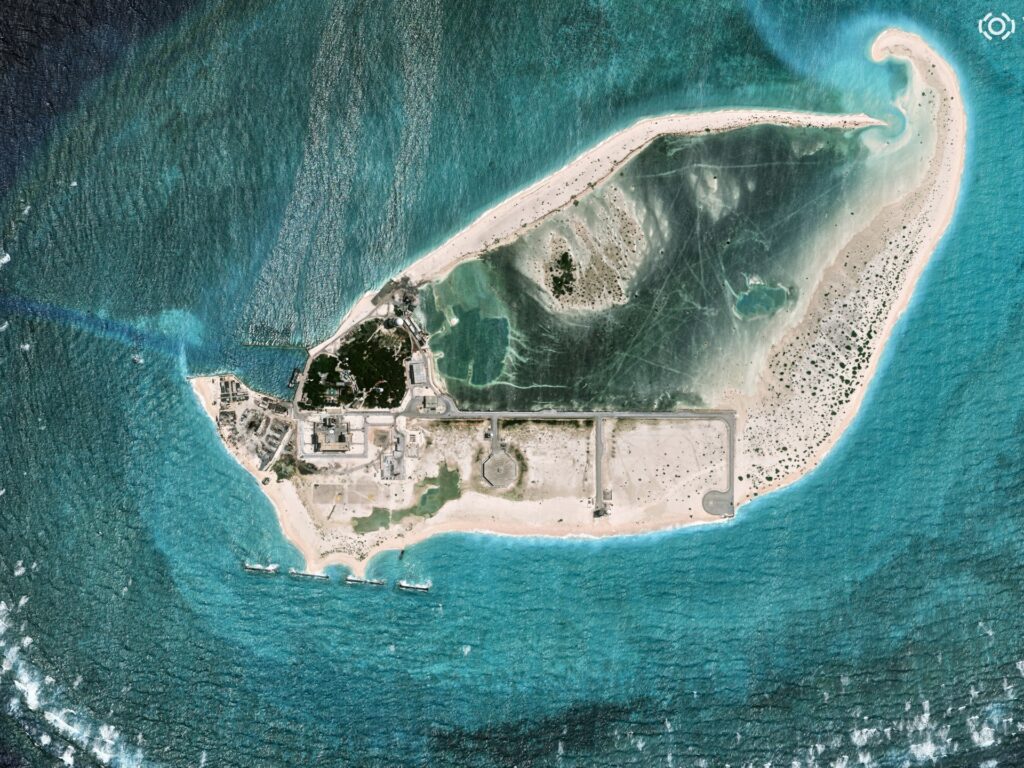
In a recent escalation of tensions in the South China Sea, the Philippine Coast Guard has accused a Chinese ship of ramming a Philippine government vessel near the Palawan province. This incident highlights the ongoing conflict and territorial disputes between China and the Philippines in one of the world’s most strategically important and contested maritime regions.
The South China Sea has long been a hotspot for disputes involving multiple countries, including the Philippines, China, Vietnam, Malaysia, and Brunei, all of which have overlapping claims. China’s assertive claims and military maneuvers in the area have alarmed its neighbors and the international community.
According to the Philippine Coast Guard, the Chinese ship engaged in dangerous military maneuvers that resulted in a collision with a government vessel. This act not only endangered the safety of the Philippine crew but also heightened tensions between the two nations, which have been locked in a bitter dispute over sovereignty and maritime rights.
Palawan province is strategically significant to the Philippines, acting as its frontline in the defense against Chinese expansionism in the South China Sea. The region is near the contested waters where China has built artificial islands and established military outposts, which have been strongly criticized by the Philippines and allies like the United States.
The Philippine government has condemned the actions of the Chinese ship, calling it a serious provocation and a violation of international law. They have urged China to respect the rule of law and maritime boundaries as defined by the United Nations Convention on the Law of the Sea (UNCLOS).
China, on the other hand, maintains that it has sovereign rights over the majority of the South China Sea, based on historical claims that are not recognized internationally. Its government typically dismisses accusations from the Philippines and other claimant nations as unfounded and politically motivated.
The incident follows a series of confrontations and aggressive maneuvers by Chinese vessels in waters claimed by the Philippines, including the harassment of fishermen and patrol ships. These confrontations have raised concerns about the potential for an accidental clash that could escalate into a broader conflict.
International observers and maritime security experts have called for restraint and diplomatic dialogue to avoid further incidents. They emphasize the importance of multilateral negotiations and adherence to international laws to maintain peace and stability in the region.
The Philippines has sought support from regional partners and international allies to counter China’s maritime assertiveness. This includes strengthening defense ties with the United States and participating in multilateral forums such as ASEAN to push for a binding code of conduct in the South China Sea.
As the geopolitical competition in the Indo-Pacific region intensifies, the South China Sea remains a critical flashpoint. The latest collision underscores the fragility of peace in the area and the urgent need for diplomatic efforts to resolve competing claims peacefully.
In conclusion, the ramming of the Philippine government vessel by a Chinese ship near Palawan not only strains bilateral relations but also poses a significant threat to regional security. Both nations face the challenge of managing their disputes without resorting to conflict while respecting international maritime laws and the principles of peaceful coexistence.