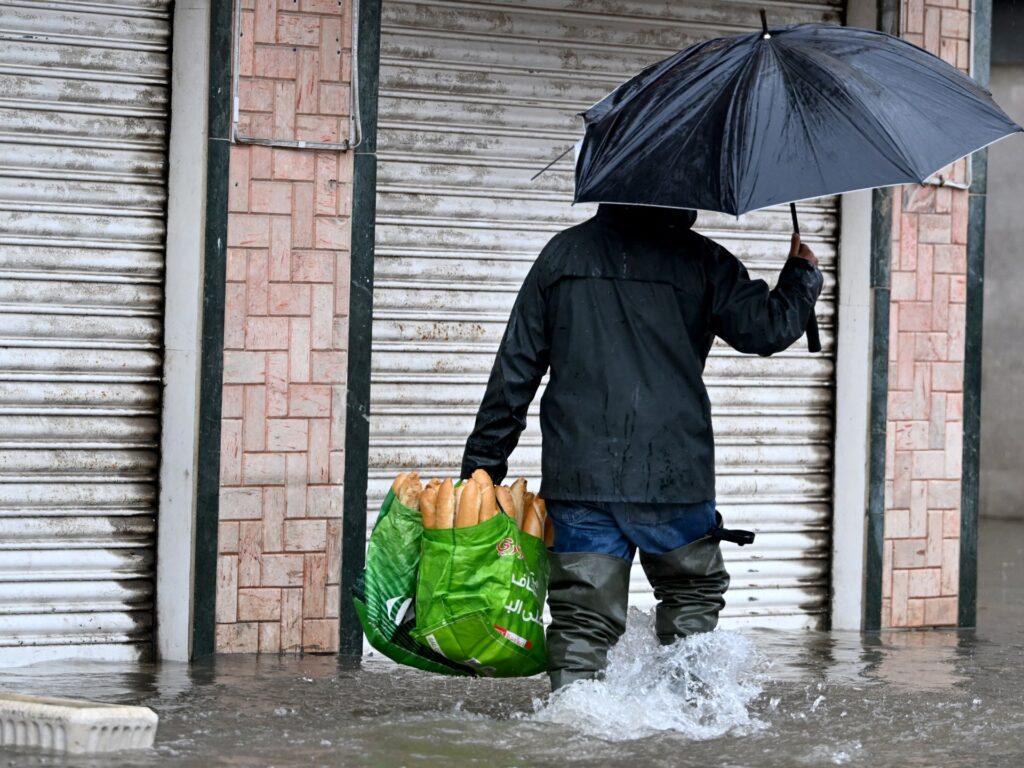
Tunis, the capital city of Tunisia, has been severely disrupted by recurring floods caused by heavy rainfall. These floods have trapped motorists and residents, creating chaos and raising serious concerns about the city’s drainage infrastructure, transportation systems, and overall flood preparedness.
The heavy rains that have fallen over the recent days have overwhelmed the city’s drainage capabilities, leading to significant water accumulation in many urban areas. Streets have turned into rivers, making everyday commutes hazardous and slow. Many vehicles have been stranded, and residents find themselves stuck in flooded areas, unable to reach their destinations safely.
Local authorities have confirmed that several main roads and residential neighborhoods are particularly affected. Emergency services are working to assist those trapped by the floods, but the scale of the disruption highlights systemic issues in the city’s planning and infrastructure.
City officials face mounting pressure to evaluate and improve the drainage systems that could reduce the impact of such heavy rains in the future. Urban planners and experts emphasize the need for enhanced flood defense mechanisms and greater investment in sustainable infrastructure designed to handle extreme weather conditions.
Public transportation services are also severely hit, with bus and taxi services facing delays and route cancellations due to impassable floodwaters. This has led to widespread frustration among commuters relying on public transport for their daily travels.
Furthermore, discussions have ignited among residents and officials regarding the overall flood preparedness of Tunis. Experts suggest that the city should implement comprehensive flood management strategies, including early warning systems, better maintenance of drainage canals, and public education campaigns to reduce risks and enhance readiness for future incidents.
The recurring nature of these floods has led to calls for immediate governmental action to prevent similar disruptions in the future. As climate change continues to affect weather patterns worldwide, Tunis and similar cities face an urgent need to adapt and reinforce their urban infrastructure.
Meanwhile, affected residents and businesses are struggling with the immediate consequences of the floods, including property damage, interrupted daily activities, and safety hazards. The situation underscores the critical need for long-term planning and investment in flood risk mitigation to protect lives and livelihoods in Tunisia’s capital.
This latest episode in Tunis serves as a stark reminder of the vulnerabilities faced by rapidly urbanizing cities in the face of changing climate conditions. Stronger coordination between local government, urban planners, and civil society will be essential to build resilience against future floods and ensure smoother, safer urban living conditions for all citizens.