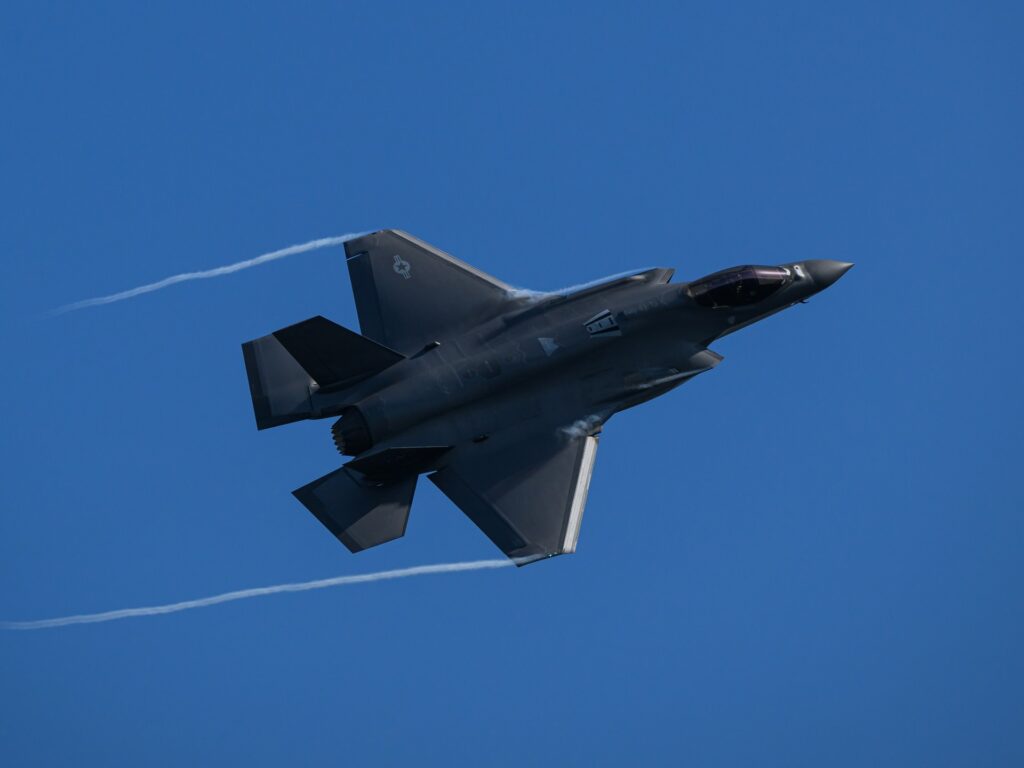
In a significant move, the Trump administration has approved the sale of advanced F-35 fighter jets to Saudi Arabia. This deal, which marks a notable point in U.S.-Saudi relations, is poised to strengthen the military capabilities of the Kingdom amid ongoing regional conflicts.
The sale, however, requires the green light from the United States Congress before it can be finalized. Congressional approval is a critical step in the process, reflecting the legislative branch’s role in overseeing international arms sales that have broad geopolitical implications.
Saudi Arabia has long sought enhanced military support from the United States, particularly in its fight against the Houthi rebel movement in Yemen. The Houthis, who are engaged in a prolonged conflict with the Saudi-led coalition, have prompted Riyadh to seek sophisticated weaponry to bolster its defense and offensive operations.
The F-35 fighter jets represent the pinnacle of modern aerial combat technology. Equipped with stealth capabilities, advanced avionics, and superior combat performance, these multirole aircraft would significantly enhance Saudi Arabia’s air combat edge in a tumultuous region.
This deal comes amid heightened tensions and ongoing warfare in Yemen, where the Saudi-led coalition has been engaged in a protracted struggle against the Houthi forces. The conflict has drawn international attention due to its humanitarian impact and geopolitical ramifications.
Critics of the sale have raised concerns about the potential escalation of violence in the region and the humanitarian consequences that might follow. They argue that providing such advanced weaponry could exacerbate the conflict and increase civilian casualties.
Supporters, on the other hand, maintain that the sale will help Saudi Arabia defend itself against threats and stabilize the region by countering Iranian influence, which is often linked to the Houthi rebels.
The Trump administration’s decision signals a commitment to its strategic alliance with Saudi Arabia, emphasizing the importance of counter-terrorism efforts and regional security cooperation.
As the U.S. Congress reviews the deal, discussions are expected to focus on balancing national security interests, regional stability, and humanitarian concerns. Lawmakers will scrutinize the potential impact of the arms sale on both U.S. foreign policy and the ongoing conflict in Yemen.
If approved, the sale could reshape military dynamics in the Middle East, reinforcing Saudi Arabia’s air power and potentially altering the balance of power.
This development also underscores the complex nature of arms sales and international diplomacy, where strategic interests often intersect with ethical and humanitarian considerations.
In summary, the Trump administration’s approval of the F-35 sale to Saudi Arabia marks a pivotal moment in U.S. foreign policy, reflecting the intricate interplay of military strategy, geopolitical alliances, and regional conflict dynamics. The coming months will reveal how this decision impacts the broader Middle Eastern landscape and global security.