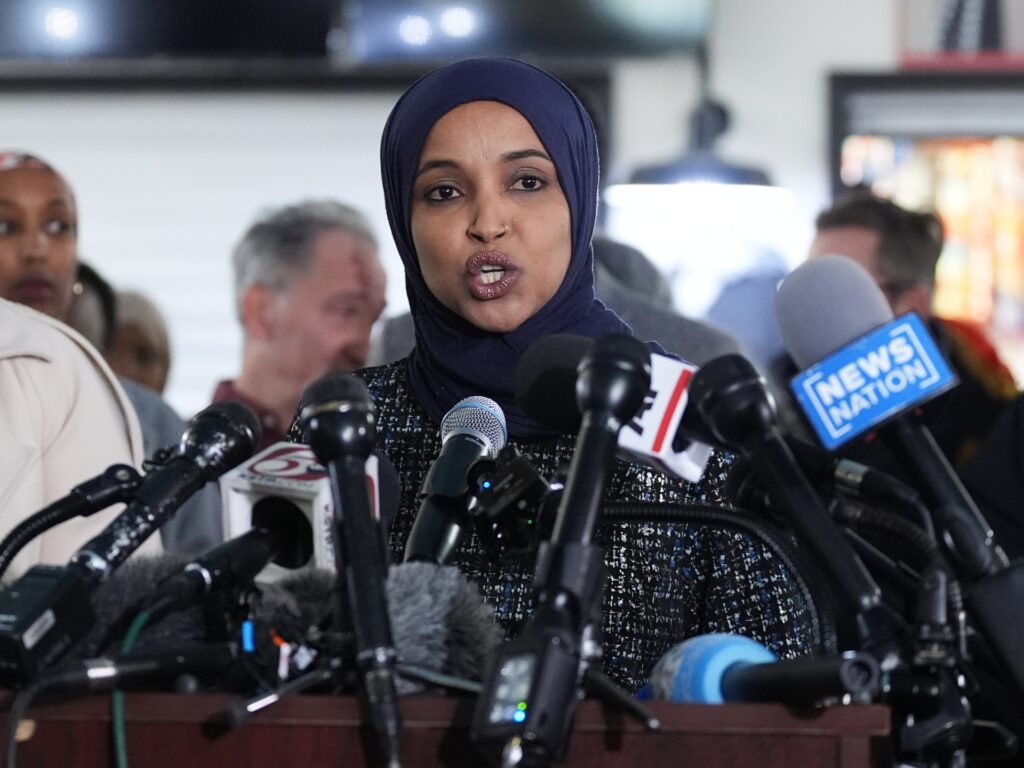
A man who sprayed vinegar at U.S. Representative Ilhan Omar during a townhall meeting has been sentenced to more than a year in prison. The assailant admitted that his actions were politically motivated, targeting Omar because of her views and political stance. The incident occurred in a public setting where Omar was engaging with constituents.
This attack on a federal lawmaker was treated with seriousness by the justice system, reflecting concerns about violence driven by political motives. The attacker’s admission that his intent was politically fueled highlights ongoing tensions in the political landscape and the risks faced by public officials.
Authorities reported that the attacker approached Omar during the townhall event and sprayed vinegar in her direction, causing discomfort but no serious physical injury. Despite the relatively mild physical impact, the act was classified as assault because it was intended to intimidate and send a threatening message.
Ilhan Omar, who has been a prominent figure in the House of Representatives, has frequently been the target of hostility due to her outspoken opinions and background. This latest incident adds to the list of threats and attacks she has endured since taking office.
The sentencing of the assailant to more than a year in prison serves as a legal precedent emphasizing that politically motivated violence will not be tolerated. Legal experts note that the sentence balances the need for punishment and deterrence, while acknowledging the specific nature of the assault.
Human rights advocates have expressed support for the decision, stating that protecting elected officials from acts of violence is crucial for maintaining democratic processes and public safety. They warn that such incidents, if unchecked, can escalate and jeopardize the freedoms that underpin democratic societies.
Following the sentencing, Ilhan Omar released a statement reaffirming her commitment to public service and dialogue despite the attack. She urged constituents and the general public to reject violence and extremism, emphasizing the importance of peaceful political discourse.
The case has drawn national attention, sparking discussions about the rising polarization in U.S. politics and the safety of public figures. Law enforcement agencies are reportedly reviewing security measures to better protect officials from similar incidents.
This legal outcome sends a clear message: violent actions driven by political disagreements are criminal offenses that will be met with significant consequences. The judicial response aims to deter future attacks and reassure lawmakers and citizens that such behavior is unacceptable in a democratic society.