Syria has recently announced the abolition of the controversial “terrorism” courts established during the era of former President Bashar al-Assad, marking a significant shift in the country’s judicial approach as it attempts to rebuild after more than 14 years of brutal conflict. This move comes at a delicate time when internal tensions, particularly involving Kurdish populations, are flaring, challenging President Ahmed al-Sharaa’s efforts to unify the war-weary nation.
The al-Assad-era terrorism courts have long been criticized by human rights organizations and various opposition groups for their harsh measures and questionable legal standards. These courts were perceived as tools for political repression rather than fair justice, often prosecuting individuals on charges of terrorism with little transparency and due process.
By dismantling these courts, the Syrian government appears to be signaling a willingness to reform its judicial system and possibly ease some of the political pressures that have impeded national reconciliation. This change could help in restoring public trust in the legal system, which is crucial for the country’s stability and rebuilding process.
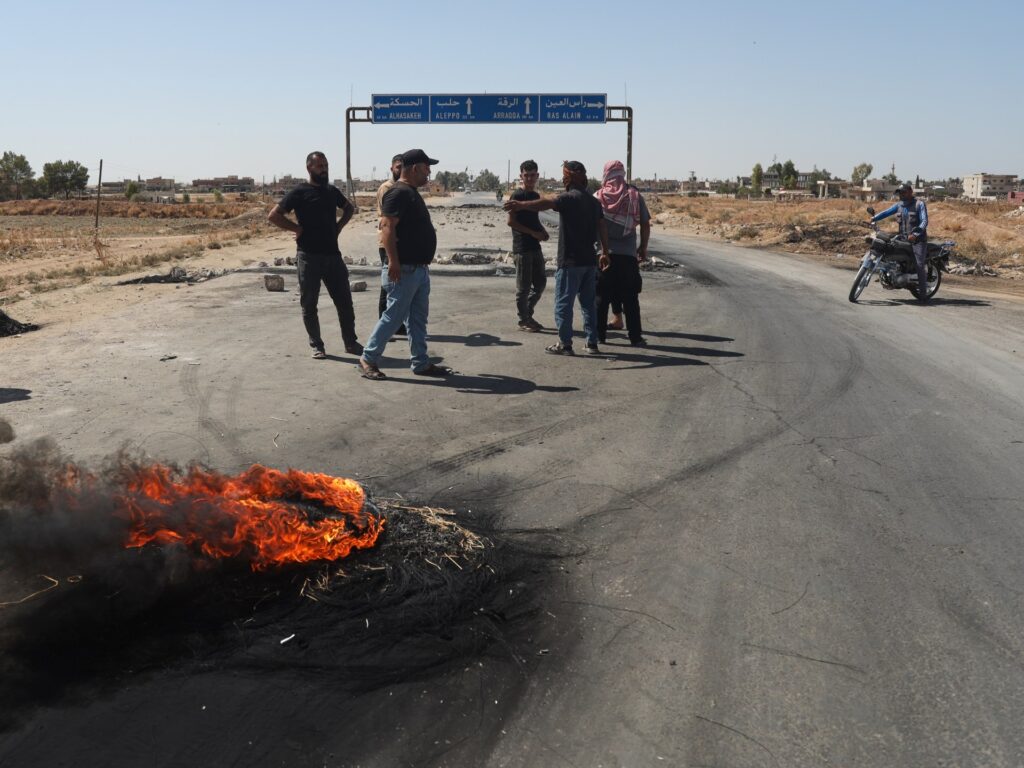
However, despite this positive legal reform, Syria faces ongoing challenges, particularly with its Kurdish communities in the northeast. Kurdish groups have long sought greater autonomy and protection, demands that have repeatedly led to political disputes and at times violent clashes. The dissolution of the terrorism courts does little to address these underlying ethnic and political tensions.
President Ahmed al-Sharaa finds himself in a challenging position, tasked with navigating these internal conflicts while restoring the country’s governance structure. Since the end of the most intense fighting phases, Syria has been on a tenuous path toward peace, but the Kurdish issue adds a layer of complexity.
Discontent among various factions—including Kurds, opposition groups, and some segments of the Syrian population—tests the president’s ability to implement a cohesive policy that represents all citizens. The Kurdish groups, in particular, seek not only recognition but also guarantees against future oppression and symbolic and real political inclusion.
Analysts suggest that the removal of the terrorism courts may be part of a broader plan by the Syrian government to improve its international image and attract diplomatic and economic support for reconstruction efforts. However, true progress will depend on the government’s capacity to manage ethnic divisions and implement inclusive governance.
The Kurdish question remains at the forefront of Syria’s political landscape. Without more inclusive dialogue and practical measures that address Kurdish concerns, the risk of renewed conflict remains high. The Kurdish leadership has expressed caution about the recent reforms, highlighting that judicial changes alone cannot solve decades-long grievances.
International observers emphasize that lasting peace in Syria will require more than legal reforms; it will necessitate comprehensive political solutions that address diverse ethnic and sectarian realities.
As Syria attempts to move forward, the abolition of the al-Assad-era terrorism courts represents a crucial, if insufficient, step toward reconciling a divided society. The world watches closely as President Ahmed al-Sharaa seeks to unify a nation scarred deeply by conflict, hoping that this judicial reform can pave the way for broader peace and stability in the region.