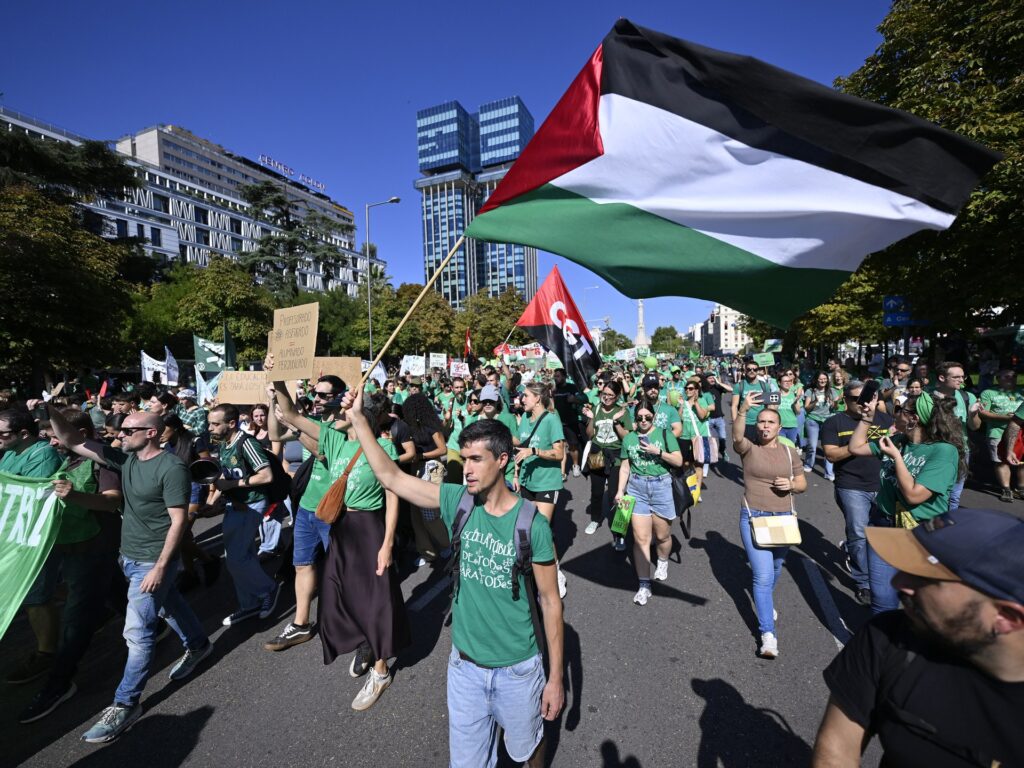
In recent times, the Palestinian flag and keffiyeh have become prominent symbols not just within Palestine but across Europe, appearing in various mass rallies and protests. These symbols carry deep-rooted significance as representations of anti-colonial struggles and solidarity with the Palestinian cause. Yet, their widespread use during large-scale demonstrations has prompted a complex debate among observers and participants alike.
Originating as traditional emblems linked to Palestinian identity and resistance, the flag and keffiyeh have transcended their cultural origins to become international icons of resilience against oppression. Their visibility surged notably amid escalating conflicts in the Middle East, inspiring supportive communities across Europe to voice solidarity and bring global attention to the plight of Palestinians.
From universities and educational settings to urban housing protests, the flag’s presence is increasingly common. Students, activists, and community members often display these symbols to advocate for justice and human rights, transforming public spaces into platforms for political expression. In many cases, these symbols help unify disparate groups under a shared cause, evoking a sense of collective empowerment.
However, this diffusion of symbolism is not without controversy. Some critics argue that the adoption of Palestinian flags and keffiyehs during unrelated protests may dilute the specific historical and political meaning behind them. Others question whether these symbols, in some instances, might be appropriated or misused to serve broader political agendas that extend beyond supporting Palestinian self-determination.
Moreover, the rise in flag-bearing demonstrations across European cities has occasionally heightened tensions among different community groups. Authorities and public officials sometimes express concern about the potential for such displays to exacerbate existing social divisions or provoke confrontations.
Despite these challenges, supporters maintain that the flag and keffiyeh remain powerful emblems of solidarity and resistance against colonialism and injustice worldwide. Educational institutions and cultural events showcasing these symbols often emphasize their historical context, aiming to foster understanding and awareness.
This ongoing dialogue illustrates the complex role that symbols play in contemporary political movements. They serve not only as connectors across borders but also as focal points for debate about identity, representation, and activism within diverse societies.
As Palestinians continue to experience struggles related to displacement, sovereignty, and human rights, the visual presence of their national icons in European spaces underscores a global dimension of their cause. The intersection of education, protest, and cultural symbolism reveals how deeply the Palestinian narrative resonates beyond its geographic origins, shaping conversations and actions worldwide.