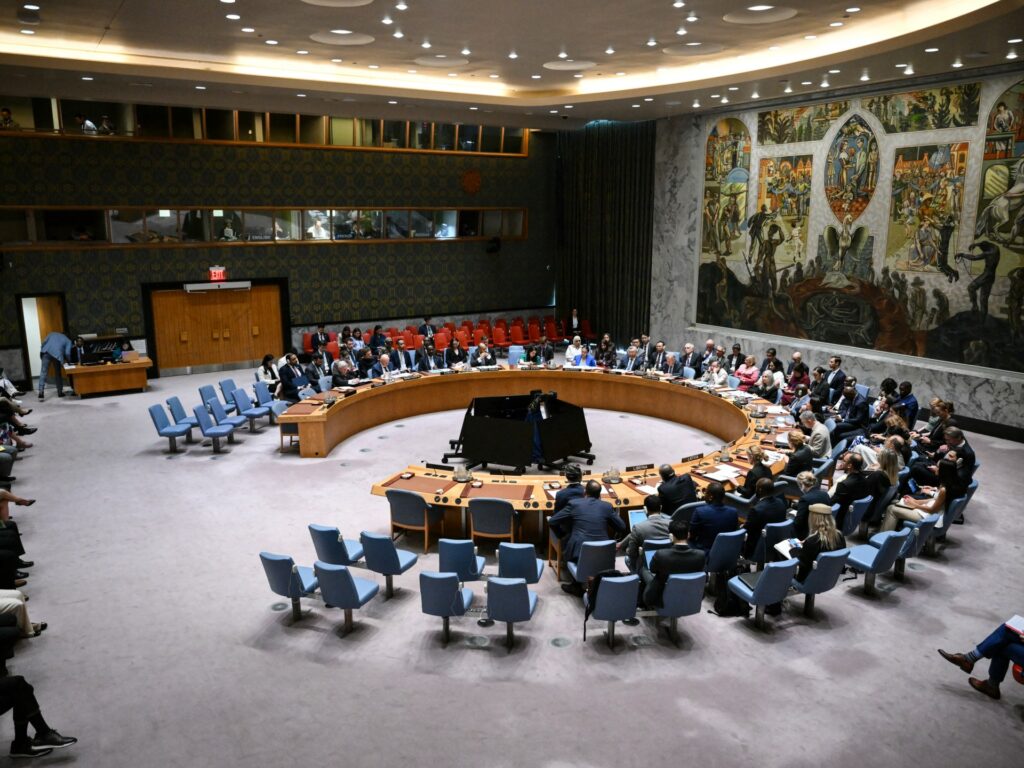
United Nations Secretary-General António Guterres has issued a stern warning about the growing geopolitical divides within the UN Security Council, highlighting how these rifts are severely hindering the body’s ability to act decisively on urgent global crises. During a recent address, Guterres emphasized the critical need for comprehensive and urgent reform of the Security Council to restore its effectiveness and credibility.
The Security Council, tasked with maintaining international peace and security, has faced increasing challenges in reaching consensus on pressing issues such as conflicts, humanitarian emergencies, and global threats like climate change and pandemics. Guterres pointed out that deep-seated political disagreements between permanent members, often driven by national interests and geopolitical rivalries, have led to frequent stalemates and inaction.
This paralysis has significant consequences for global governance. Numerous conflicts remain unresolved, and crises continue to escalate without sufficient international intervention due to the inability of the Council to take unified action. Guterres made it clear that without reform, the Security Council risks becoming irrelevant in addressing the complexities of 21st-century threats.
The Secretary-General’s call for reform includes proposals to expand the Council’s membership to better represent the current geopolitical realities and to improve decision-making processes to ensure more transparency and accountability. He also advocated for the reduction of unilateral veto power, which has often been used to block interventions backed by the majority of member states.
Several member countries and experts have echoed Guterres’s concerns, pointing out that the current structure reflects the power dynamics of a post-World War II era that no longer aligns with today’s geopolitical landscape. Reform advocates argue that a more representative and agile Security Council would enhance the UN’s ability to mediate conflicts and coordinate global responses.
However, proposed reforms face significant hurdles. Permanent members wielding veto power have historically been reluctant to dilute their influence, resulting in stalled negotiations and limited progress. Despite this, the Secretary-General remains optimistic that sustained dialogue and international pressure can pave the way for meaningful changes.
Global crises such as the ongoing wars in various regions, refugee influxes, climate emergencies, and persistent violations of international law underscore the urgency of revitalizing the Security Council. Guterres’s warnings serve as a clarion call to the international community to reevaluate and strengthen the UN’s core decision-making body before further paralysis diminishes global stability and peace.
In conclusion, António Guterres’s message is clear: bridging geopolitical divides and reforming the Security Council is imperative for the UN to fulfill its mission in a rapidly evolving world. Failure to act risks prolonged conflict, humanitarian suffering, and a weakened global order. The coming months and years will be crucial in determining whether the international community can overcome entrenched divisions to secure a more effective and responsive Security Council.